Places that every metro builder should visit
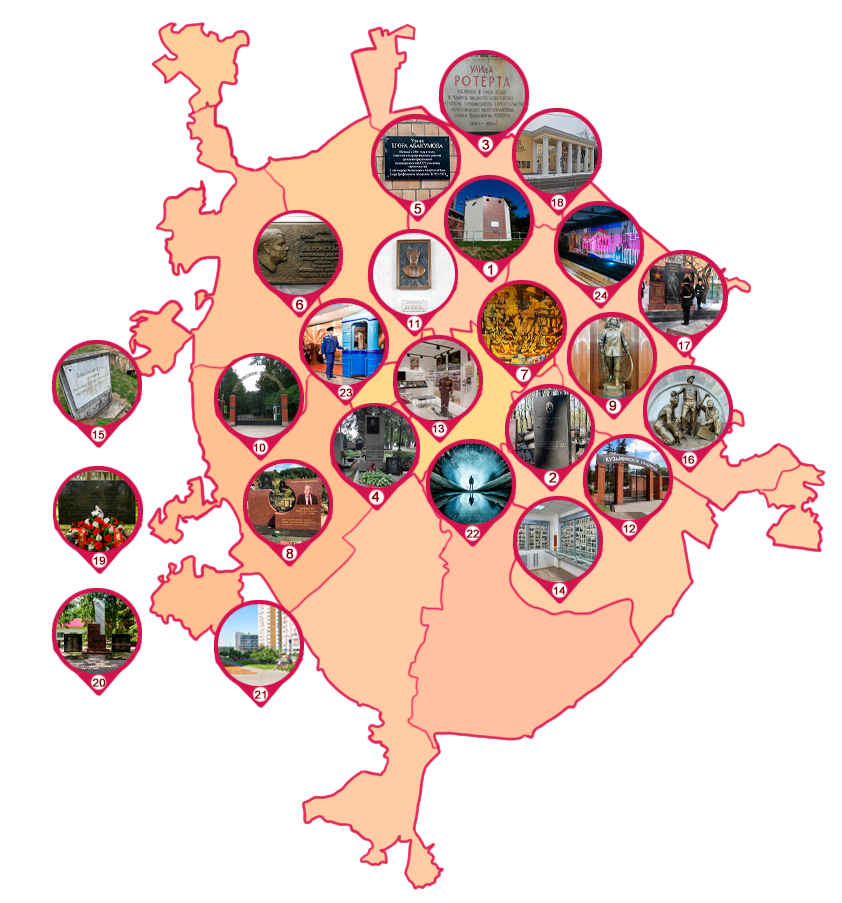
In early October, the Council of War and Labor Veterans of Mosmetrostroy, with the support of the organization’s leadership, traditionally visited memorable places associated with the beginning of the construction of the capital’s metro and the people who devoted themselves to this matter.
The event began with words of gratitude addressed to the pioneers and heroes of the legendary construction. Chairman of the Council Boris Prigoda, on behalf of the veterans, expressed confidence that the memory of the heroism of the metro builders nourishes them as a source, helping them to confront difficulties and move forward. Today, the Moscow Metro Construction has many such monuments - silent witnesses of those years, and they are all important. We will name those that every metro builder should visit.
-
Mine No. 29 is the pantheon of construction of the first stage of the capital's metro. It was from this experimental site on Rusakovskaya street, building 13a, building 2 that the history of the Moscow subway began.
-
Vvedenskoye Cemetery.The first head of the Moscow metro construction, Pavel Rotert, and the Hero of Socialist Labor, metro builder Vladimir Bessolov are buried here.
-
Rotert Street.Until 1964, this was the name of 2nd Metrostroevskaya Street. It is located in the north-east of Moscow in the Yaroslavsky district of the North-Eastern Administrative Okrug from Yaroslavskoye Highway to Prokhodchikov Street.
-
Novodevichy Cemetery.Outstanding metro builders are buried on its territory: the heads of Metrostroy - Yegor Abakumov (1938–1939), Ilya Gotsiridze (1940), Mikhail Samodurov (1941–1950) and Vasily Polezhaev (1958–1972), as well as the pioneer, Hero of the Socialist Labor Tatiana Fedorova.
-
Egor Abakumov Street.Like Roterta Street, it was renamed in 1964 (formerly Station Street). It runs from Yaroslavskoye Highway to Yugorsky Proezd and ends opposite the Los railway platform.
-
Polezhaevskaya station.Today, the only station of the Moscow metro named after metro builder Vasily Polezhaev. Vasily Dementievich went through a professional career from the foreman of tunneling workers to the head of Metrostroy.
-
Komsomolskaya station.At the exit from the station, two panels with the plot of the construction of the metro, sketches of which were prepared by Lanseray, attract attention.
-
Troekurovskoe cemetery.The place where the winner of the USSR State Prize in the field of technology, Honored Builder of the RSFSR, Academician of the Russian Academy of Transport and Head of the Moscow Metro Construction (1972-1976, 1986-1999) Yuri Koshelev is buried.
-
Baumanskaya station.The central hall of the station is decorated with eight sculptures, including “Metrostroevka”.
-
Kuntsevo cemetery.In this place is buried Nikolai Gubankov, head of Mosmetrostroy (1950 -1958) and laureate of the Stalin Prize of the second degree (1947) - for the improvement and implementation of the shield method of tunneling in the construction of the Moscow Metro named after L. M. Kaganovich, which ensured a significant increase in labor productivity in underground work.
-
Krasnoselskaya station. On May 15, 2006, the grand opening of a memorial plaque in memory of the legendary builder of the Moscow metro Tatyana Fedorova took place in the lobby.
-
Kuzminskoe cemetery.Here the USSR State Prize Laureate, head of the Moscow Metro Construction from 1976 to 1983 found eternal peace Peter Vasyukov.
-
Mosmetrostroy Office on Tsvetnoy Boulevard. On the façade of the building there is a memorial plaque dedicated to the outstanding leader of Metrostroy, Yuri Koshelev. In addition, since 2020, on the ground floor of the company there has been a museum space with a constantly updated exhibition.
-
SMU-8 Metrostroy.In the organization's office on Gazgoldernaya Street, building 8, building 11, rare and unique photographs are presented, which depict the stages of construction of the capital's subway of different periods, outstanding personalities and teams of domestic metro construction. These photos are worth viewing over and over again.
-
Borodinsky field.Among the open fields you can find a stele to the metro builders who participated in the construction of defensive structures on the Mozhaisk defense line in 1941.
-
Elektrozavodskaya station of the Arbatsko-Pokrovskaya line. In the niche of the station lobby there is a sculptural group “Metro builders in the face” by Georgy Motovilov.
-
GBOU school No. 1246.On the school grounds there is a memorial complex dedicated to the metro builders who died during the Great Patriotic War.
-
New Moscow Drama Theatre. The building was erected by metro builders in 1956. For 20 years, Metrostroy workers engaged in amateur artistic activities and made all kinds of crafts there. The House of Culture in Losi was one of the team’s favorite places.
-
Malye Vyazemy village, Odintsovo district.In the school yard there is a monument to the students of the Metrostroy flying club, who were awarded the title of Hero of the Soviet Union.
-
Balabanovo, Kaluga region. This is the location of the “Young Metro Builder” children's health camp, which is iconic for several generations of metropolitan subway builders. On one of the alleys there is a monument with the names of Heroes of the Soviet Union who worked in the Moscow Metro Construction in peacetime. Since the summer of 2022, an open-air museum of specialized equipment has been operating in the camp.
-
Microdistrict "Grad Moskovsky" on Moskovskaya Street.In 2016, the opening ceremony of the “Mosmetrostroy Alley” took place in the Moskovsky settlement of New Moscow. Young linden trees were planted on it and a memorial plaque was installed. The event was dedicated to the 85th anniversary of Mosmetrostroy.
-
“Bunker 703”. Museum of modern fortification at a depth of 43 meters underground. In 2020, Mosmetrostroy donated cast iron tubing, which is used in the construction of tunnels, to the museum. Its weight is
-
Career Guidance Center and Metro Museum.Visitors will be able to get acquainted not only with the operating features of the city's main underground transport, but also find exhibits demonstrating the construction of the metro.
-
Sokolniki station of the Big Circle Line.The first station of the Moscow subway, which is entirely dedicated to the work of metro builders. Its design uses slogans, posters and metro maps of the past decade.
We have touched only on a small part of what can be said about the activities of the Moscow Metro Construction. The history of the organization and the fame of the subway builders does not end in Moscow and its environs. The map of implemented projects is extensive: this includes Sevastopol, Koktebel, the Far East, and the Volga region, which means that you can find information about metro builders in absolutely any region of our country and even beyond its borders.