Come back alive
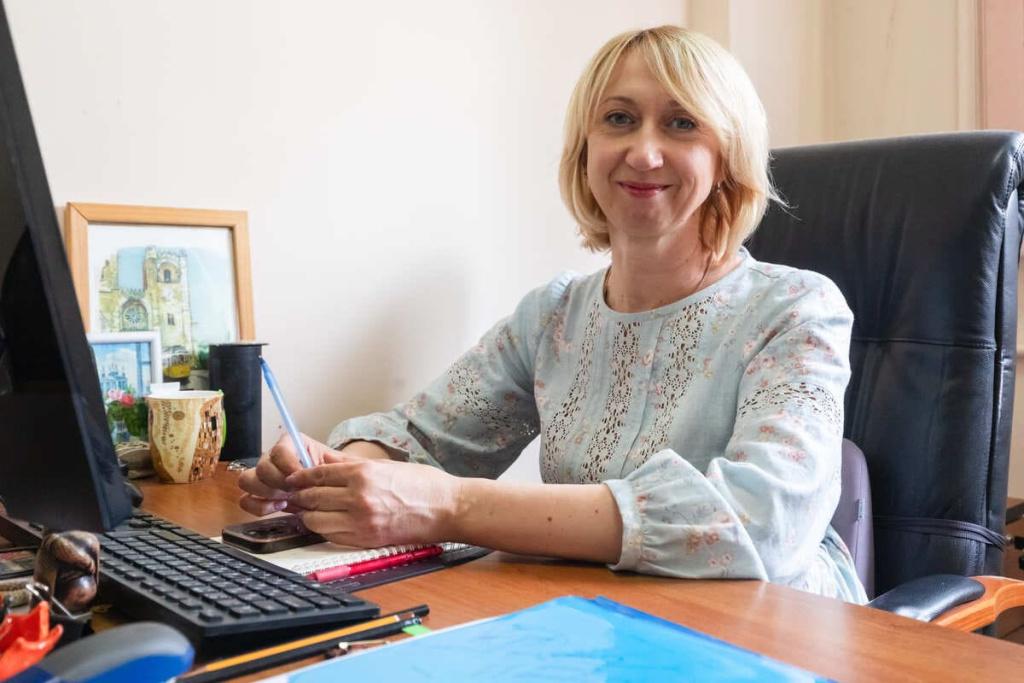
Head of the legal and contract department of Stroymekhservice Metrostroy Ekaterina Grigorieva is an experienced volunteer. Over the course of three years, I plunged headlong into the problems of refugees and helping Northern Military District soldiers. Helps collect, complete and distribute food packages, clothes, shoes to those who left their native land and were left with nothing, participates in collecting humanitarian aid for children on the front line, and cares for the wounded in hospitals.
She succeeds everywhere: today Ekaterina Grigorieva is a volunteer in the Zaryanka group, a nurse in a military hospital, and an organizer of a fundraiser at her main job. And all this is not under compulsion, but at the call of the heart.
Zaryanka–front
“It all started in April 2022,” says Ekaterina Nikolaevna, “I passed an interview at the church Headquarters for Assistance to Refugees at the Synodal Department of the Russian Orthodox Church. One of the main areas of work of the Headquarters is the distribution of humanitarian aid. The food packages that we provide to refugees help them endure hardships, because the Headquarters’ wards are the most vulnerable segments of the population, people who have lost their home, their jobs, and often their loved ones.
At the Headquarters I met amazing people, like-minded people, and a little later the closest of them joined together in the volunteer group “Zaryanka”. Why Zaryanka? This beautiful bird flew to our humanitarian warehouse and delighted the volunteer girls. The bird is fast, agile, early. He succeeds everywhere. At dawn he is already singing. So we need to be on time everywhere - both at our main jobs and at Headquarters, and yet each of us also has a family. Together we have implemented many different social projects and continue to do so.”
For military forces: from trench candles to camouflage nets
Another area of volunteer activity is helping the front: purchasing medicines, ambulance supplies to relieve pain syndromes, hemostatic drugs, hygiene products, making trench candles, and camouflage nets.
Ekaterina Nikolaevna speaks with gratitude about the people who help her: “The longer we work, the wider the circle of those who help and who turn to us for help. When our fees began to fall short, I told the director of Stroymekhservice, Anatoly Vasilyevich Semushkin, about this. He supported me. And at one of the meetings he asked employees to help the initiative. A lot of people responded, took part, and the scale of purchased aid increased.”
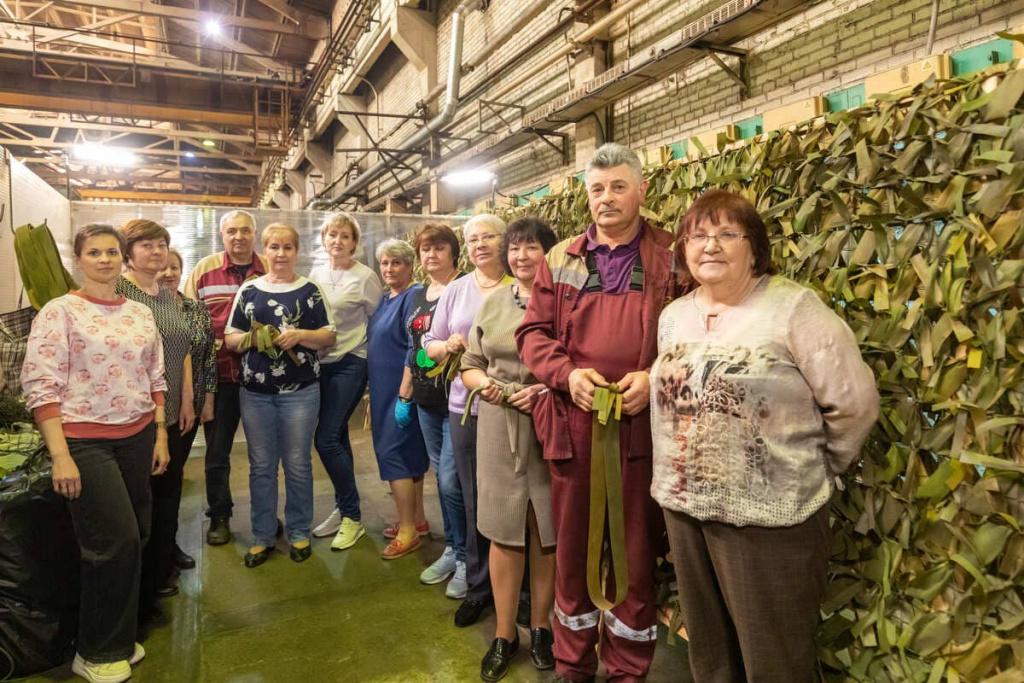
Anatoly Vasilyevich also supported the idea of making camouflage nets at work: “Thanks to the management, which, on the initiative of Ekaterina Grigorieva, allocated us a site for making nets,” Elena Korolkova, work distributor, joined the conversation. “The guys made a stand on which they are stretching the foundation of the future network. Aleksey Kachkov cuts spunbond tapes on a homemade machine, deftly turning the oversized roll into the required blanks. The girls weave them into the foundation, coming at lunch and staying after work. And the boys are not far behind, they also come in and help. There are many of us. Everyone understands that we are doing a common cause. Many have relatives and acquaintances participating in the SVO. Tatyana Saratova has a son on the front line, I have a nephew! We root for everyone with our hearts and try to help.
A special military operation forced us to reconsider our value system. For many years we were raised on the principles of tolerance and forgiveness, including in relation to those who once came to us with a sword. We sincerely believed that they and their descendants drew conclusions and, at times, modestly kept silent about the exploits of their ancestors, so as not to inadvertently hurt those who were then on the other side of good and evil. But it turned out that we were selflessly mistaken. And now, more than ever, it is worth remembering the price we paid during the Great Patriotic War and those heroes thanks to whom we are alive.
So the war affected me and my family directly. My grandfather died in 1944, my mother ended up in an orphanage, which was evacuated to Uzbekistan. While we were getting there, we ourselves came under bombing, all her documents disappeared, because of this it was difficult to later prove that I was her daughter.
Tatiana Kachkova, a human resources specialist, had her father, Mikhail Ivanovich Shatokhin, who fought from 1941 to 1943. In the Oryol region he went on reconnaissance and was wounded, returning home without a leg.
Each of us has or had war participants in our family. We remember them and try to help those on the front line with everything we can. And also...you know, because the war in 2014 came to some of us directly into our homes. Here is the head of security, Sergei Devitsky, originally from Lugansk, he spent a happy childhood there, his father’s home. Now he helps liberate his native land and delivers humanitarian aid collected by volunteer centers to the front lines of sponsored fighters. Free of charge, selfless. And he writes applications for leave without pay on working days, which he “takes over”, not having time on the weekends. He already has over 50 such rides to his credit.”
We dream of victory and peace
When a year and a half ago, at the church Refugee Assistance Headquarters, Ekaterina Grigorieva saw an advertisement that hospitals needed volunteers, she decided to try herself in this area, although she had doubts: where is medicine and where is a lawyer - no professional intersections! And also: where can I get extra time for this? Will he be able to withstand it mentally, seeing physical pain and suffering with his own eyes every day?
There were many questions, but the desire to help prevailed. Grigorieva collected the necessary documents, completed short-term evening courses and ended up in the hospital with an experienced mentor-coordinator. I went out on my second duty on my own!
“The first time was not easy,” recalls Ekaterina Nikolaevna, “it’s hard to see someone else’s pain, strong and courageous warriors, limited in movement, physically weak, in need of the simplest care: they need to be washed, nails trimmed, the bed changed, sometimes spoon-fed.
We in no way replace medical workers, we are in their support.
During my volunteer service at the headquarters and hospital there were many stories, both difficult and bright. But behind each of them is a Man, a fighter, a personality. Social volunteering for me is not only pain, loss and the need to overcome inconvenience. These are also unbroken, strong-willed people who have not lost their love of life and humanity, who smile, joke and try to support each other and even us, the volunteers.
One day I was asked to accompany one of my charges - a soldier with a concussion and leg amputation - from one hospital to another. He was poorly oriented in space, did not remember his name and did not realize where he was. I handed over all the information for him, before that I had to communicate with him a lot, waited until he was admitted and assigned to the ward, and called his mother.
As a result, the story ended well. Now Anatoly is with his family, active, rides a snowmobile into the tundra, goes fishing and is waiting for a prosthesis to be fitted. He doesn’t remember the first days in the hospital, but he remembers me, his savior, and invites me to visit. He and his parents promise to greet me as if they were their own. It turns out that it was with me that the special military operation ended for Anatoly. This is what we dream about in our moments of leisure: to wait for victory, peace and, most importantly, to make sure that those who were maimed return full-fledged to peaceful life.”
Natalya Dolgushina