How they fought for Moscow
The Battle of Moscow - the largest in the history of the Great Patriotic War - turned 80 years old. Among those who valiantly defended the capital in those terrible times were our metro builders. Of course, almost a century later, none of the heroes of past years are alive, but the archives of the Metrostroyevets newspaper preserve the memories of those who returned from the front.
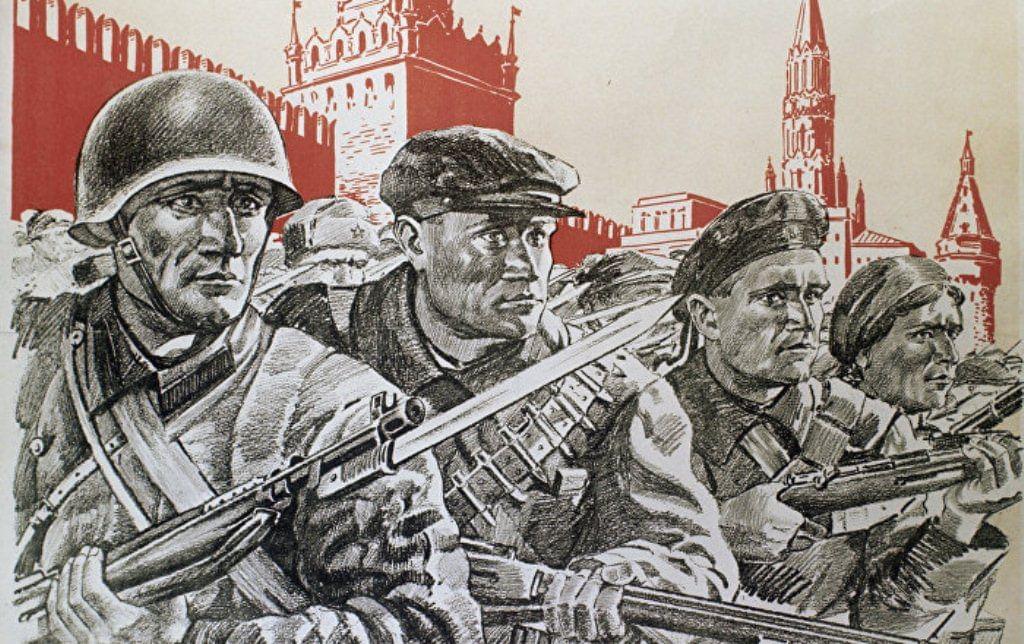
“Typhoon” was the name given to their operation by the German invaders who planned to capture Moscow. The city was subject to total destruction, and the population was to be sent to Germany. The offensive began on September 30, 1941. The plan had to be completed in 10-12 weeks in order to be in time before the start of winter. But it was here, near Moscow, that the Nazis suffered their first defeat. No other capital in the world gave such a powerful rebuff to Hitler.
REFUSED RESERVATION
Sergey Vavilkin worked at Metrosnab. With the outbreak of hostilities, he mined rolled metal for the defensive structures of Moscow. And in October 1941, he refused his armor and volunteered to defend the capital.
The memories of engineer Metrosnab Vavilkin were preserved by the newspaper “Udarnik Metrostroy” No. 43 dated February 23, 1947: “The day of October 13, 1941 will forever remain in my memory. Together with the Metrosnab communists, comrades Chekalov and Mironov, I went to the building of the Lenin Komsomol Theater, where the working battalion of the Sverdlovsk region was being formed. Our unit took the first battle near Ostashkov. We killed a lot of Germans in this battle. Our mortar battalion accompanied the infantry and helped knock the enemy out of the fortifications. Hundreds of enemy soldiers and officers, many German tanks are recorded in our combat account. We fulfilled our duty to our Motherland, we went through a difficult battle path from Moscow to Lyubava.”
Since the beginning of December, the division in which Vavilkin was a member, together with units arriving from Siberia, drove the Nazis away from Moscow along the Volokolamsk Highway.
DEFENDED MOSCOW UNDER HISTORY
Metro construction worker Boris Shchekoldin volunteered for the front in July 1941, although he was declared unfit for military service. The 18th division of the people's militia of the Leningrad region was formed in the building of the Sovetskaya Hotel. He became one of its fighters. He received the medal “For the Defense of Moscow,” which he later considered the most expensive.
Shchekoldin defended the capital near Istra. Fighting next to him were Directorate engineer Alexander Chernenko and KSUM chief engineer Boris Tikhomirov. Already in peacetime, he said: “They gave us two grenades and a rifle. But even with this arsenal, the Moscow militia won victories. Private Aliyev, for example, managed to fire from one cannon from three different points. The militia showed exceptional courage in the battle near the village of Skirmanovo, where they defeated an insidious, heavily armed enemy. Here, on this land near Moscow, there now stands a monument to the militia soldiers of the 18th division. It was manufactured by the team of the Cherkizovsky reinforced concrete plant.”
AUTOMATIC GUYS ARE ADVANCED
Metro pioneer Ivan Golokhvastov is one of those metro builders who also refused armor and took up arms in the most difficult days for the capital and the country. Until the end of his life, he remembered his first battle on the near approaches to Moscow.
His memories are preserved by Metrostroyevets No. 45 dated December 1, 2006: “The battle was very difficult. Submachine gunners were advancing on our positions. They were supported by tanks. Unfortunately, we did not have good anti-tank artillery at that time. And the forty-five shells bounced off the armor of heavy tanks like nuts. Our company survived. We even set several tanks on fire with bottles of hot mixture. They blocked the road for other cars, and they turned back. The machine gunners were left without support, and we destroyed almost all of them. However, our company suffered terrible losses. Out of 250 people, only 17 remained. I didn’t expect to be alive.”
But Golokhvastov survived, took part in the battles on the Kursk Bulge, liberated Ukraine, Poland, Moldova and Czechoslovakia. I celebrated victory in Germany.
WE HAVE RECEIVED AN IMPORTANT TASK
In August 1941, metro builders received a task of national importance - to build the Mozhaisk defense line. For this purpose, a special detachment was created, which began building pillboxes, laying trenches and anti-tank ditches, and preparing artillery positions. They worked on the approaches to Mozhaisk, on the Borodino field.
Metro construction workers built about a hundred pillboxes, machine gun emplacements and command posts. At the same time, defense lines were built at Mozhaisk-Vereya, near the villages of Kukarskaya, Marfin Brod, Novosurino and other settlements. The ditches, gouges, pillboxes and towers on the fortification line near Kuntsevo are also the merit of our metro builders. Tatyana Fedorova, the head of the section during the war years, was appointed responsible here. She later recalled: “The work was mainly carried out by women. How selflessly the metro construction workers treated their work! No one thought about personal things, only about how to quickly complete the task of defending the city. We had to work under bombings.”
Among the girls who went to the front was the embosser Lyubov Petrova, who first delivered reports to the Moscow military registration and enlistment offices, and later, under heavy enemy fire, as a line telephone operator pulled the heaviest communication coils until she received a shell shock.
Zoya Belova worked at SMU-5 for 40 years. She came to Mosmetrostroy immediately after the war, where she met victory on the way from Germany to Prague.
Unfortunately, not everyone returned after the war. The miner of mine No. 5-6, Nina Bondarenko, was unable to be saved by her comrades. The girl was shot by the Nazis.
IN ZEMLYANKA LIKE IN THE METRO
The driver of motor depot No. 2, Sergei Filippov, also did not return from the militia. His fate was unknown for many decades after the end of the war. The family received a notification that the Red Army soldier had gone missing in November 1941. Earlier, he wrote to his wife: “Dear Marusenka, I am still alive and well. I live like the Chelyuskinites. They lived in the ice in the ocean, and we lived in the field. In our dugout it’s no worse than in the subway."
Thanks to search engines, it later became known that thirty-nine-year-old metro builder, father of three children, and volunteer Sergei Filippov took his last battle in the village of Malyshkino, Kaluga Region. There were only 13 fighters there who entered into an unequal battle with the Nazis. An honorary badge from the Moscow City Council for the construction of the second stage of the metro and a decayed note found in the grave helped establish Filippov’s name.
The battle lasted for more than seven months and involved more than seven million people. Over the entire period, Moscow and the Moscow region formed 16 divisions of the people's militia. Volunteers were sent to build defense line structures, including workers of the largest factories and factories, teachers and students of institutes, teenagers and those who were previously not taken for health reasons.
For two months, Hitler’s army moved towards the capital from different directions. She was stopped at the end of November - beginning of December 1941, 25 kilometers from the outskirts of Moscow in the area of Kryukovo station, the village of Krasnaya Polyana and Lobnya. Many cities, towns and villages became places of desperate resistance by the defenders of Moscow. They died, but did not give up.