They became a legend
The names of these women are known to every metro builder. Their work biographies became bright pages in the history of the Moscow Metro. They inspire and delight with their strength, patience and will.
IN THE CAISSON
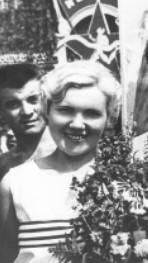
Sofia Kienya is one of the leaders of the Stakhanovite Metrostroy movement in the 30s of the last century. She became a living example of selfless work and proved that women can do anything by going down to work in the caisson.
Sophia, born in 1912 in a remote Belarusian village, came to Moscow to pick up her older brother. She learned Russian, studied at a technical school and joined the Komsomol. In 1933, she received a permit to work at Metrostroy and was assigned to the construction of a section between Komsomolskaya and Krasnye Vorota.
Construction was carried out by Mine No. 23 in conditions of strong quicksand; a caisson was used. Women were not allowed underground in such conditions; it was dangerous to their health. But the girl wanted to work equally with everyone else and got permission to go down into the caisson.
The newspaper “Udarnik Metrostroy” wrote about the first girl-caisson worker: “On June 29, 1933, Sonya pulled on a tough canvas overall and, clumsily moving her feet in high rubber boots, went to the slaughter for the first time; many things seemed unusual and even scary to her. There was pain under the eyebrows, and there was a heavy heaviness in my ears. But she withstood the caisson.”
In 1935, Sophia became the shift supervisor at Mine No. 82. Workers under her leadership joined the Stakhanov movement during the construction of the Belorusskaya - Dynamo section. Kieni's team set a record of five distillation rings of cast iron lining per shift. Sofia received the honorary title “Master Shift Leader”. In the same year, the girl was awarded the Order of the Red Banner of Labor.
During the war years, Sofia Kienya participated in the construction of important defense facilities and led the Paveletskaya construction site. At a time when men went to the front, it was mostly women who worked. The station was delivered on time.
The example of the girl’s labor exploits inspired not only her compatriots. Women from abroad wrote her words of admiration. She harmoniously combined strong character, perseverance, and exactingness in working with femininity, kindness and beauty, both external and internal.
After the war, Sophia Kieni's health deteriorated, but she continued to work in the Metrostroy Department for many years.
IN THE MINE
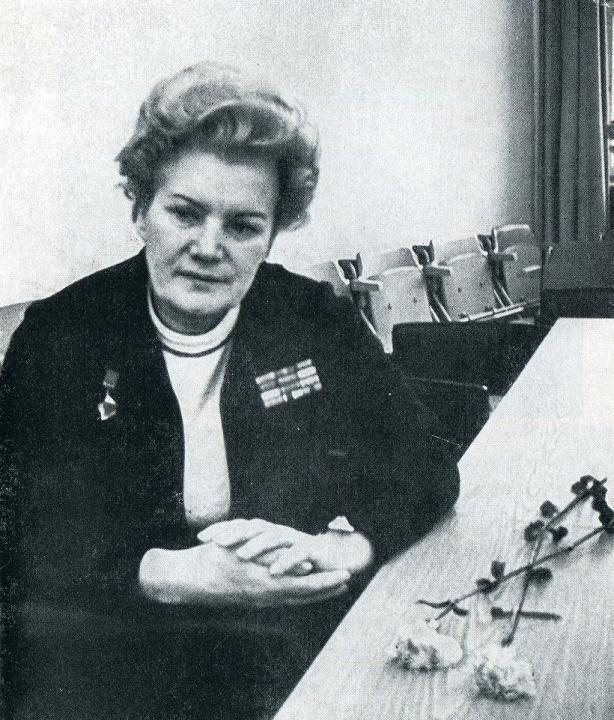
Everyone who personally knew Tatyana Fedorova talks about her as a stunning woman with a masculine character and unearthly beauty. It is not surprising, because this fragile Muscovite, who has come a long way in her career, became the first woman to head the construction of the metro.
Tatyana Viktorovna was born in 1915, graduated from a factory apprenticeship school, and worked at the Kauchuk plant. Like many at that time, she came to Metrostroy at the age of 19 at the call of the Komsomol. Her career began in the tunneling crew at the construction of Krasnoselskaya. Here, in 2006, a memorial plaque was installed in her memory, to which our veterans lay flowers every year.
Tatyana Viktorovna was a concrete foreman and site manager. During the war she graduated from the Moscow Institute of Transport Engineers. With her participation, “Kaluzhskaya” (now “Oktyabrskaya”), “Paveletskaya”, “Novoslobodskaya”, “Kievskaya”-ring were built. She was assigned the lagging areas. The ability to organize work helped Tatyana, as the workers called her, to deliver projects on time. In 1948, she headed SMU-3, and in 1961 she became deputy head of the Moscow Metro Construction.
From her youth she worked, not sparing herself and her health, she was a chaser, she went down into the caisson. Metrostroy became a family for her, which she did not have in her personal life. As a deputy chief, she took care of the professional growth of employees. She paid attention to the construction of housing for metro construction workers and provided them with sanatorium rest. During her reign, kindergartens were built and the “Young Metro Builder” children’s camp flourished.
Having no children of her own, Fedorova took care of strangers. She took custody of orphans from an orphanage, becoming their second mother. Tatyana Viktorovna adopted one of the pupils named Lydia Kim.
Tatyana Fedorova became the prototype of the heroine of the film “Volunteers” by Yuri Egorov. Her labor successes were noted at the state level. The Honored Builder of the RSFSR received the Hero of Socialist Labor in 1975. Until her last days, she was with Metrostroy, heading the Council of Veterans.
IN THE SKY
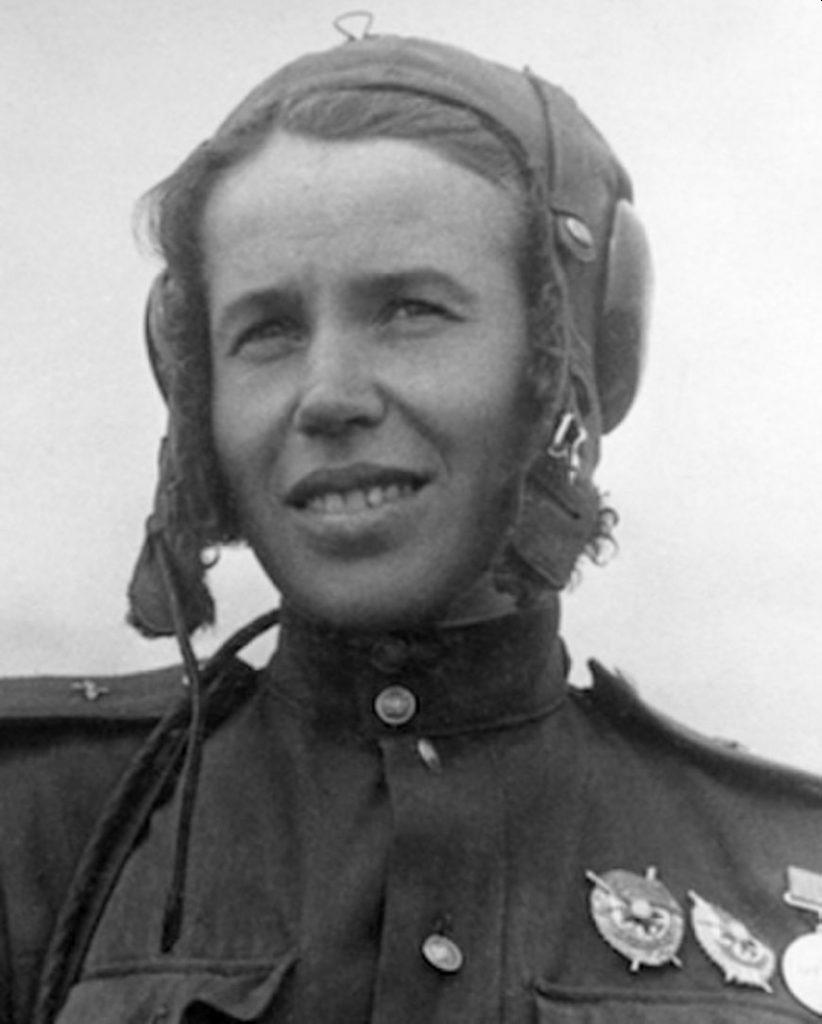
The famous attack pilot Anna Egorova-Timofeeva was able to conquer the sky that Metrostroy opened for her. She was born in 1916 in the Tver region. She came to the construction of the Krasnye Vorota station as a very young girl on a Komsomol ticket. She worked as a fitter, at the same time she graduated from the workers' school, a gliding school, and studied at the flying club in Malye Vyazemy.
In 1938, Anna was sent to the Osoaviakhim pilot school, but she was not accepted due to the arrest of her older brother, as a relative of an “enemy of the people.” She got a job at a flax mill in Smolensk, where she also studied at the flying club. She graduated from the pilot school in Kherson and worked as an instructor at the Kalinin flying club.
At the beginning of the war, Timofeeva-Egorova was assigned as a pilot to the 130th separate aviation communications squadron of the Southern Front. She carried orders and blood for the wounded to the front line, returned from there with letters from soldiers, and kept in touch with those who were surrounded. Made about a hundred missions on an unarmed U-2 aircraft. In 1942, she achieved a transfer to attack aviation and went from an ordinary pilot to a regiment navigator. She took part in the battles over the Taman Peninsula and Malaya Zemlya, in the liberation of Crimea, Ukraine and Poland.
Anna was the only female pilot in the regiment. Together with gunner Dusya Nazarkina, she formed the first female crew in attack aviation. Their plane was shot down by the enemy in 1944 during the fighting on the Magnushevsky bridgehead. Everyone knew that no one survived after this. Therefore, Timofeeva-Egorova was posthumously given the Hero of the Soviet Union, and her mother was sent a funeral. But Anna survived. With wounds and burns, she was captured, where she went through several camps, in which she managed to keep the awards she had previously received. Liberated in 1945 by our tank crews from the ZTs camp.
Anna Timofeeva-Egorova's service record includes 277 combat missions. After the war, my health did not allow me to take up flying work again. She returned to Metrostroy.
INTERESTING
The heroines left their memoirs, in which you can plunge into the atmosphere of metro construction in the first years.
- Sofia Kienya “Five distillation rings per shift”
- Tatyana Fedorova “Moscow at the top”
- Anna Timofeeva-Egorova “I am a birch tree, how can you hear me?”
HELP
A caisson is a structure for excavating soil with a large water influx. The caisson mining method uses compressed air to hold back water and dry the face. The method is used only in extreme cases due to its harm to human health.