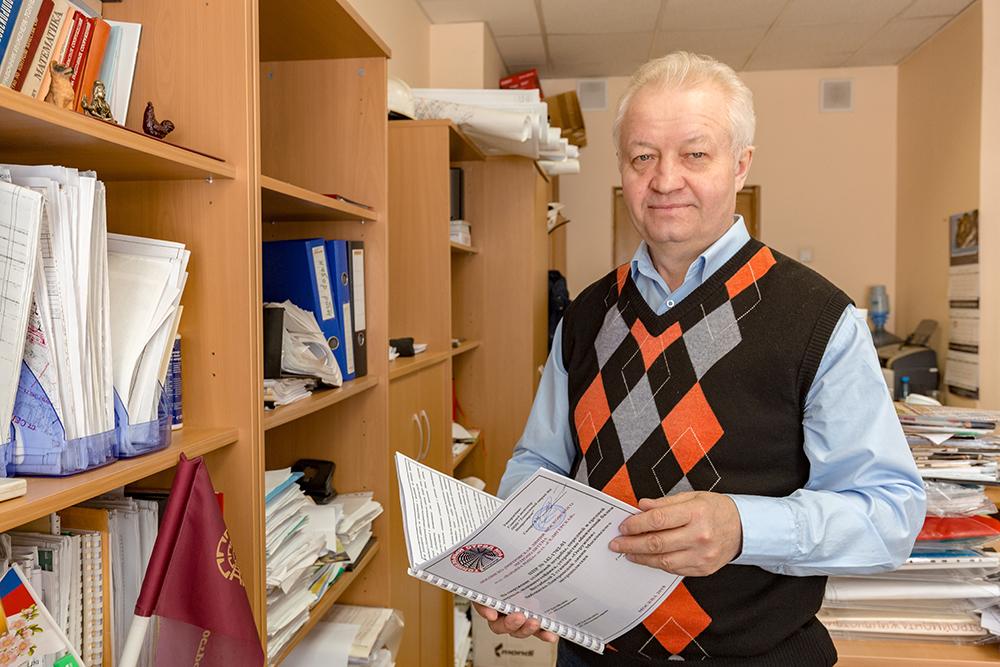
The difficult path to the north
The contract manager Alexander Zakharikov told the Metrostroevets correspondent about the difficulties that builders encountered during the construction of the Okruzhnaya, Verkhnie Likhobory and Seligerskaya stations.
– The second stage of extending the Lyublinsko-Dmitrovskaya line to the north was successfully completed. The first one finished a year and a half ago. What is the main difference between the new launch and the previous one?
– The hydrogeological conditions of the excavation have become even more difficult – primarily because of the Likhoborka River, under which our route passed. Almost all workings during the construction of the Okruzhnaya and Verkhniye Likhobor inclined shafts were flooded. The most serious test fell on the tunnelers when they pierced the bypass cable collector above the Okruzhnoy STP. More than 200 cubic meters of water were collected per hour. Something similar started when the cable collector was installed at an angle. I had to slow down the progress for a while. But the pumps did not turn off, delivering up to 600 cubic meters of water per hour. Special methods were used - cementation and chemical consolidation of soils; a special composition was pumped into the rock through holes to squeeze out water. Even the TO-6 tunnellers felt the increased water inflow when they were building a tunnel from Seligerskaya to Verkhniye Likhobory. They also required special measures to pump out 250-300 cubic meters of water per hour.
– At the second stage, mechanized tunnel boring complexes were used in large volumes?
– Yes. In addition to both running tunnels between Seligerskaya and Verkhniye Likhobory, TO-6 also built tunnels behind the terminal station, including exit chambers and dead ends. SMU-1 traveled an even longer underground route. They connected the Likhobory electric depot and the Lyublinsko-Dmitrovskaya line. The dismantling of the tunnel boring complexes was carried out by TO-6 specialists, who carried out a volumetric excavation for the right shield at a depth of 60 meters. Then the SMU-5 tunnelers solved a similar problem for the left complex. The same teams worked through the Okruzhnaya station tunnels and stretches using mountain methods.
– How can you characterize the projects of the launched stations from a passenger point of view?
– Passengers first of all pay attention to the passages and escalators. We built the longest pedestrian crossings for Seligerskaya. The Verkhnie Likhobory station is currently oriented only on one side of Dmitrovka, and there the path is simpler. “Okruzhnaya” was built on a narrow strip between the railway embankment and Gostinichny Proezd. There, the SMU-4 escalator operators installed steps for four belts and, during the installation and adjustment process, walked many thousands of steps up and down the service reinforced concrete flights. At Verkhniye Likhobory there is a three-belt escalator and a little shorter. “Seligerskaya” was built as a shallow station, but it is two-tiered, and the platform is located on the lower tier. That’s why there are escalators leading to it, with three belts at both ends.
– The platform parts of “Okruzhnaya” and “Verkhnih Likhobor” are of the same type - pylon-type, three-vaulted. But a feeling of otherness is still created. Due to what?
– Finishing materials – marble and granite. But in the side tunnels the pylons are lined with different marbles: at Okruzhnaya - golden yellow, at Verkhniye Likhobory - dark red. The same stone was used for the middle halls, but the lighting was arranged differently.
– “Seligerskaya” was both conceived and looks different.
– For the USR there was enough work in the pedestrian corridors alone. And a lot of attention was paid to the platform both at the end of the rounds and during the launch, when the original benches appeared. There are also interesting columns - stainless steel cladding combined with travertine.
– Judging by the reviews of passengers, they like Seligerskaya. They don't go into detail. When it comes to the two previous stations, the emphasis is on the lack of second exits.
– There will be second exits at the Okruzhnaya and Verkhniye Likhobory stations. The question is when? At Verkhniye Likhobory in a few months. It’s more difficult with Okruzhnaya. The second exit will lead to the other side of the Savyolovsky direction railway.