Olga Manizer: not a single metro can compare in beauty with the Moscow one!
On the occasion of the 90th anniversary of our company, we talked with Olga Manizer, the granddaughter of the great sculptor, who gave the capital’s subway unique works of art, next to which millions pass every day passengers.
Olga, why did you choose London as your permanent place of residence? Don't you miss Moscow and Russia?
I love Moscow very much, it is my hometown, I would never leave there. But circumstances turned out to be such that my husband’s contract in Moscow ended and he was invited to work in London. This decision was not easy for us - I moved in with my husband while I was nine months pregnant - at the very beginning of 2000, on the threshold of the new millennium.
All these years I have been constantly flying to Moscow, bringing my children there, participating in exhibitions and shows. I am very glad that my Moscow friends have not gotten lost in the twenty-one years that we have been living in London, we continue to communicate almost every day, and new friends are appearing, which is wonderful.
You have traveled a lot and been to different cities around the world, which metro is your favorite? What about the London Underground, do you have a favorite station?
Of course, no metro can compare in beauty to the Moscow one! This is a real museum, each station is the embodiment of the greatness of our country.
In London the underground is shallow and sometimes without escalators. There is no use of rare stones and metals, much less sculptures and mosaics, as in the Moscow metro. All the eyes focus on are the billboards on the platforms. I don't have a favorite station because, with the exception of Westminster, they are practically indistinguishable.
If we talk about the Moscow metro, which station is closest to you, what is the reason for this?
The answer is predictable - I have two favorite stations: my native Dynamo with medallion reliefs on the theme of sports in the underground hall and friezes on the facades of the above-ground pavilions - the work of Elena Yanson-Manizer, my grandmother, and, of course, Revolution Square with eighty bronze sculptures of Matvey Manizer, my grandfather.
I also love all the stations on the green line from “Dynamo” to “Teatralnaya” - each one has pleasant memories associated with my studies at the Surikov Institute.
Do you, as an artist, like the image of new modern stations? Is there a desire to change something?
I haven’t been to the completely new ones, but I have seen photographs of the CSKA, Petrovsky Park and Bitsevsky Park stations, designed by my institute friend Ekaterina Bubnova in collaboration with her husband Evgeny Shcheglov and parents Valeria Shaposhnikova and Vasily Bubnov. These artists are professionals in their field and have perfectly continued the traditions of the Moscow metro in a modern way.
Your famous grandfather, Matvey Genrikhovich, and grandmother, Elena Aleksandrovna, left a great legacy, including the appearance of the Moscow metro. Which of their works decorating the stations do you remember first?
“Shakhtar” on the “Revolution Square”, as well as the reliefs “Figure Skater” and “Gymnast” at the Dynamo station. “Shakhtar” is, in my opinion, the embodiment of male beauty, and besides, he is somewhat similar to my dad in his youth. Although, when this station opened in 1938, dad was only 11 years old and, of course, it couldn’t have been him. Dad assumed that the prototype for this figure could be Matvey Genrikhovich’s brother, Andrei.
Now the Internet, including Wikipedia, is full of fables about specific people who allegedly posed for this station for Matvey Manizer. There is no information in the archives of our family, so there is no question - grandfather did not leave any records about this. The son of the sculptor, my father, Hugo Manizer did not deny the possibility that Matvey Genrikhovich could invite someone to pose, having seen a certain type in life, but he always emphasized that these figures are conventional and that Matvey Manizer in the sculptures of the Revolution Square station created an image of the time, an image of the era.
Another myth is that all eighty figures of Revolution Square were evacuated from Moscow during the Great Patriotic War. Dad was sure that if this had actually happened, packing, loading, and shipping the sculptures would definitely have been discussed in the family, but such conversations never happened. Over time, “The Square Where Dreams Come True” (the name of a good film about this station) acquires more and more new legends.
Continuing to answer your question, I also remember the filigree reliefs at the Dobryninskaya station, the work of my grandmother. By the way, the figures at the Partizanskaya station by Matvey Manizer make me as proud of our country and its difficult history as his images on Revolution Square.
What influenced your choice of creative path? The atmosphere at home and the activities of loved ones, genes or something else?
Everything you listed. I have been drawing since early childhood. My parents, both talented people: artist-fashion designer Nina Pulyakhina-Manizer and painter and graphic artist Hugo Manizer, always admired any of my scribbles and did not criticize me, thereby inspiring me to continue.
Of course, their interesting and unusual life is constant participation in exhibitions, showings of their mother’s collections, filming films and programs about dad, then mom, then about grandparents, with visits from journalists and visits of large film crews to our house-workshop; as well as meetings with my parents’ friends, also artists, cheerful, extraordinary people; even the smell of oil paint, with which I associate the concept of Home - all this together played a role in choosing a profession.
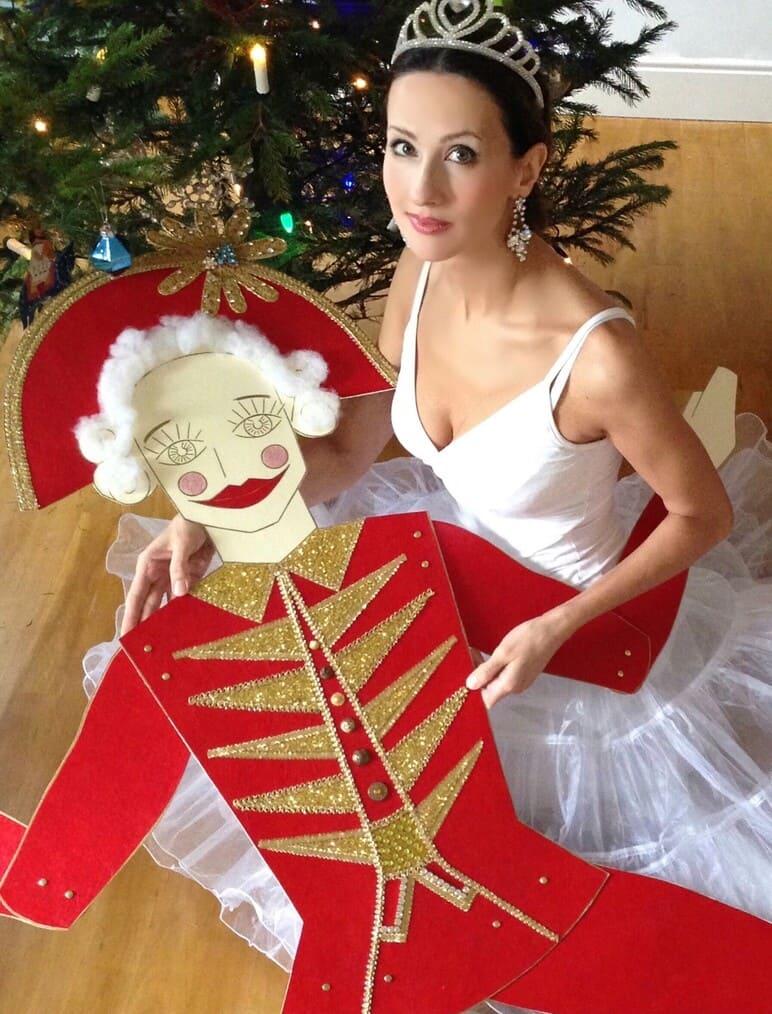
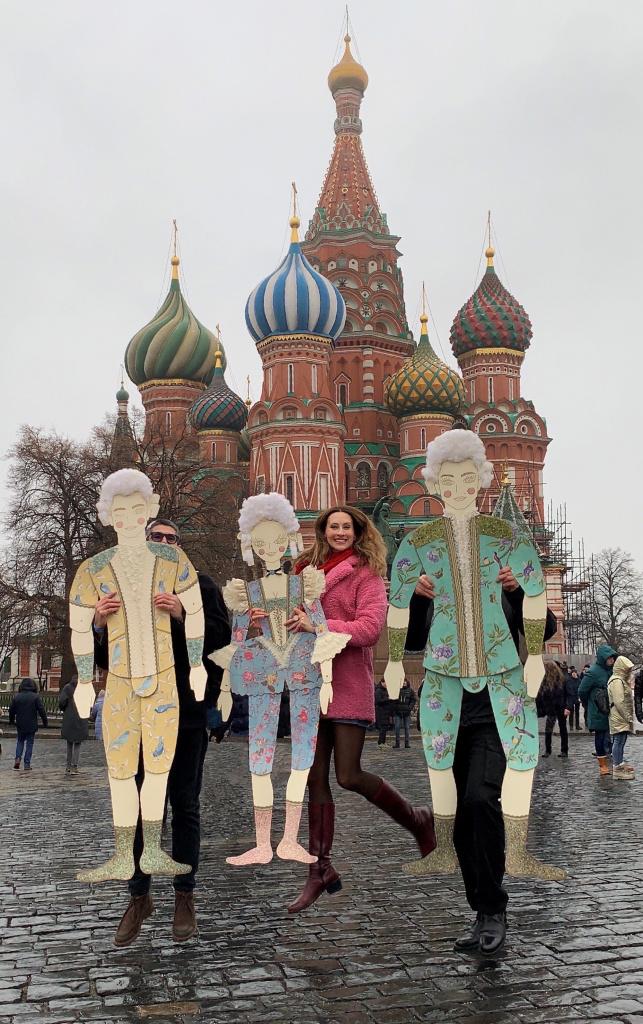
Regarding your question about genes, the figures I create were called “paper sculpture” by several London journalists in their articles. My mother jokes about their enormous size, which has begun to exceed human height: “The genes of my grandfather-monumentalist give me no rest.” I am interested in form construction and costume - this is from my mother, whom I still turn to for advice through the WhatsApp camera. Mom believes that my dad passed on to me the “steady hand of a graphic designer,” but where am I compared to him!
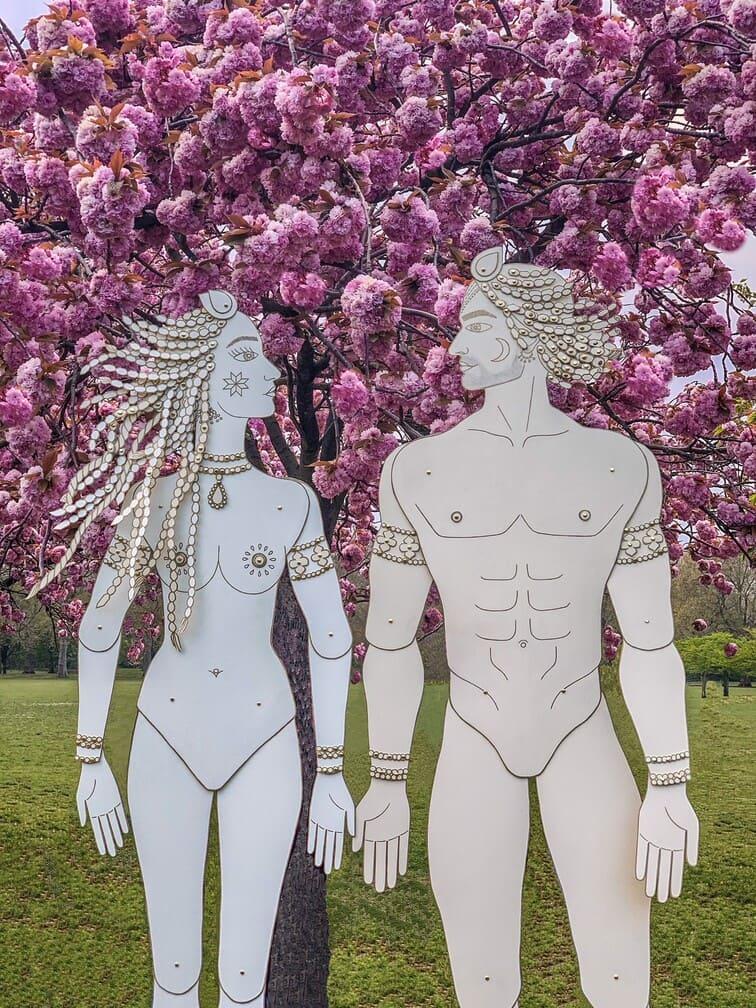
Your works are very attractive, light at first glance, they have a deep subtext that reveals itself as you study them. What inspired you to create such magical puppetry?
Thank you very much for your words! I would like to ask, what kind of subtext do you see in them? (laughs).
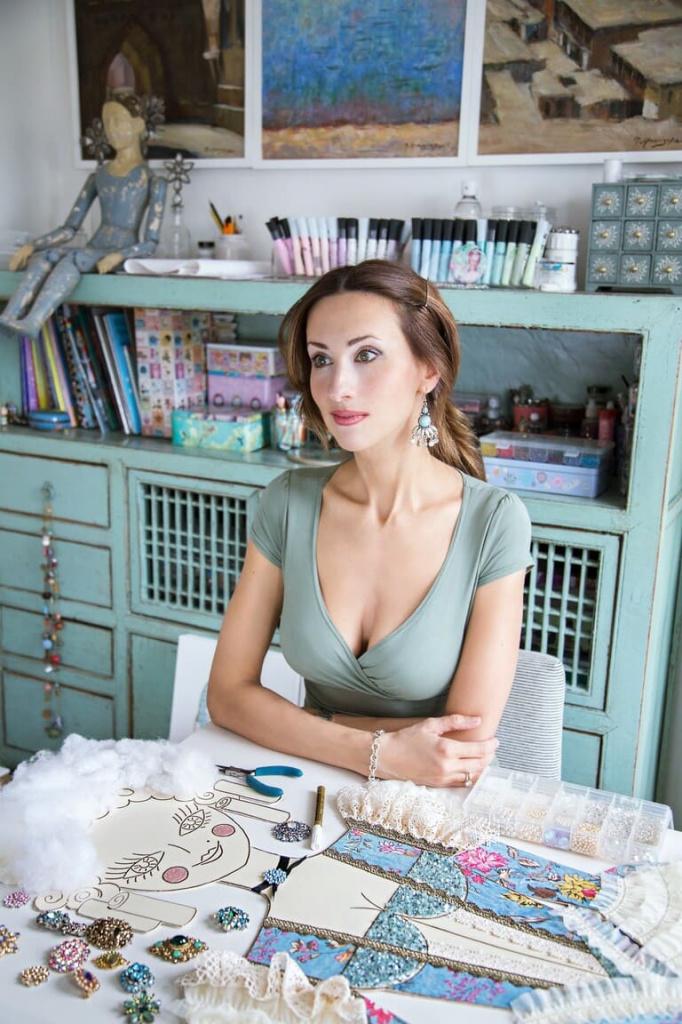
I'm interested in a person, an image of a face. The name “dolls” has stuck to my works - although, technically, it is so - these are dolls called Twitchers in Russia, Hampelmans in Germany, Jumping Jacks in England - I still see them as people, with characters, moods, in costumes of certain eras.
According to art critic of the Tretyakov Gallery Anna Kilimnik, I developed my own style very early, at the age of sixteen. I partially adhere to this conventional style to this day, although, of course, those first works - large-format pencil drawings depicting characters from the Commedia dell'Arte - seem very naive now.
In 2008, on the first day of my Master's degree at the University of the Arts London, I wanted to go beyond the flat surface of the canvas - this is how the first small doll appeared. And in 2014, I began to create human-sized moving figures.
I’m glad that I came up with something of my own, that no one else makes such cardboard people - at least I haven’t come across anything similar. I see from the reaction of people, even taxi drivers, who, when asked the standard question: “What do you do?” unexpected answer: “I’m creating life-size puppets,” they forget about the road, turn around and peer intently into the face, did they hear correctly, and is everything okay with me?
As one designer from Dubai joked: “As long as your dolls are not inflatable – you are fine” - “As long as your dolls are not inflatable, you are fine!” (laughs).
Further, no matter what country the Uber driver is from (London is a very international city), there is always a request to show the dolls on the phone and the conclusion: “You are doing something unique! I’ve never seen anything like this!” At such moments I understand that I am on the right path.
Is the sculpture of a ballerina, which was captured by the paparazzi behind the fence of the Manizer house at Dynamo, still there?
Yes, this is one of the most famous works of Elena Alexandrovna Yanson-Manizer - ballerina Galina Ulanova in the role of “Odette” from the ballet “Swan Lake”. It is still the visual center of our garden. A cast of it is installed in front of the entrance to the Royal Dance Museum in Stockholm.
There are publications that say that your father bequeathed his works to the state. Is this true? And do you have anything left to remember him from?
The Pope donated 100 of his paintings to the state in 1974. They were sent with a traveling exhibition to the cities of the USSR. His paintings were often donated by the USSR government to the heads of other states. Mikhail Gorbachev was given a choice of fifty works by different artists of that time for his office, and he chose his father’s landscape “Ice drift on the Moscow River.”
Tell us a little about your family. Do you have brothers and sisters? Who else followed in the “artistic” footsteps?
My husband Michael was born in Germany and grew up in Switzerland, where his family moved due to his father’s work as a nuclear physicist. In his free time, Michael is engaged in aerobatics, masterfully drawing the Nesterov loop and other aerobatic figures in the sky. We have two children: son Alexander (21 years old) graduated from the Imperial University of London, Faculty of Biochemistry; daughter Polina (11 years old) recently entered one of the best ballet academies in London.
On the Manizer side, I have a cousin Peter Manizer, a sculptor, and a fourth cousin, Nadezhda Korshakova, a violinist, soloist of the Zurich Opera orchestra.
My mother, fashion designer Nina Pulyakhina-Manizer, recently wrote an excellent book about the Manizer dynasty, collecting information about all four generations of artists in our family. The book was published by the International Union of German Culture with the support of the German Embassy. In October there will be a presentation of the publication at the Tretyakov Gallery, and now it can be found in Moscow libraries.
Where can I see your work? Are there permanent exhibitions?
My works are collected under the hashtag#olgamanizer on my Instagram@oliamanizer. Also on the site:www.oliamanizer.blogspot.com. There will definitely be a permanent exhibition; I dream of opening a small museum of my life-size puppets and other works as soon as we are able to move back to Moscow.
What creative plans do you have for the future?
I'm currently working on a big project dedicated to the circus of the early 20th century. It will feature performers in period costumes, as well as a life-size circus tent.
The organizers of the large-scale exhibition “Doll Art” at Gostiny Dvor in Moscow loved my work and have been providing me with the best stands for several years now. They even chose my “Nutcracker” from hundreds of works by other authors for the cover of the catalog of the latest exhibition. This is a big responsibility - I am already preparing for the exhibition, which will be in December. I will be very glad to see you and your readers there!