Overcome difficulties: how the army teaches this
Defender of the Fatherland Day in our country has become simply a “men's holiday”, and the memory of its origins is being erased. What do people think about this who, out of duty and at the behest of their hearts, have defended the Fatherland all their lives, says Mosmetrostroy corporate security consultant Valery Nikolaev, who worked for 40 years in the internal affairs bodies.
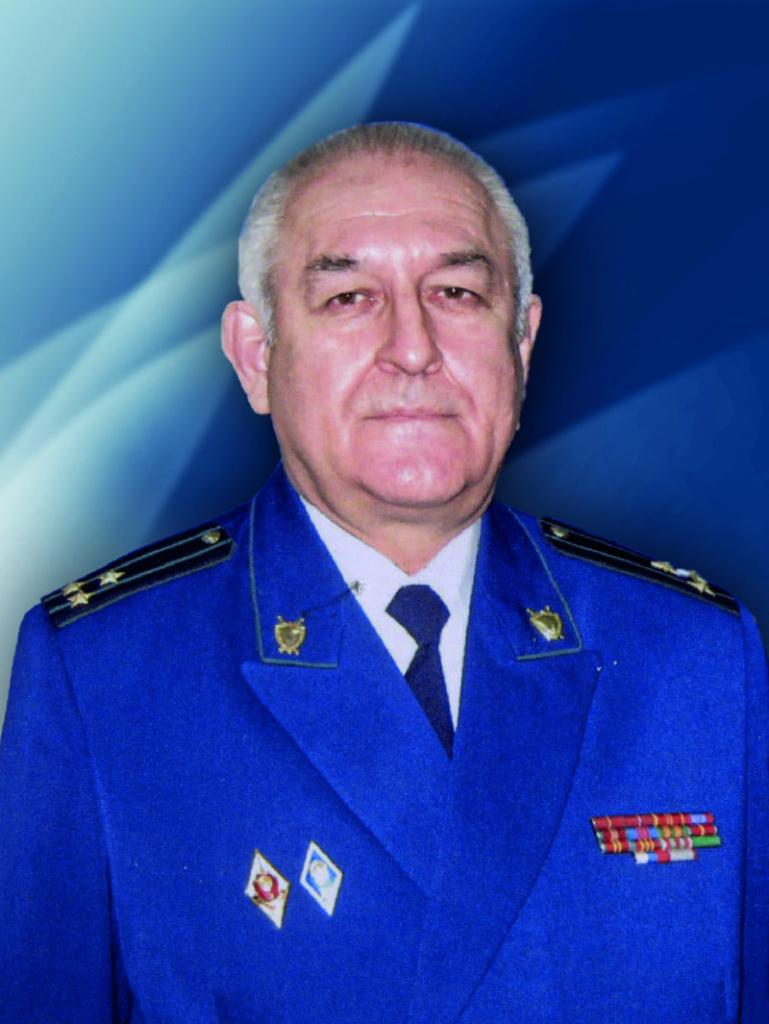
Valery Alexandrovich, what does Defender of the Fatherland Day mean to you?
This holiday is very symbolic; it is associated with the creation of the Red Army. A series of wars and revolutions had just ended in the country, and it was unclear what was going on in the minds of people, including the army community. Someone else remembered the tsarist times with their ideology, but the new government had different ideas and slogans. Much had to be changed both in the minds of employees and in the army structure.
The revolutionaries understood very well that in tsarist times the majority of the population were peasants, and the period of military service reached 25 years. That's why promises to give land and shorten service worked so well, and the lower and middle-level military took the side of the revolutionaries. Thanks to the army, they retained power.
The army itself subsequently went through serious transformations; it changed and improved. Deprived of noble privileges, employees achieved titles and awards through their labor, and as a result, the relationship between officers and soldiers changed. It was these relationships, in which the fortitude of employees was cultivated, that became decisive in the Great Patriotic War, when the enemy army was technically superior to ours. Therefore, for me, the holiday of February 23 is associated not only with the army, but also with ideas about people with military training and deep respect for them.
In your opinion, are men who served in the army different from those who did not serve?
Of course. Previously, guys wanted to join the army, because there they received very important knowledge and skills. In addition, the army provided an opportunity to understand what was happening in the country and the world. The village children especially dreamed of serving. Even the village girls looked at those who were not accepted with suspicion: unfit means weak and sick, children will go the same way.
Three years later, completely different young people returned from the army to their native village: literate, prepared for life, able to work on modern machines. Of course, there were also delays, and those who studied at universities with military departments did not join the army. But most of the guys tried to get there.
Today the situation has changed. Young people are not eager to join the army, but reports about what is happening there sometimes make them feel cold inside...
There is such a thing. I think it started in 1985, when the role of Komsomol organizations and political departments began to decline, and commanders received more powers. The soldiers moved from general education training to outright drill. Relations between employees began to suffer and discipline deteriorated. The 1990s and early 2000s saw the peak of hazing and reports, not always truthful, of atrocities in the army.
Does military service provide advantages to those who get a job at Mosmetrostroy?
The very fact that a person went through the army is not a privilege in this case. But those who served are different from those who were not in the army. Before talking to an applicant, I study his documents: I read his resume, look at his diploma and note for myself whether the person served in the army, by whom, in what rank.
Often guys who have been through the army turn out to be more disciplined and better able to set goals. They say at the interview that they want to gain certain knowledge, realize themselves in a profession, and build a career. And those who come after college usually don’t have a clear idea of their path. When asked what they want, they answer: “I don’t know yet. Let's see". Without a clear goal, a person can be interested in everything, and this takes a lot of energy and distracts from serious work.
To work well, it’s not enough to love your job, you need a regime, discipline. And here the winners are those who have learned to organize themselves, set goals and go towards them. It turns out, albeit indirectly, military service provides advantages when applying for employment in our organization. Our work is not easy; it requires precision and high responsibility. And, of course, special skills.
Over the years of work at Mosmetrostroy, you have probably developed criteria for selecting employees. What do you pay attention to, besides military service?
People from outside very rarely come to us. Usually, applicants have an idea of what organization they are going to, understand that it has a serious past, its own traditions, and authority. And they get ready to work in an established team. For those who come for an interview with me based on an advertisement on the Internet, I briefly tell the story of Mosmetrostroy, noting that here it is customary to consult with the team, take into account their experience when introducing something new.
In people, first of all, I love combativeness, the ability to clearly and quickly answer questions. If the applicant hesitates, I try to understand the reason: is he thinking about his words, does not know the question, or maybe he is going to lie.
I also pay attention to appearance, but I don’t immediately draw conclusions about clothes. Scientists often walk around in worn out shoes. And our team educates. It used to be that a young man would come to the organization, first dress as he was used to, and then gradually adopt the Metrostroy dress code.
Has it ever happened that you recommended not hiring an applicant?
My task is to find out whether a person is suitable for us, to understand whether he can work in the organization. If I think not, then I write about it directly in the report. But the final decision is made by the leader. No matter what he does, in most cases I do not change my point of view. I served in the internal affairs bodies, and this is a school where opinions and positions are valued.
What other principles do you adhere to in your work and communication with people? What qualities do you especially value?
One of my main qualities I acquired in the army is the ability to make decisions not spontaneously, under the influence of emotions, but based on the results of a thorough analysis of the situation. I recently had an interview with a young man who was applying for a management position. He wrote in his resume that his weaknesses include fussiness. During the meeting, I asked to see one document, even though it was not necessary. And so the young man began to look for the document... In general, fussiness, of course, is not the best quality, but he assessed himself correctly, and this is a plus.
The second important quality for me is knowledge of my profession and job responsibilities. I am convinced that only those who strive to study their subject as deeply as possible grow professionally and achieve success. If you constantly change jobs, you will not be able to immerse yourself in the work enough and achieve a good result. The issue here is not so much a matter of basic education, but rather a desire to constantly learn new things. Such people have a different level of responsibility; they are decent and reliable.
Another quality that I value is the ability to work in a team. There must be mutual understanding between people in the team, otherwise fruitful work cannot be built. Conflicts only get in the way. Previously, organizations generally believed that after the Great Patriotic War, fighting among themselves was too much.
I also consider self-criticism to be one of my strong qualities. I always think carefully about my opinion, asking myself if I’m doing the right thing. If I understand that I was wrong somewhere, I will definitely figure out why this happened, and, when necessary, openly apologize.
What would you advise readers?
First, show persistence and endurance. We are going through a difficult period, and these qualities are very needed now. I had a moment last spring when I started thinking about the coronavirus, how quickly it could spread, how much damage it could cause, and I panicked. And then he analyzed the situation and pulled himself together. Our country survived the Great Patriotic War, the 90s. It was very difficult, but we overcame everything. We can handle it now. Secondly, be more careful with information, check it, compare what comes from different sources, and draw conclusions. And thirdly, of course, take care of yourself and your loved ones.
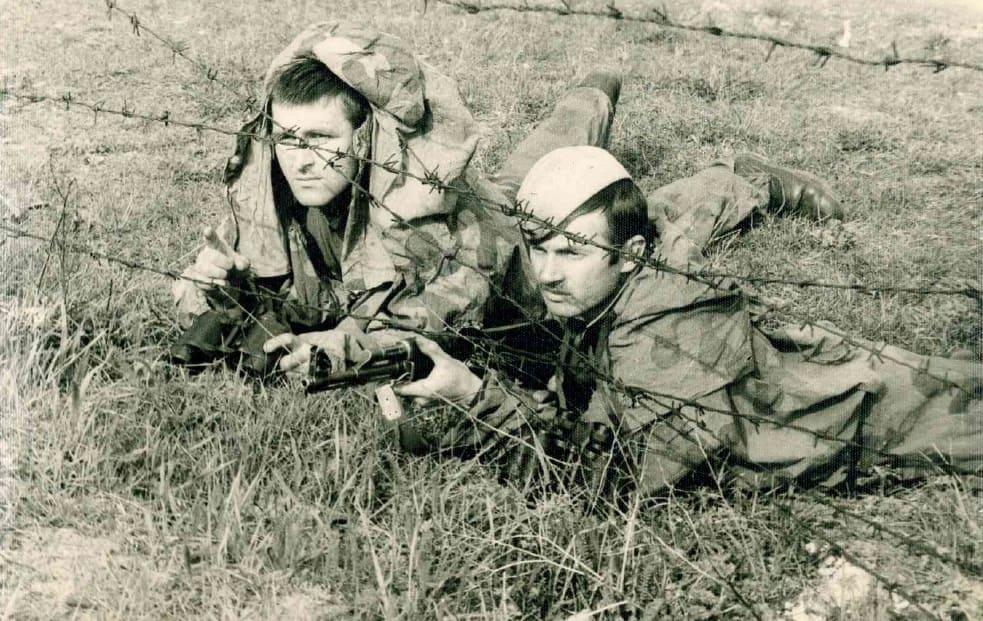
Valery Nikolaev (left) with a colleague on the border with West Berlin
HELP
Nikolaev Valery Alexandrovich was born in 1949 in Nizhny Tagil. From March 1968 to August 1970 he served in a group of Soviet troops in Germany. He went through a special school, was the commander of a deep reconnaissance group, and received the rank of sergeant major. In 1975 he graduated from the Saratov Law Institute. From 1983 to 1993 he worked in the internal affairs bodies, began as an investigator in the Suzdal District Department of Internal Affairs, and rose to the rank of deputy head of the Internal Affairs Directorate of the Vladimir Region. In 1996, he became head of the Department for Ensuring Public Order of the Russian Ministry of Internal Affairs. Since 2014 he has been working in Mosmetrostroy. Awarded medals of the Order “For Merit to the Fatherland”, I and II degrees, “For Military Valor”, “For Excellence in the Protection of Public Order” and departmental awards.