The smell of the new station is unique
General Director of Tunnel-2001 LLC Ilya Gevorgizov has headed the company since 2011. Under his leadership, the company is developing new areas of work. In an interview with our newspaper, he told what event would be the most important milestone of his 60th birthday.
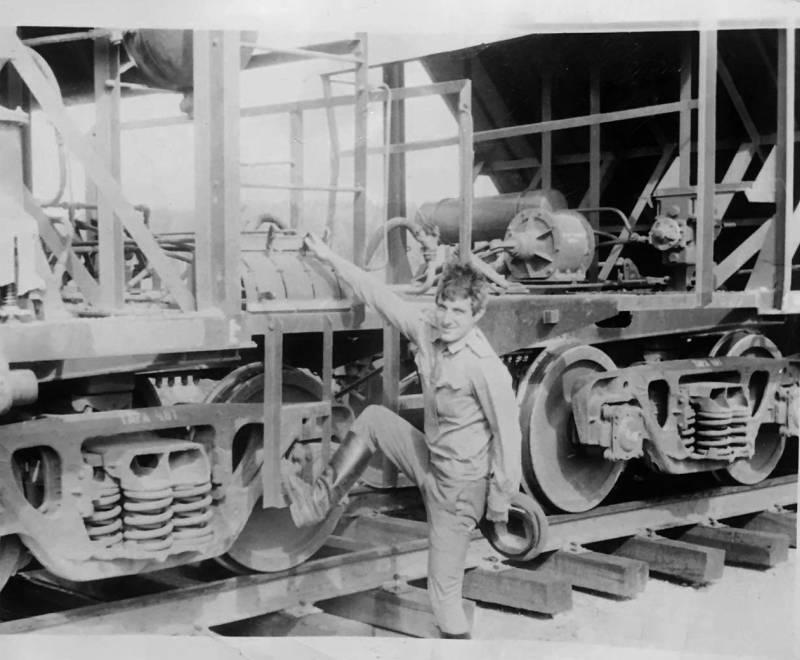
1984. Gevorgizov at the construction of BAM
Ilya Viktorovich, you were born and raised in Central Asia. How did you end up in Moscow at the age of 17?
– I was born in a city that worked for the defense of our country. The best specialists were gathered here, and my parents came here. My sister and I were advanced children, we studied English from the first grade. There were three-hour direct flights to Moscow. My sister left to study, and I followed her.
Why did you decide to enter MIIT?
– For practical reasons. Upon enrollment, you were given 100% hostel accommodation. Entered the Faculty of Bridges and Tunnels. I got housing on Obraztsova Street. Lived there for five years. Here I met my future friends in metro construction. Over time, I fell in love with the profession that became my life.
After college, you worked in Mostootryad No. 67. You were 23 years old, and you were already supervising the construction of a major bridge. What was this project? How did your colleagues and subordinates feel about such a young boss?
– Nowadays young people learn geography from tourist routes. I trampled all of Central Asia with my heels. He built bridges from Krasnovodsk on the Caspian Sea to Osh in Kyrgyzstan. The first distribution was received by Mostotrest No. 7 in the city of Tashkent. He started as a master.
All the objects on which I had to work were very interesting. He worked on bridges across the Syr Darya in Chinaz and Khojent, across the Amur Darya in Termez.
But the most significant thing was the work in the mountains. I am 23 years old, the nearest settlement is about 50 km, the deadline is four months, the task is to build a five-span bridge. Complex heavy structures, drinking water in barrels - everything was delivered through the Shakhristan pass of the Tien Shan. But this work educated me, opened me up. After her, any adversity seemed like nothing.
Two teams of workers were with me, I selected the people myself. Even then I understood that it was all about people, the ability to talk to them. They believed me, a 23-year-old boy, and followed me.
You served for two years in the construction of the eastern section of the BAM. What specific part of this giant railway were you building? What was your position and what were your responsibilities?
– I was sent to the eastern section of the BAM at the age of 25 as a senior lieutenant. Career officers fled from this hard work. We remained - the “two-year students”, who served for two years. This is exactly the time frame they gave me for the construction of the Dugda station. The frost is minus forty, and we are sewing in turnouts. But I managed.
Why did you then go to Central Asia and work there for 6 whole years? Did you feel drawn closer to your homeland?
– Tired of the frosts. At that time, good connections had already appeared in the bridge crews, and I was offered to head a comprehensive department at the design institute. The work turned out to be unusual and interesting. The department included surveyors and geologists. We did research, designed serpentines, bridges, tunnels. When the war began, the institute was closed.
You've lived in different cities across the country, which one do you consider your favorite and why?
– Of course, Moscow. I can't live without her. When I'm on vacation two weeks in, I start to get bored.
What objects were built during the period of work at Mosmetrostroy?
– Came to Mosmetrostroy in 1991. At that time, the company was going through difficult times. The leadership changed, the SMU directors tried to keep the teams from falling apart, and we built.
With my personal participation, many serious objects were created, including 32 km of tunnels, the unique Serebryanoborsky tunnels, the Troparevo station, which I commissioned personally.
Tunnel-2001 was originally created for the construction of transport tunnels. What other objects did you have to deal with?
– Tunnel-2001 was created from the best personnel of Mosmetrostroy. The team includes different people, but all are professionals. Over time, he rallied. In 2011, the existence of the company came into question. Some employees were not provided with work. Then I took advantage of the chance to save the organization and took on the construction of a dam on the shores of the Baltic Sea in St. Petersburg. Now, in addition to everything else, we are doing landscaping.
Did you have to study additionally?
– Additionally, he graduated from the Faculty of Economics at the Moscow Mining Institute. He defended his diploma in 2008.
You have gone from a simple master to a general director. What advice would you give to aspiring metro builders?
– Believe people. Believe in the working man and build on him. Another piece of advice that I follow was given by the leader of my group during my student years. The most important thing is to clearly fulfill your duties and go towards your goal, then you will achieve success in any profession. It is impossible to solve the problem by doing nothing, sitting on a chair, grumbling at the government and the janitors.
Don't you miss working on site? How often do you, as a general director, personally inspect the progress of construction?
– Sometimes I get tired of offices. I conduct inspections frequently, although the director is not supposed to do this. Otherwise, it will become a setback, preventing deputies from solving their production problems.
You celebrated your 55th anniversary as General Director of Tunnel-2001. On that day, October 1, 2014, the organization completed the excavation of the distillation tunnel between Salaryevo and Rumyantsevo. Are you looking forward to major production achievements on the back of your 60th anniversary?
– Lefortovo station must be handed over. Tunnel 2001 has been there from the very beginning. We went there to zero, took out the network, started construction, and broke through six tunnels. Now we're finishing it, I can't sleep at night. But this is my job, which is impossible not to love. When you walk at night before the launch, the smell of the new station is unique.