Tubing music
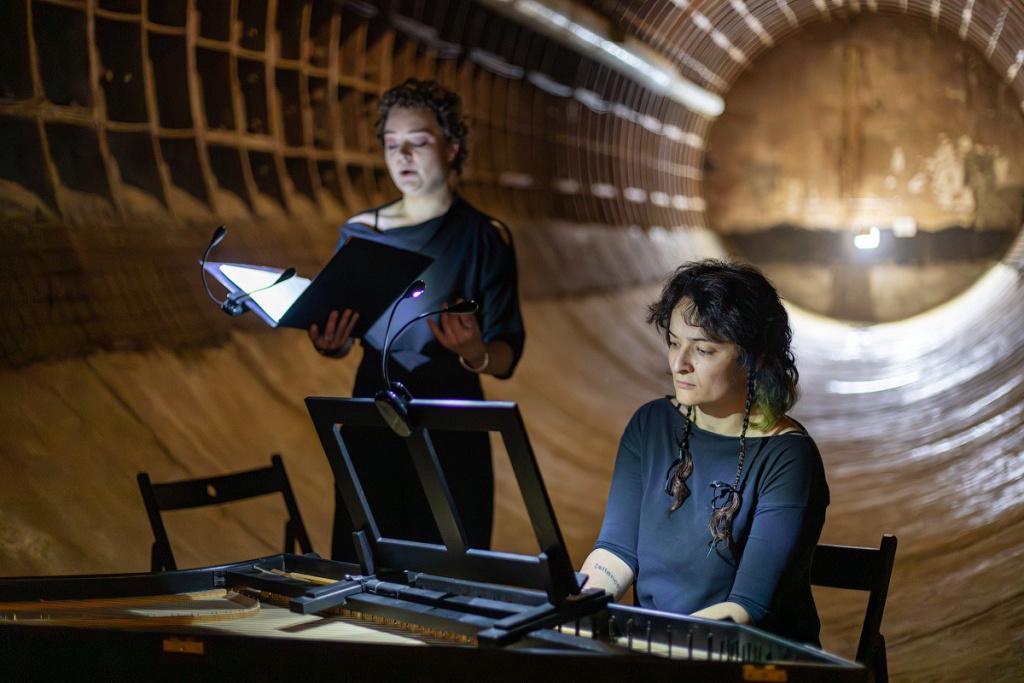
The Bunker 703 Museum celebrated Metro Day with a harpsichord concert at a depth of 43 meters and the addition of rare exhibits to the exhibition display.
Mosmetrostroy donated to the Museum of Modern Certification two Soviet cast-iron tubes dismantled on the emergency section “Kantemirovskaya” - “Tsaritsyno” of the Zamoskvoretskaya metro line. One of them - weighing almost 650 kg - became the largest exhibit of the museum.
“The Bunker 703 Museum is a former mine shaft that was used to construct a service branch for the Circle Line. Metro construction workers converted it into a special storage facility for the USSR Ministry of Foreign Affairs and commissioned it in 1961. Since 2018, a museum of modern fortification has been operating here, and part of the exhibitions is dedicated to the history of the labor feat of those who laid the first tunnels. We donate to the museum tools from different historical eras of subway construction. You can touch everything with your hands, and try on a helmet, for example, or a self-rescuer,” said Sergei Zhukov, General Director of Mosmetrostroy JSC.
Director of the Bunker 703 museum Dmitry Yurkov thanked Mosmetrostroy for the updated exhibition and noted that today this is the only place in the capital where every visitor can look into a deep mine and walk through cast-iron tunnels, authentic to those where trains run.
The tubing broadcast was accompanied by live music. Project 1685 musicians Katarina Melik-Hovsepyan (harpsichord) and Anastasia Bondareva (voice) performed ancient English music, since the term “metro” itself originated in England. The underground concert in the extraordinary acoustics of tubing became the first of its kind in the history of Russia and metro construction.
A presentation of the project for a monument to the pioneer metro builders took place in the bunker. The concept of the monument has been approved, the layout is ready. The sculpture is planned to be installed on Sokolnicheskaya Square, where the metro began.
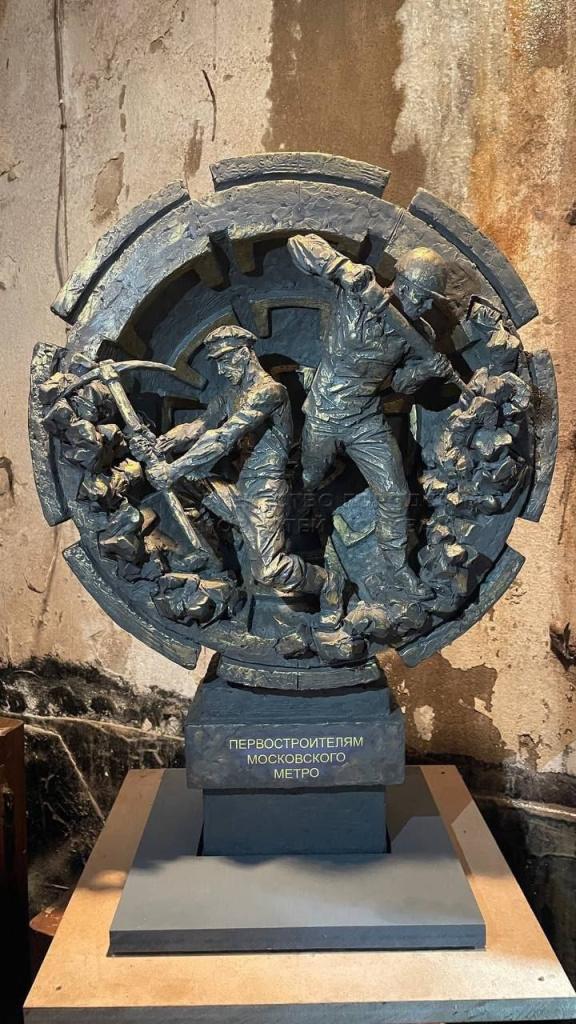
Author of the project, sculptor Vildar Yusupov:
The main idea of the sculpture is to glorify the heroic work of the pioneer metro builders. Previously, and even now, tunnels were built manually. Therefore, in the foreground, two workers are carved at the face: a pioneer builder working with a pick, and a modern metro builder with a jackhammer.
On the back of the monument is the first metro map of the 1930s, as well as reliefs of the most beautiful stations - underground palaces. The height of the sculpture with a pedestal is 7.6 meters, the material is bronze and granite.