"Fili" transformed for the anniversary
One of the oldest stations of the Moscow metro celebrated its sixtieth anniversary on November 7. We tell you how Fili was built and what changed after the reconstruction of the Filyovskaya line.
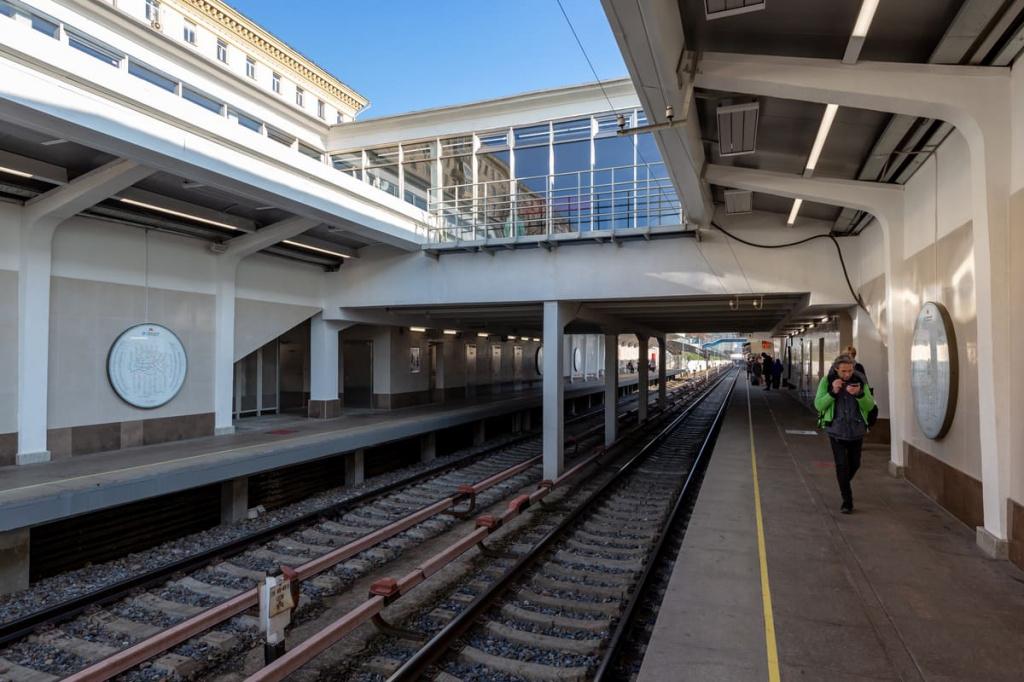
Fili station after reconstruction.
The Fili station opened in 1959 as part of the Kievskaya – Kutuzovskaya section. It got its name from its location. In the middle of the last century, the Filevsky Park area was actively developing, new residential areas were built. Numerous workers and employees receiving apartments in new buildings needed fast transport links to the center of the capital.
Thanks to the Stakhanov movement among metro builders and local residents who were involved in construction, Fili was built at a record pace. The speed of construction was facilitated by the use of simpler materials and the unified design of the Filevskaya line.
The station, made of reinforced concrete structures, was designed to be ground-based, with straight coastal platforms. The architects of “Fili” are Yuri Zenkevich and Rimidalv Pogrebnoy.
A special feature of the station is its location - at the junction of the tunnel and open tracks. From the center, trains arrive from the tunnel and leave along open tracks. Over its northern part there is an overpass of Bagrationovsky Proezd, over the southern part there is a railway bridge connecting the Western River Port and the plant named after. Khrunicheva.
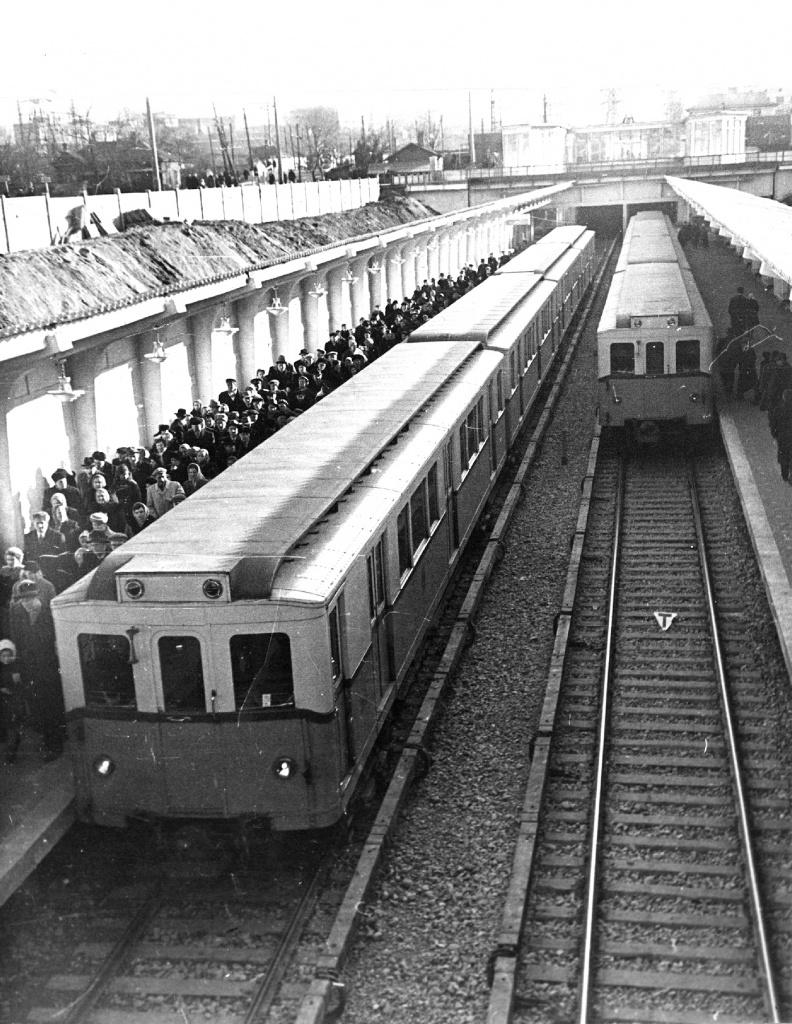
"Fili" on opening day.
The most difficult stage of construction was digging a tunnel under the railway tracks. But the team of SMU-8 Metrostroy under the leadership of Pavel Burtsev coped with this task without stopping train traffic.
Over half a century of operation, some infrastructure elements and cladding have become unusable, and engineering structures have become severely worn out. In 2016, they decided to carry out a major renovation. The station no longer met modern safety requirements.
Metro builders put Fili in order without stopping the work of the metro. The reconstruction lasted about two years during technological “windows”. During this time, the platform was completely updated, which acquired an attractive appearance. Instead of utilitarian materials from the Soviet period, granite and stained glass windows appeared in the decoration.
The precast concrete wall panels were removed and roofing sandwich panels were installed. Heating with infrared emitters was built into the floor. The facades were finished with decorative plaster, metal cassettes and natural stone.
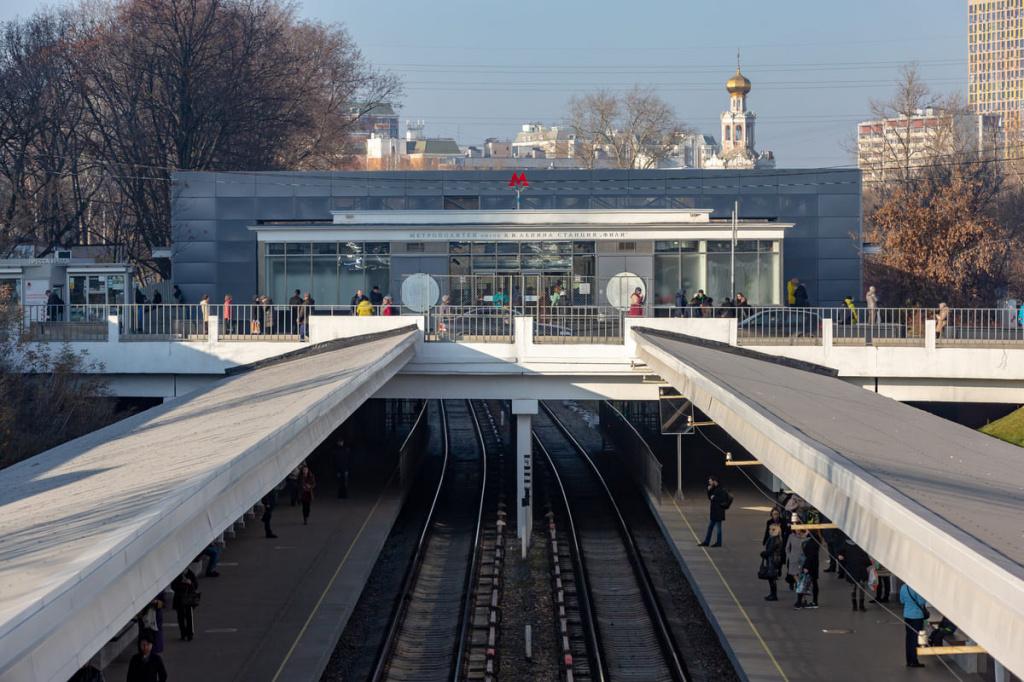
View of the renovated western lobby
The station lobbies have been renovated. Moreover, the eastern one was expanded by 15% during the reconstruction process. Now its area is more than 800 sq.m. Both entrances were equipped with heating and ventilation systems. The throughput has also increased - instead of six, twelve turnstiles were installed in each lobby.
The Fili staircases were decorated with decorative paintings in the form of city silhouettes. The side walls became transparent, giving passengers a view of the surrounding area.
HELP
The station received its name in honor of the village of Fili (formerly Khvili), located on the Filka River not far from the capital. The settlement was first mentioned in chronicles in 1454. Dictionaries interpret the word “khvili” as bad weather, blizzard, sleet, blizzard.