Galina Gubankova: the place of attraction for my grandfather was the shore of the Oka River
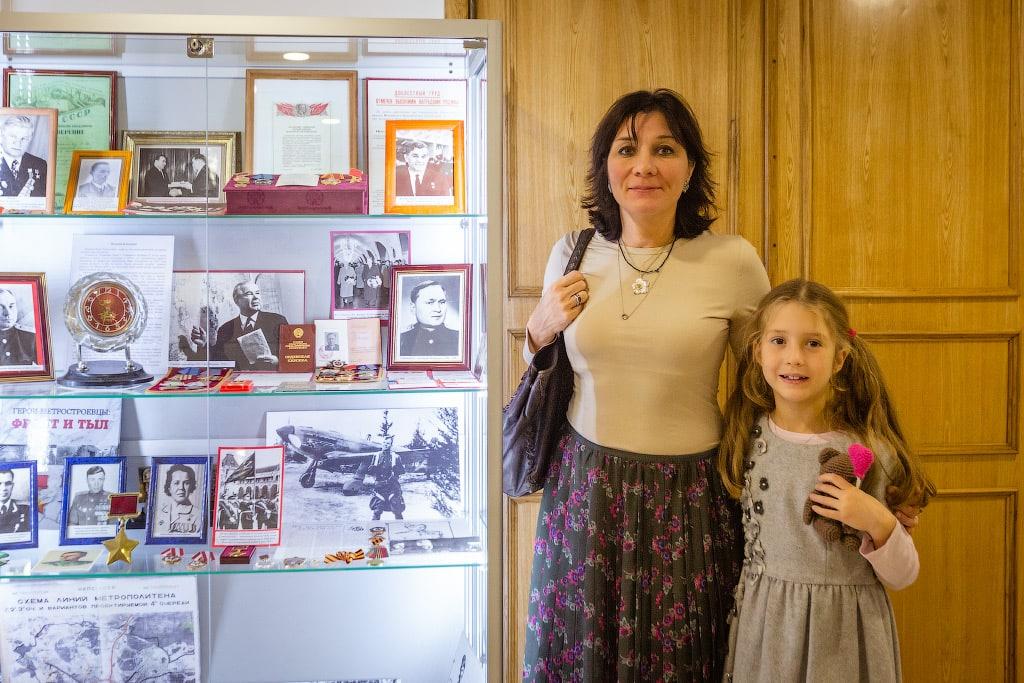
Galina Gubankova graduated from the Faculty of Journalism of Moscow State University. M. V. Lomonosova, studied in graduate school. She is fluent in English and has also studied French and Italian. She worked for many years in journalism, communications and PR, and was involved in projects in the field of gastronomy, music, culture and art. Galina has been working at the International School of Etiquette (ISE) almost since its founding, since 2011. At first I was involved in the development and promotion of the school. Then she trained as an etiquette trainer and received a certificate as an etiquette & social skills trainer. Now she is a practicing ISE trainer, teaching various courses on etiquette.
Galina Vladimirovna, the granddaughter of the fifth head of Metrostroy, Nikolai Alekseevich Gubankov, in a conversation with a Metrostroyets correspondent, shared her childhood memories of her grandfather and the memories of her father, Vladimir Nikolaevich Gubankov.
–Galina Vladimirovna, your grandfather, Nikolai Gubankov, left a noticeable mark on the history of Soviet metro construction. How do you remember him?
– At the time when we communicated, I was a child, so I can’t imagine him as a big boss, except perhaps from the stories of my parents. In my memories, my grandfather is a dear, loving person. He loved the nature of the middle zone, Crimea, the Caucasus, the sea. But the main place of attraction for him was the shore of the Oka: his grandfather was an avid fisherman, he was well versed in the types of fish, knew their habits, what and at what time they bite best. I spent almost all my vacations on the Oka River with a fishing rod in my hands. I caught it from the shore, from a boat. And I taught my dad. At first they took a tent with them and lived in it. Then they started renting a house.
My parents are scientists. Mom graduated from the Faculty of Biology of Moscow State University and was a botanist and allergist. Dad graduated from the physics department of Moscow State University and became a famous physicist, professor, lectured at universities in Russia and various countries, and authored books on physics. According to their stories, I was two and a half years old when my mother went on a business trip to BAM, and left me with my dad. And he and I went to the village to visit my grandfather for a week.
I remember well how I played hide and seek with him, how he took me to the pond or the Oka River to fish, and I “helped” him: I knocked on the water with my fishing rod, scaring away the roaches and perches. Grandfather was not angry, but laughed. He loved to work with me and wanted to be surrounded by many children and grandchildren.
Grandfather collected a most interesting library. What surprised me most was the “theatrical” collection: more than 50 memories and memoirs of directors and actors of the 19th – early 20th centuries, whose names are still heard today. Among them are the memoirs of the director of the imperial theaters V. Telyakovsky, the opera genius F. Chaliapin, the director K. Stanislavsky and others. Grandfather especially valued theatrical editions and kept them separately. His “professional” books stood apart in the library - about construction in general, about the construction of tunnels, bridges, subways.
One of the cabinets was filled with pre-revolutionary books - fiction, history, magazines. I remember well Gogol’s “Dead Souls” - a magnificent publication with wonderful illustrations.
Grandfather was interested in everything. He acquired not only books, but also paintings and antique furniture. But not in order to invest capital profitably, but because they touched the soul and excited the heart. Apparently, he lacked beauty in his everyday life. He didn’t buy everything - there was no such goal, and there were no means. He just bought a few things that touched his soul. After him, for example, an old carved oak dining table from the 19th century remained. He really liked him. Family feasts took place at this table. Today my family continues this tradition.
He loved music, we had a grand piano, my dad already learned to play the piano, and my grandfather in his youth played a musical instrument like the button accordion, the harmonica, and sang songs. When dad was born, he bought him a piano. Dad played well, I played too, but they forced me to: I like to listen, not to play. And my daughter studies with pleasure: she adopted the musical gene from her grandfather.
He was unmercenary. He lived in an apartment on Tverskaya, which he received from the state for his labor merits; I didn’t have my own dacha or car. On long trips he drove a company car, in Moscow he used the metro or walked.
When I retired, I did not lose the habit of getting up early: I was a morning person. He wakes up, drinks tea and goes to an antique or second-hand bookstore on Stoleshnikov Lane. Spent a lot of time there. I often took my grandmother to the theater.
I really loved going to the market early in the morning on weekends and finding something tasty to please my wife and son.
–Fruits, homemade sausage?
– Sauerkraut, pickled apples, fruits. I made sure the food was good. Dad said that grandma was a good cook. I baked pies, cooked soup every day, grandfather didn’t eat yesterday. Grandmother reassured: “The soup is fresh, just a little like yesterday.” Grandfather was capricious about this. Once I remembered that his mother prepared him some kind of dish from offal, which he ate with pleasure: in a large family there was not enough money for meat. And grandfather began to ask to cook the same dish for him.
His grandmother tried to dissuade him for a long time, but, having given up, she went to the market and bought these offal. I spent the whole day fiddling with them, cooking them, I probably took the recipe from the “Book on Tasty and Healthy Food.” Grandfather ate it and said: “Well, yes...”. I realized that my grandmother was right: the memories of a hungry childhood are one thing, but the reality is completely different.
–Where is Nikolai Alekseevich from, what family?
– He was born on December 15, 1903 at the Karavannaya station of the Ekaterininskaya Railway in the family of a railway worker. His father, Aleksey Ivanovich Gubankov, worked in the Donbass on the railway for over 50 years. He was a loader, watchman, fireman. He died in Krasnoarmeyskoye, Stalin region in 1938. Mother, Maria Ivanovna Gubankova, was a servant before her marriage, and after getting married she became a housewife. This is not surprising - the family raised six children: three boys and three girls.
At the age of 13, my grandfather went to work. He was a laborer at an artillery factory and railway at the Karavannaya station, and a telegraph operator at the communications section at the Ilovaiskoye station of the Donetsk railway. In 1921, he went to study at the workers' school in the city of Stalino. In 1924 he entered the Kiev Polytechnic Institute at the Faculty of Transport Engineers, majoring in construction. After graduation, he worked as an assistant to the head of the track section at the Vapnyarka station of the South-Western Railway; was the chief engineer of the road department of the regional executive committee in Melitopol, head of the production department of the regional road department of Odessa; chief engineer of the road section in Kherson and in the regional road construction office in Dnepropetrovsk. In 1934 he came to Moscow to build a metro. Pioneer. During the war, he supervised the construction of underground defensive structures in Kazan.
There is an interesting, or rather sad story connected with this business trip. My dad was born in October 1941. At that time, the Germans came close to Moscow, and panic began. And grandfather was going to Kazan. Before leaving, I decided to evacuate my relatives. I still have a pass that says: “A woman with a child is going to evacuation” - so that they will be allowed in everywhere. We traveled for the first few days in unheated carriages. People died, the train periodically stopped for the funeral of another deceased. Nobody understands how my dad, just a few days old, survived. Some kind of miracle. On the road and after the evacuation, grandma and dad were largely saved thanks to their mother-in-law, who was with them all the time. They returned to Moscow when the Germans were driven away.
–How did grandfather meet his wife?
- Unfortunately, I don’t know. And there is no one to ask. Perhaps through mutual friends. My grandmother had no connections with Metrostroy; she was from Crimea. Graduated from paramedic courses. In Moscow she worked in her specialty. After marriage she became a classic housewife. Grandmother Varya shared all her grandfather’s hobbies; they always had something to do and talk about. They lived together and loved each other. I remember their tender relationship.
– What other regalia did Nikolai Alekseevich have?
– Grandfather has orders and medals. He was also a professor, defended his doctoral dissertation on tunnel construction, was an academician of the Academy of Construction, and a deputy of the Moscow City Council.
–How do your children feel about their great-grandfather?
“We often go down to the subway, and I constantly remind them that their great-grandfather was a pioneer of the subway, a lot of things here were done with his hands and head, I pay attention to the memorial plaques, it’s very nice.
I would like to donate my grandfather’s documents and manuscripts to the Mosmetrostroy Museum. I think it is important to pass on the memory of the pioneer builders to the next generations.