The main feature of his character is firmness in everything
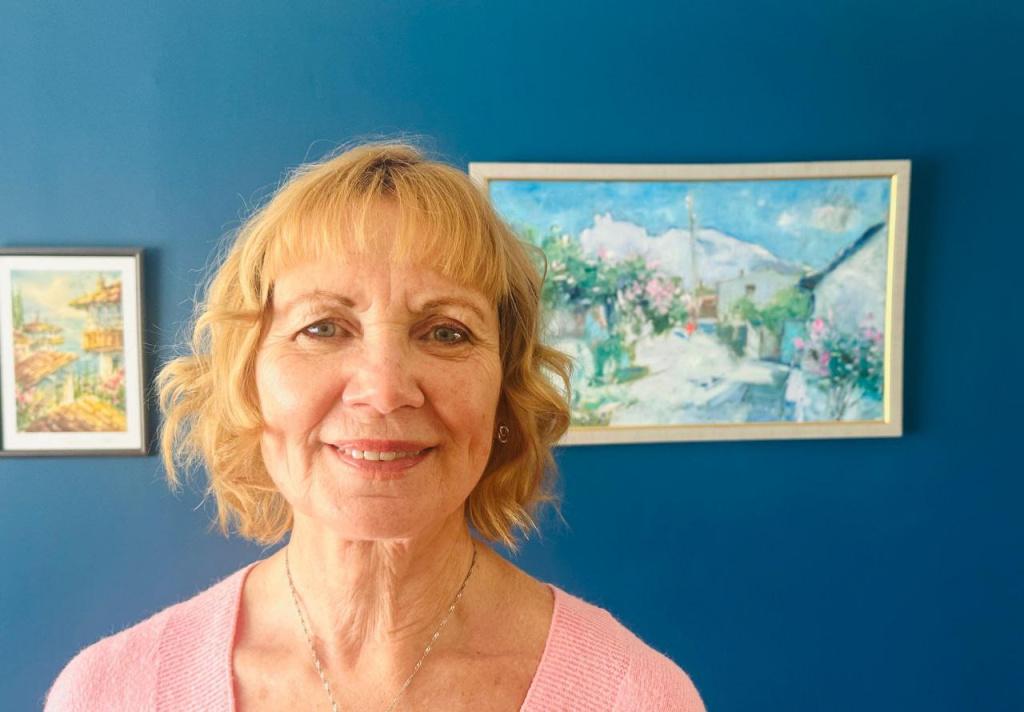
We continue the series of interviews with the descendants of outstanding metro builders, directors of Mosmetrostroy. His daughter Marina Dakhno shares her memories of her father Pyotr Aleksandrovich Vasyukov.
–Marina Petrovna, your father is one of the galaxy of legendary heads of Mosmetrostroy. Please tell us about him, what family is he from?
“Dad’s parents were real workaholics. Father, Alexander Pavlovich Vasyukov, was a road engineer who built roads in Crimea. So my father inherited his engineering talent from his grandfather. On the highway to Yalta there is a gazebo built by my grandfather. Unfortunately, he died early - from a stomach ulcer; mother, Natalya Viktorovna, worked as a doctor at the sanitary and epidemiological station. When she fell ill with tuberculosis, the family from Kyiv moved to Crimea. Dad was three years old: he was born on November 4, 1930. So his childhood was spent in Crimea, where the family survived the German occupation. After graduating from school, dad went to Dnepropetrovsk and entered the Dnepropetrovsk Institute of Railway Transport Engineers, from which he graduated in 1952.
This year became fateful for him. In the summer, he went to his mother and grandmother in Crimea, Alupka, and accidentally met a girl, Zoya Nikolaevna Semina, the love of his life and my mother. She came to Crimea for vacation. It was love at first sight, and dad came to Moscow to see his wife. I have never regretted it. Dad was captivated by her character and beauty, mom by his masculinity and strength. With him she was like behind a stone wall, he was her support and support for the rest of her life. They lived a good long married life.
–How did a young specialist end up in Metrostroy?
– In those years, this was in the order of things: the construction of the metro in Moscow was in full swing, there were not enough specialists, so many graduates of specialized institutes were sent to Metrostroy. My father said that after defending his diploma, he was sent to the Metrogiprotrans Institute, and he wanted to build. In the director's reception room I got into a conversation with some guy. He graduated from the institute with the same specialty, and he was sent to Metrostroy, in the caisson. And doctors forbade working in underground conditions. Then his father offered him his place at the institute, in the work organization department, and he himself went to Metrostroy to work in the mine.
The place in the caisson turned out to be occupied, and my father was sent to “Kievskaya”, to construction No. 12, where the construction of a large escalator passage was underway.
I was little, but I still remember how my dad’s nose would bleed when he came home from work. Mom was sympathetic to my father’s hard work and supported him in everything.
Dad was a tough boss, but he didn’t spare himself either. He was proud of the work of his predecessors, talked a lot about the architecture of the metro, contacts with architects, sculptors, and artists. He said more than once that each station is a work of art, talked about various aspects of construction, the deposits where marble and granite were mined, and they were brought from different regions of the Soviet Union, including Georgia and Ukraine.
He was not a native Muscovite, but he was imbued with the spirit of the capital, loved the city with all his soul, and became its patriot. He loved his job and dreamed of expanding the metro network so that people could quickly get to different parts of the city. He said that compared to others, the Moscow metro was technically the most equipped and had the highest operating speed: at that time it carried up to 7 million people a day.
He considered the main principles of metro construction to be the distance between stations: as he said, it should be at least one and a half kilometers. Otherwise, the operational speed of trains will not correspond to technical needs. The historical part of the capital must be preserved, although this requires additional research - geological, hydrological, historical development of the city. Costs increase, labor intensity, material consumption, technical support increase significantly, but it is worth it.
To create such a metro, he said, a solid design and research base is needed. And it was - the All-Union Institute Metrogiprotrans. In the 30s, it was the technical department of the Metrostroy Administration, which over time turned into Metroproject and, finally, into the head institute of all domestic metrostroy and similar institutes. My father was proud that Metrogiprotrans advised metro builders in Czechoslovakia, Bulgaria, Hungary, Poland, and helped specialists from a number of capitalist countries.
Dad felt his involvement in the CPSU and felt the support of the party. He was surrounded by a team of like-minded people, comrades who supported him, and he believed in them.
–What struck you most about your father?
– His attitude to work. Dedication. In addition to metro construction tasks, dad devoted a huge share of his time to political and social activities. He was a delegate to the Congress of the CPSU Central Committee, spoke at party plenums, and was a member of the Metrostroy party cell. As a deputy, he received the population, delved into people’s problems and tried to help them.
He was fond of creative work: he has many copyright certificates.
The main feature of his character was firmness in everything; physically he was also unbending. The main thing for him was to get the job done and on time.
It was amazing how much respect my father had for the women metro workers of the 1930s and 40s. When he arrived at Metrostroy, he found female tunneling crews with jackhammers. In 1941, they replaced men who had gone to the front.
–The importance of the metro during the war years is difficult to overestimate.
– Yes, its uninterrupted work was a kind of propaganda of our strength and faith in victory. Thousands of people - women and children - took refuge at stations during the bombings. The most important government institutions were located in the metro premises. The historic decision - to defend the capital to the last, to defend Moscow, to push back the enemy - was made underground, in the metro.
–His favorite pastime?
- Construction! Even on vacation in Crimea, where my grandmother had a house, I was always doing something, sawing, planing, improving. When he got his own plot of land - small, swampy - he built a house there himself. Parents loved to go to the dacha, travel, and learn something new. Their marriage can be called ideal: dad is the breadwinner, mom did more of the housework. He looked at her and said: “How beautiful you are!” When disagreements arose, my mother gave in and closed the topic, and then did it her way.
When my father had free time, he read a lot - about the war, historical literature, and followed the political situation in the world.
–How did he influence you?
“I always wanted to attract his attention, to be very good.” I studied with straight A's so that he would praise me.
He raised me strictly, instilled principles with which it is not scary to find himself in any situation. When I find myself at a crossroads in life, I always ask myself the question: what would dad do in this case?
The younger brother, Alexey Petrovich Vasyukov, graduated from MIIT, worked at Metrostroy, and is now retired.
Dad is always in our heart. How he raised us by example, how he communicated, how he read to us as children, talked at the table, and assessed everything. He was cheerful and strict. It was good and reliable with him.