The main thing in life is a strong and reliable rear
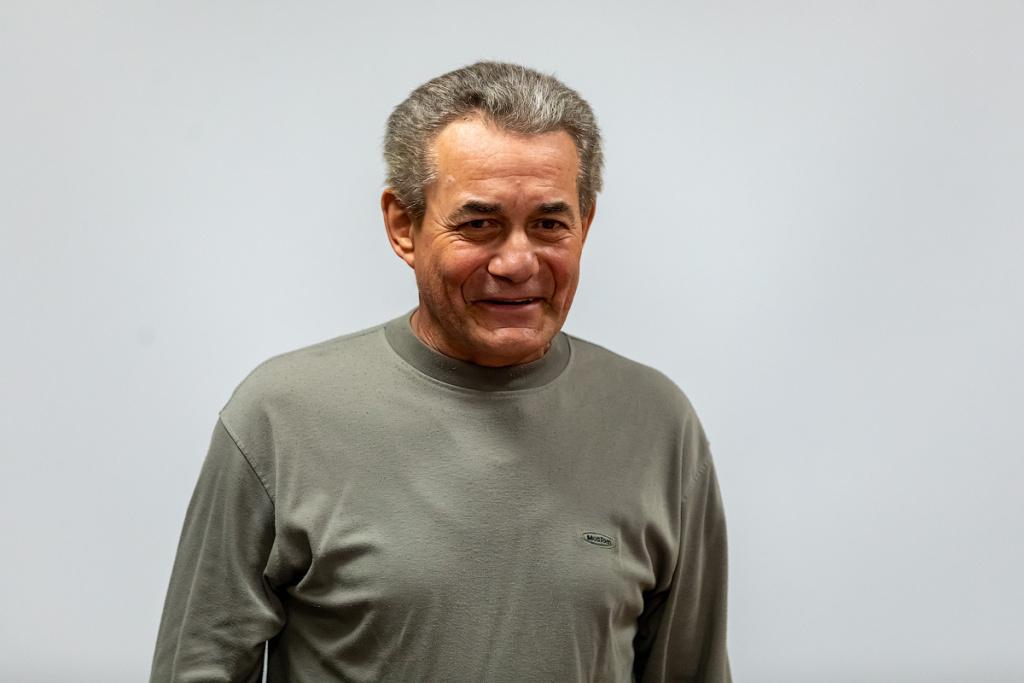
For three years, since 1983, Nariman Aleksandrovich Prostov headed the Moscow Metrostroy. At this time, several stations were built on the Zamoskvoretskaya, Serpukhovsko-Timiryazevskaya and Kaluzhsko-Rizhskaya lines. He was awarded the Order of the Red Banner of Labor and the Badge of Honor, and was a laureate of the USSR State Prize. In an interview with a Metrostroevets correspondent, his son, Alexander, spoke about his famous father, the ninth head of Mosmetrostroy.
–Nariman Prostov is one of the galaxy of legendary heads of Mosmetrostroy. What was he like for you?
– A real father who always had time for me. These included trips to the theater, cinema, excursions, trips to the sea, and even helped with homework. I could ask for help at any time and receive it. Thanks to my mother, our family was strong. My father always said that the most important thing is a strong and reliable rear. And with age, of course, I began to understand what he meant.
He met his mother in Nizhny Tagil and were married for more than 50 years. Mutual understanding and respect reigned in the house. The father is calm and open by nature. He really liked to do things with his own hands; in our free time we built a house in the country.
He had many real friends - not passing ones, but proven by time and joint work. The parents were hospitable and hospitable, a wonderful couple who complemented each other well. They loved to read, and looking at them, I also began to become engrossed in literature. We have a huge library - domestic and foreign classics, the collection “The Lives of Remarkable People”. My father’s reference book is “Les Miserables” by Victor Hugo. We often visited the theater; at the Bolshoi we reviewed the entire repertoire. I also found Ivan Semenovich Kozlovsky, a great opera singer of that time.
The Kuznetsky Most station is located not far from the Central House of Artists, and when it was being built, my father was in charge of SMU-6 at that time, the metro builders and artists formed a kind of alliance: if the Central House of Arts needed some help, the metro builders helped the servants of art. Gradually, a strong friendship began between them. The artists organized creative evenings with the participation of Nina Sazonova, Boris Brunov, Vasily Merkuryev and invited metro construction workers. Sometimes my parents took me with them. Vladimir Vysotsky also attended the evenings.
My father was a versatile person. He visited museums, was fond of painting, which he was well versed in, and collected albums of famous artists. He was friends with Nina Aleksandrovna Aleshina, an architect and designer who developed designs for 19 metro stations, and sculptors who collaborated with Metrostroy.
He refused to help anyone: both when he headed SMU-6, and then the entire Mosmetrostroy, and when he became a deputy. He helped some to place their child in a kindergarten or nursery, and for others, he helped them get an apartment. Many turned to him for help and received it. He had a phenomenal memory and an analytical mind. He stored a huge amount of information in his head, used it promptly, and quickly responded to situations.
–Have you learned anything from your father?
– Respect for human work. I regret that I did not adopt his neatness: it was evident in everything. His desk and workbench were in perfect order. Apparently, discipline, punctuality, and neatness remained with my father from captivity. At the age of 16, he and other Kharkov residents were taken to Germany, and there they were sold to Austria. No matter how much I asked to tell about those times, my father answered that I didn’t need to know. I can imagine what the Soviet people experienced in German captivity if dad didn’t want to talk about it. After the Soviet Army liberated them, my father returned to Kharkov. He studied at a vocational school, the Kharkov Construction College, and the Kharkov Mining Institute, after which he ended up in Mosmetrostroy.
When my father was in charge of SMU-6, he often took me to sites under construction on weekends. I watched with interest how he interacted with people. He never swore, he spoke calmly and convincingly; if he was dissatisfied with something, he said: “You guys are piglets.” And the guys felt ashamed. Those I talked to confirmed that the word “piglets” was more powerful than swearing.
My father and I walked through the tunnels of the stations under construction; while we were walking, he told me everything and it was so fascinating that the desire to work at Metrostroy increased. First you see the pit, a week later you come - there is reinforcement there, a week later - they are already laying concrete. You go down to the depths, walk along the face and see how the station is born.
The process was fascinating: it’s one thing to go down the escalator to the platform, get on the train and go where you need to go. And it’s quite another thing to gradually observe the work of the metro builders, how everything is arranged underground, how the “naked” station is gradually dressed in granite and marble and turns into a work of art!
– How many years did he head SMU-6?
– April 20, 2024 marks the 90th anniversary of SMU-6 Metrostroy, the legendary organization that Nariman Aleksandrovich led for 13 years. If you look at his track record, you can see the construction of the most serious stations and junctions: Taganskaya, Ploshchad Nogina (now Kitay-Gorod), Kuznetsky Most, Marxistskaya. There was a colossal amount of work, many faces and mines. And when there was a breakthrough at Marxistskaya and everything was flooded, the guys coped with it in a month. Although foreign experts were sure that six months would not be enough to launch the station. But my father himself was a competent specialist, and he selected the same team. Everyone worked for the result. And it worked.