How they built during the war
In wartime conditions, 78 years ago, on January 1, 1943, the Zamoskvoretsky radius was opened, consisting of one station - “Stalin Plant” (since July 5, 1956 - “Avtozavodskaya”). Trains passed through two more stations – Novokuznetskaya and Paveletskaya – without stopping. But before we talk about the difficulties of constructing the metro during the war years and about the project changes that had to be made, we need to go back a little, to the very beginning of the construction of the third stage.
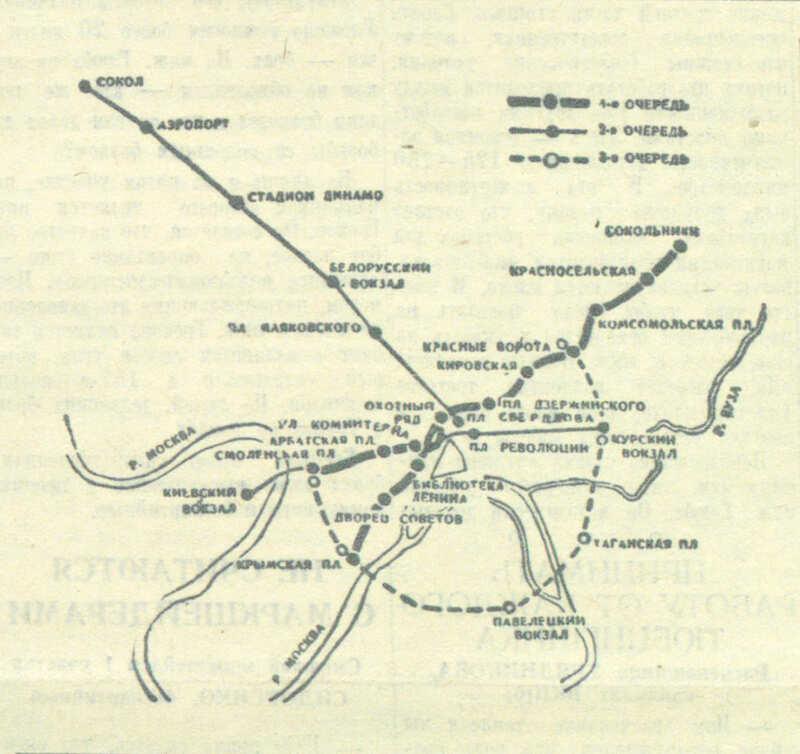
Diagram of the third stage of metro construction in “Udarnik Metrostroy” No. 8 dated January 10, 1937
BUILD TWO RADIUS IN THE SHORTEST TIME
The history of the Zamoskvoretsky radius began on January 8, 1937, when the Council of People's Commissars of the USSR and the Central Committee of the All-Union Communist Party of Bolsheviks issued a decree “On the construction of the third stage of the Moscow Metro.” A plan diagram was published in the newspaper “Udarnik Metrostroy” No. 8 dated January 10, 1937. The Council of People's Commissars of the USSR and the Central Committee of the All-Union Communist Party of Bolsheviks recognized the need to begin work this year, and planned to put the new stations into operation with passengers by the end of 1939. Even then the deadlines were very tight, and the given diagram did not coincide with what was eventually built.
A new decree, issued on July 10, 1937, dramatically changed construction plans. According to it, it was supposed to build two radii, and postpone the Circle Line to a later date, since the reconstruction of most of the Garden Ring was completed in Moscow, making it possible to provide passenger transportation on it by overground transport. Thus, the traces of two new radii were approved:
Zamoskvoretsky radius – from the Sverdlov Square station to the Stalin Plant station, 6.5 kilometers long with the Novokuznetskaya, Paveletskaya and Stalin Plant stations.
Pokrovsky radius – from the Kursky railway station to the Stalin Stadium, 7.3 kilometers long with the stations: “Spartakovskaya” (“Baumanskaya”), “Electrozavod”, “Stalin Stadium”. Station "Stalinskaya" (now "Semyonovskaya") will appear later.
The new line was difficult - two crossings under the Moscow River and passage through quicksand. Metro builders had to apply all their knowledge and skills, all their perseverance and patience to tame the underground depths.
The commissioning date has not changed compared to the January decree - the end of 1939. The experience of constructing the second stage and the use of more advanced technology theoretically made it possible to meet the allotted deadline. But in practice everything turned out to be much more complicated. Despite attempts and calls to start work earlier, this was not possible. Firstly, we had to wait until the workers for the construction of the second stage were free. And, secondly, go through the entire difficult preparatory stage of site development.
Metro builders came to the Stalin Plant station in December 1937. And the excavation of the first shaft began at the end of March 1938. The sinking of shafts and the development of sites proceeded very slowly; it was clear to everyone that there would be no launch by the end of 1939. But, most importantly, the work has begun.
After the start of construction, two major changes to the project occurred - the Stalinskaya station was added, which led to the relocation of the Elektrozavodskaya station. The wells drilled to freeze the inclined course had to be plugged and others began to be drilled for a new inclination.
The design of the Paveletskaya station was changed. The pylon option was abandoned in favor of a column station. It was supposed to be a further development of the Mayakovskaya station.
As the shafts were sunk and the faces were opened, more and more shields rushed along the routes. And the length of the finished tunnel began to grow rapidly. By June 19, 1941, 24.3 of the 26.8 kilometers had been completed. In May we completed the last slope at the Elektrozavodskaya station. And at the Stalin Plant station, finishing work began in February. All station tunnels were also completed except for the middle hall of the Paveletskaya station, which was not even approached. Apparently, the third stage could be launched in mid-1942. But the war began.
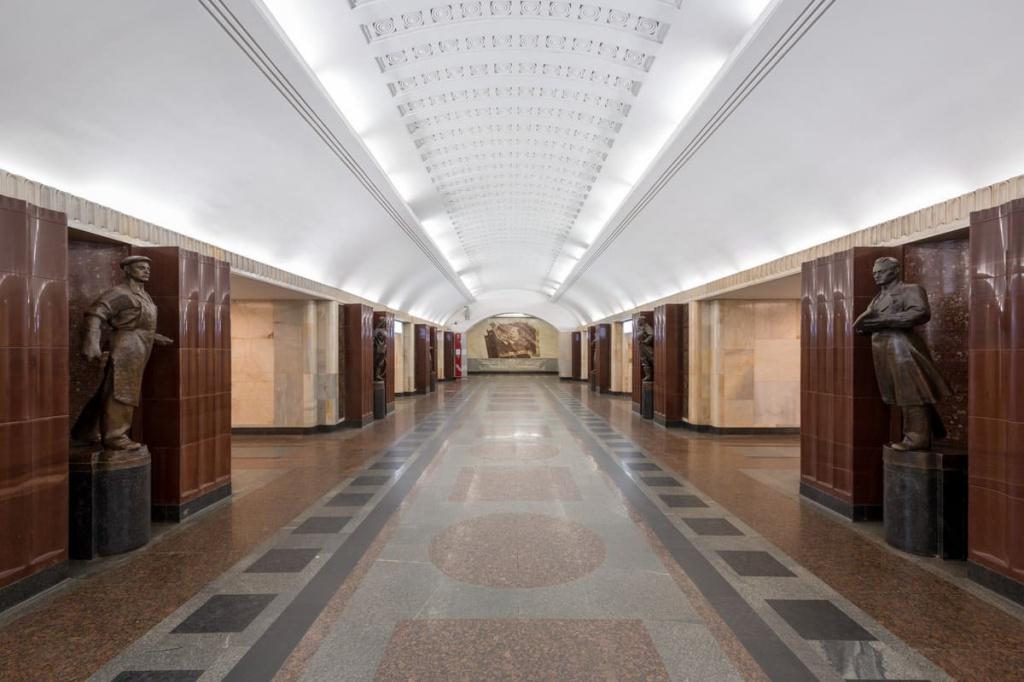
Baumanskaya station of the Arbatsko-Pokrovskaya line
WAR CHANGES PLANS
After the Nazi attack, more and more of our employees went to the front. Who will fight and who will build various defensive lines and special facilities. The volume of metro construction decreased as the invaders advanced towards Moscow. Metro construction workers began preparing the third-stage workings to shelter the population of Moscow. In October 1941, construction essentially stopped.
In the spring of 1942, a decision was made to launch the Zamoskvoretsky radius without two deep stations. There are no escalators for them, and at the Paveletskaya station there is no middle vault, shaped tubes and metal structures. Again we had to change the design of the station. Literally within a few days it was converted into a double-vaulted building, with an antechamber near the slope. At the Zamoskvoretsky radius, the volume of excavation was minimal, and it was completed quickly. Then we began the installation of engineering systems, track laying and finishing.
Simplified technical conditions were used wherever possible. Only one traction substation was commissioned, the service bridge in the tunnel and the sound-absorbing plaster on the distillation tubes were abandoned. For ventilation and drainage, Metrostroy equipment was used according to a temporary operational scheme.
Three escalator lines were installed at the Stalin Plant station, but only two had a drive. The middle thread remained in the form of a fixed ladder. Half of the columns had plaster, which was painted to resemble marble.
On November 20, 1943, the two remaining stations were opened. It was already easier with them - Moscow factories were able to produce six escalator belts. For the first time, an asbestos-cement umbrella was used at stations, which made it possible to abandon the labor-intensive operation of concreting tubes. In December 1943, construction began on the Circle Line.
At the same time, work was being completed on the Pokrovsky radius. Three stations of the Pokrovsky radius opened on January 1, 1944, and the Elektrozavodskaya station was completed only by May 15 of the same year.
At all seven stations opened during the war, “constructed during the Patriotic War” is carved in gold letters. The heroic work of the metro construction workers, who carried out their tasks as if they were fighting at the front, will forever remain in the history of our company.
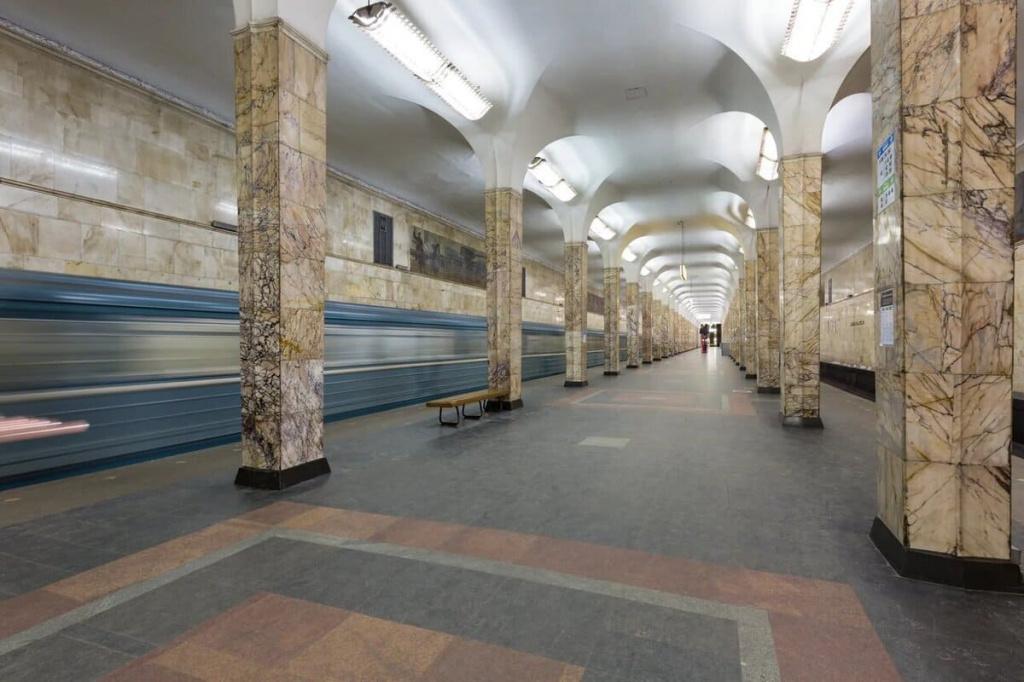
Avtozavodskaya station of the Zamoskvoretskaya line