Pirozhkova designer
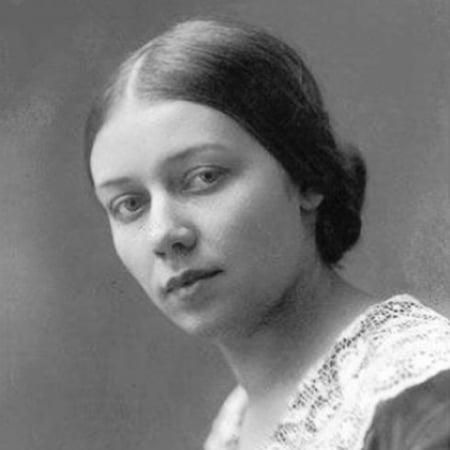
When talking about the beautiful Moscow metro stations, we, of course, first of all mention architects. And this is understandable: our impression of the station is formed by the techniques and components of architecture that the architect incorporated into the project. And yet, the metro architect is not nearly as free as his counterpart in ground-based structures. The initial appearance of the station, its volume is determined not by him, but by the design engineer.
It depends on the designer what kind of station there will be: a pylon, a column, a vaulted one or with a flat ceiling, a beautiful light “Kuznetsky Bridge” or a simple “centipede”... For some reason, it is not customary to call designers by name. It's a pity. Let’s try to partially fill the gap and talk about the wonderful designer Antonina Nikolaevna Pirozhkova.
She was born in 1909 in the village of Krasny Yar, Tomsk province. At the age of 14, my father died. The mother was ill, and the girl had to take care of the younger ones. The regional center of Tomsk provided more opportunities for this - the girl moved there and began to earn extra money by teaching lessons. At this time, her mathematical abilities clearly emerged.
In 1930, Antonina Pirozhkova graduated with honors from Tomsk Polytechnic University (at that time the Siberian Technological Institute named after Dzerzhinsky) and went to work at Kuznetskstroy, participated in the design of a metallurgical plant. Even then she showed the highest professionalism and ability to cope with any technical task.
In 1934, Antonina Nikolaevna, on the recommendation of a representative of Vostokstal, came to Moscow to work at the State Institute for the Design of Metallurgical Plants. But just at this time, work on the first stage of the metro was nearing completion in the capital, and Antonina was attracted by a completely new and unfamiliar business. She entered the Metroproject and soon, thanks to her outstanding abilities, she became one of the best specialists and then became the chief designer. Five metro stations were designed with her participation. Let's call them:
- “Revolution Square”, 1938 (together with N.A. Komarov and M.V. Golovinova);
- “Mayakovskaya”, 1938 (together with E.M. Grinzaid, R.A. Sheinfein)
- “Paveletskaya-radial”, 1943 (together with M. Semiz, B. Umansky, V.I. Dmitriev);
- “Arbatskaya” Pokrovsky radius, 1953 (together with A.I. Semenov, and P. Pashin);
- “Kyiv-Koltsevaya”, 1954 (together with M.V. Golovinova).
In the 1950s, Pirozhkova participated in the design of sanatorium and resort buildings. She taught at MIIT, together with V.P. Volkov and S.N. Naumov wrote the textbook “Tunnels and Subways.” Earlier, back in the 30s, together with Nikolai Vasilyevich Nikitin, the future outstanding designer, designer of the Ostankino TV tower, with whom she studied at the institute, and engineer A. Polyansky, she wrote the work “Simplified calculation of complex frame structures.”
Having read Isaac Babel in Kuzbass, Antonina met the writer in Moscow. In the same 1934, they united their destinies. It is difficult to imagine people with more different characters than Isaac and Antonina, but this did not interfere with their short happiness. In 1937, daughter Lydia was born. In 1939, Babel was arrested and a year later executed. The execution list was signed by Stalin himself. All the years Pirozhkova waited for her husband: until the Khrushchev thaw she was not informed about his fate. To inquiries I received the answer: “...serving time on construction sites of the national economy.”
Antonina Nikolaevna lived a long life - 101 years - and dedicated the entire last part of her life to the memory of Babel. I collected materials and published several books. Antonina Pirozhkova died in 2010 in the USA, where she had lived since 1996 next to her beloved grandson Andrei, an actor and director.