Reliable rear. Xumu – 90 years old
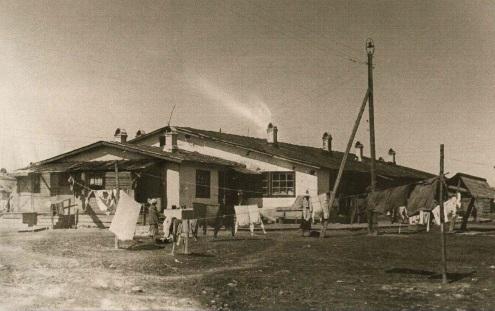
For the purpose of communal services for workers and employees, in the structure of Metrostroy, already in the first months of its work in the 1930s, a department of auxiliary and general construction works was created - the prototype of KSUM. As the first metro builder, Hero of Socialist Labor Tatyana Fedorova, wrote in her memoirs: “Metro construction began with the construction of hundreds of barracks in which people arranged their lives without pretensions.”
Today it is difficult to imagine how complex and diverse the social economy of the capital’s metro builders was during the first five-year plans. Almost two dozen residential towns were organized in various areas of Moscow and the Moscow region.
Over time, all objects acquired a unified economic and management structure. By the end of the 1930s, all social services were united into the Municipal Construction Department. It included teams from the Metrostroy Housing Administration and municipal construction offices that served metro towns.
“KSUM is the heart of Metrostroy, the beating of which can be heard at all facilities,” - this is what Ksumov residents said with pride in those years. More than half a century ago, the team consisted of 2,500 employees, hundreds of residential buildings with a population of about 60,000 people, more than 20 preschool institutions, seven municipal construction offices, shops, bathhouses, laundries, libraries, three children's country facilities, cultural institutions, a pioneer camp, sports facilities, bases and recreation centers... An entire city!
The scale of KSUM's activities in different periods reflected the country's social policy and was completely dependent on the economic situation of Mosmetrostroy. When, in the late 1950s, a course was set to reduce the cost of subway construction, Mosmetrostroy transferred many facilities to the city, including almost all permanent residential buildings, shops, and parks. In the 1960s, the main task of the KSUM was the liquidation of more than 200 barracks, that is, the relocation of metro construction workers into comfortable apartments, as well as the maintenance and maintenance of the remaining housing stock and social facilities. Over the course of a decade, it was possible to resettle about 40,000 workers and members of their families.
Over the next thirty years, the KSUM team consisted of 1,000 employees managing housing, preschool institutions, workers in the pioneer camp, cultural and sports sectors.
Since the 1970s, the construction of modern preschool institutions and the reconstruction of the camp began. In the 1980s, KSUM reconstructed the Vesna boarding house in Adler and overhauled the Izmailovo dormitories.
In the mid-1980s, the government adopted a decree on the construction of 47 km of metro lines in the capital. To increase capacity, Mosmetrostroy received from 2,000 to 6,000 people per year. Moscow has allocated 13 workers' dormitories in new buildings. In 1993-1996. The UOC dormitory on Korovinskoye Highway was put into operation.
However, in the 90s, Mosmetrostroy experienced serious upheavals. Metro construction was practically frozen. In order to survive the financial crisis, it was necessary to liquidate most of the hostels, transfer a number of social facilities to pay off debts, and close the country children's towns "Frolki" and "Tuchkovo".
Many large enterprises then got rid of their infrastructure. Mosmetrostroy took a different path. Both the health camp and kindergartens were transformed into non-profit organizations and have survived to this day.
DIRECT SPEECH
Alexander Astafiev, Director of JSC “KSUM”
Today, KSUM employs a little more than a hundred employees. They are in charge of five dormitories - from the largest workers' dormitory in Moscow on Korovinskoye Highway to a five-story building on Chernomorsky Boulevard. About four thousand people live in them on a permanent basis and temporarily accommodate them, more than a thousand of whom do not work in Mosmetrostroy organizations.
Today, many dormitory premises require repairs, and in the UOC, the replacement of elevators is also required. So next year seems to be difficult for us. Nevertheless, the team is determined to complete the assigned tasks. We will accommodate non-resident workers and specialists from Mosmetrostroy, improve their living conditions, increasing the attractiveness of our facilities in the market of specialized services.
On the anniversary of the organization, I want to say warm words to the veterans and employees of KSUM, who, together with other organizations, created the glory of Mosmetrostroy. Maybe not in the mines, but in a vital sphere.
So that metro workers have a roof over their heads, and their children do not know what a shortage of places in kindergartens is and happily spend every summer in a health camp. So that every metro builder is proud of a company that not only has advanced equipment and technologies, but also has its own dormitories, its own sports club, a museum, and its own rich traditions. Many of which are stored by KSUM and its employees.
THE BEST HOSTELS IN THE CITY
Valentina Kuznetsova,
veteran of KSUM JSC, head of section No. 1 of the dormitories in 1989-2011
I worked for almost forty years at Mosmetrostroy, which is dear to my heart. One of the strongest construction organizations in the USSR had a solid social base, which was under the jurisdiction of the Municipal Construction Department.
If you were born into a family of metro construction workers, then you were provided with a departmental nursery, kindergarten, summer children's camps, and a pioneer camp; for cultural development - libraries, clubs, studios, the Palace of Pioneers, Palaces of Culture; for sports - a stadium, ski resorts, various sections and numerous competitions, for health and recreation - its own dispensaries and sanatoriums, vouchers to resorts. For treatment there is our own Medical Unit No. 2. And most importantly - their own residential buildings.
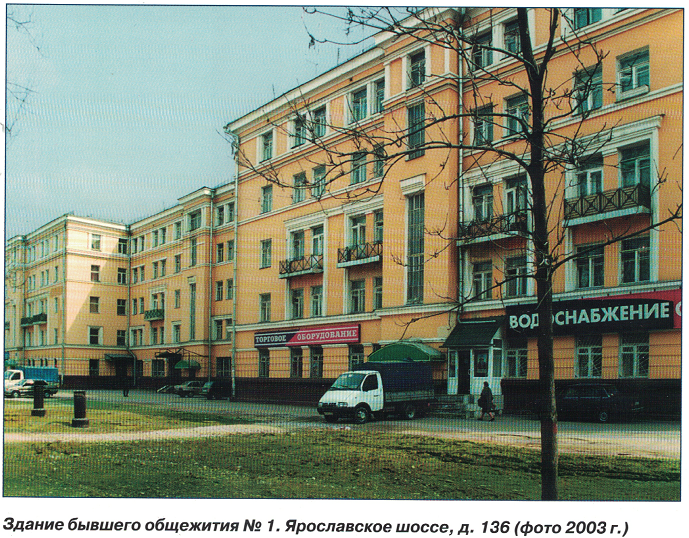
Moscow was growing and needed new metro lines. For those coming to work from other cities, new dormitories began to be created according to the limit, of which by the mid-1980s we already had about twenty. The area of dormitories that I managed united three apartment buildings in Novokosin and one eight-entrance building on Reutovskaya Street. It was a large enterprise, where the operation of buildings and services for more than 4,000 residents were in one hand.
What do I think about when I look back on the past years of work at KSUM? I remember both deeds and events, but most of all I remember people - metro builders who lived in our dormitories, managers, inspectors, supervisors from various bodies and departments... And, of course, colleagues, associates, friends, all those who worked nearby, who conscientiously fulfilled their duties every day - created normal living conditions for the lives of thousands of metro builders.
To ensure that the dormitories are always light, warm, clean and comfortable is the task of the team of employees - from the cleaning lady to the boss. In what mood the metro builders go to work, how rested those who go down into the mine, work on the surface, creating the grandeur of underground palaces, largely depended on us, public utility workers.
At KSUM there was team cohesion, a friendly atmosphere and a special friendly competition between sections of the dormitories. We tried not to lose face in front of each other. The Mosmetrostroy dormitories were considered the best among the dormitories of the USSR Ministry of Transport Construction! We knew how not only to work well, but also to relax. There were traditions of holding evenings dedicated to significant dates, honoring anniversaries, and solemnly seeing off people into retirement.
No matter how many years pass, metro builders will also create, build new tunnels and stations, and improve the capital of our Motherland - Moscow. And that means that the wonderful people of the Municipal Construction Department, who have been reliably providing the rear of the Moscow Metro Construction for 90 years, will work for their benefit.
Happy anniversary to us, dear colleagues! I wish you happiness, health, longevity, love and peace in the whole world!
Zinaida Nechaenko,
veteran of KSUM JSC, technical and technical engineer 1973-2003
KSUM was, is and will be the most dear and faithful friend for me. After all, I spent almost my entire working life here. In 1950, I was sent to Municipal Construction Office No. 2 (a division of KSUM in Losi). She worked as an auxiliary worker and lived in a dormitory.
These were happy years: Komsomol activity, evenings of entertainment. The time when we fell in love with our Metrostroy guys and created families. In 1953, after studying at the Metrostroy technical school, I went to the KSUM office for an internship. Here they taught me to work accurately and flawlessly.
In the early 60s I found myself in military service. She returned to KSUM only in 1973. She worked as an estimator, determining the cost based on the volume of work for capital and current repairs of housing stock, kindergartens and children's playgrounds.
In 1982, we got a special facility. This is a 15-story building of the Vesna sanatorium and a canteen in the city of Adler, where KSUM had to do a major overhaul. The work ahead was big and responsible. They brought in USR, SMU-4, DOZ-9, UMM, and motor depots. The repairs were successfully completed, and metro construction workers began to receive free trips to this sanatorium.
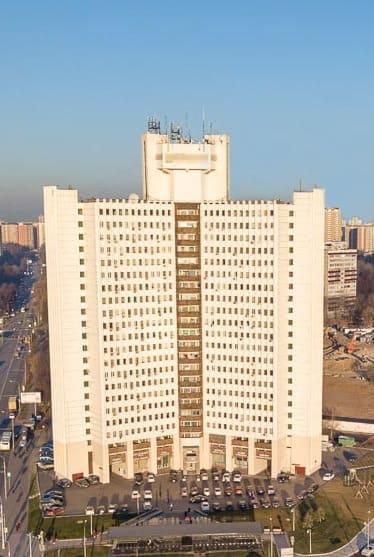
In the 1990s, KSUM acquired another serious object - the UOC. It was necessary to take into operation a 22-story building, a long-term construction of Metrostroy at the fork of Korovinskoye and Dmitrovskoye highways. Maria Ivanovna Petushkova, Mikhail Vasilyevich Komarov, Viktor Nikolaevich Moiseev and I were appointed responsible for acceptance at the site. The work went smoothly. Gradually, the hostel began to function floor by floor.
In 2003, after many years of interesting, exciting work, I retired. Thank you for not losing touch with the team. It’s worth a lot when Ksumov residents congratulate you on the holidays, send Metrostroyevets newspapers, and friends and work colleagues just call. We, veterans, really appreciate taking care of us! And all this thanks to the kind attitude of the management in the person of the deputy director of the KSUM Pavel Yuryevich Kalinin, the chairman of the trade union committee and the council of veterans Valentina Ivanovna Kanishcheva.
Congratulations to all KSUM employees on their anniversary! I would like to wish you success in your work, in your personal life and all the best.
SUMMER AT CAMP
Love Cancer,
veteran of JSC "KSUM", operator of the gas boiler house of the pioneer camp "Young Metro Builder" in 1982-2011
I started working at the camp in 1982, when I came with my family on the recommendation of friends. I had to be a boiler room operator, a cook, and a cleaner. My husband worked as a driver. They did not disdain any work. The head at that time was Hero of Socialist Labor Nikolai Ivanovich Lozovoy.
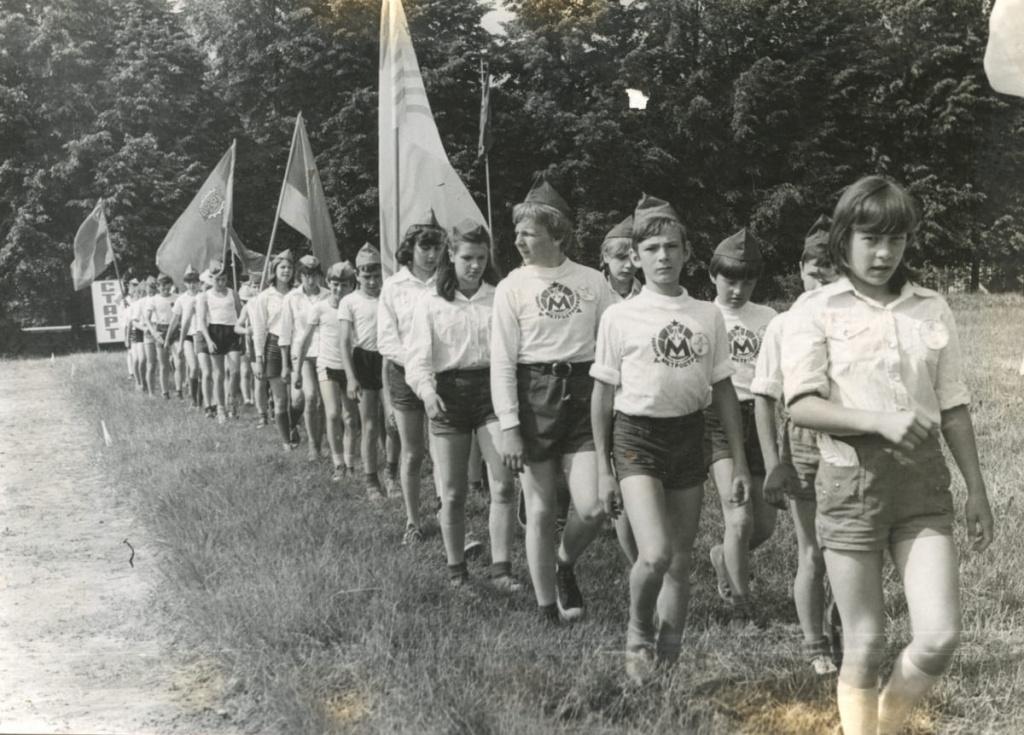
My husband and I quickly got used to it and got to know our housemates. There were only a few of them; they all worked in the pioneer camp. We always looked forward to the opening of the season and prepared seriously. These were the most important days, but also the most joyful. It's great to see the happy faces of the visiting children!
Life in the pioneer camp is seasonal. The brightest, of course, is in the summer. We lived in a festive atmosphere, because every day the children had various events, competitions, contests, songs, and fun.
I remember an episode from the 1980s, when veteran metro construction workers came to us, led by the deputy head of Mosmetrostroy, Hero of Socialist Labor Tatyana Viktorovna Fedorova. The entire camp greeted them with bread and salt. The veterans and the children planted many trees of different species and bushes on the territory of the pioneer camp.
And in our free time we relaxed with our families. I especially remember how we celebrated the New Year and celebrated Maslenitsa. They baked pies and pancakes, took with them pickles prepared in summer and autumn, jam, tea and went to the hill where they celebrated. They sang to the accordion, played different games, and went down the slide. The ringleader was Maria Mikhailovna Kozlova. She and her husband Anatoly Mikhailovich worked as stokers from the mid-1960s, and after reconstruction - as operators of a gas boiler house. Their family is from the large metro construction dynasty of the Alekseevs.
We also had three-day races for Mosmetrostroy workers. They came to relax with their families, pick mushrooms, and swim in the river. In the evening they organized concerts and dances. Everyone was happy.
Somewhere at the turn of the century, the Metrostroy management developed a new tradition - to celebrate the Old New Year in our camp. All the heads of SMU, guests were invited, and artists came.
In 2010, our camp was empty for a whole decade. And what a joy it was when this summer, after recovery, he welcomed the children again! Our leadership has wisdom! I’m so happy in my heart for the kids – this place is wonderful!
Now we have lived to an old age, many have passed on to another world. But we are very glad that they do not forget us, remember us, and visit us. Health to all metro builders, Ksumov residents and all the best.
BEST FOR CHILDREN
Galina Elizarova,
deputy Head of JSC "KSUM" for children's institutions, in 1990-2001, general. director of the ANO preschool "World of Childhood" in 2001-2012
The history of Mosmetrostroy kindergartens is interesting and diverse. The first of them were organized in 1932 in unsuitable premises. And only in 1936 specialized buildings appeared in Losi and Cherkizovo. Two years later there were more than thirty of them.
In the summer, the children of metro construction workers vacationed in the best health resorts and pioneer camps in the country, at summer dachas in the Moscow region and children's dachas run by trade unions.
In 1939, the first metrostroyevsky dacha children's town "Tuchkovo" was opened in the Ruza district of the Moscow region, where hundreds of preschool children began to go every year. The first manager was Valentina Fedorovna Gromakova, in whose honor one of the five Tuchkovsky dachas, “Gromakovskaya,” was named. Others were called: “Pushkinskaya”, “Lermontovskaya”, “Kutuzovskaya”, “Leningradskaya”.
With the outbreak of the war, all kindergartens were closed. Many of our children were evacuated directly from Tuchkovo to the city of Kurgan, along with the staff and the head of kindergarten No. 250, Tatyana Andreevna Klimova. Parents continued to work at defense facilities and on the construction of the metro.
But already in 1942, the first four kindergartens accepted children, and in 1944 five more opened. In 1945, two more buildings were built, and one kindergarten opened in adapted premises of a residential building.
In 1949, in the Kaluga region, next to the pioneer camp “Young Metro Builder”, another country children’s town was opened - “Frolki”. In the 1950s, intensive housing construction began, including at Mosmetrostroy. Along with residential buildings, kindergartens were also built.
Metro builders built cozy, mostly wooden, one- and two-story buildings. There were also kindergartens located on the first floors of multi-story buildings.
By the mid-1970s, many of those preschool institutions were outdated, both physically and morally. The construction of modern buildings based on standard and individual designs began. Most kindergartens built SMU-13 under the leadership of Alexander Ivanovich Suslov, who was very attentive to all our wishes and requests. We are very grateful to him.
In the 1970-1980s, magnificent kindergartens were built at Mosmetrostroy, which are still the pride of not only Mosmetrostroy, but the entire capital
I feel special gratitude to Yuri Anatolyevich Koshelev and Nikolai Alekseevich Agapov for their sincere concern for the younger generation of metro workers and kindergarten employees. They always supported us and provided comprehensive assistance.
Thus, in the early 1990s, for the first time in Russia, we took part in the international educational project of the Ministry of Education of the Russian Federation “Child-Centered Education.” Our talented teachers Marina Viktorovna Yanvareva and Maria Viktorovna Gerasina, as part of this project, developed and introduced the first Russian program “I, YOU, WE” into our ranks. We visited the Netherlands with her twice, where we shared our best work experience.