He could have led the construction of bama
Forty years ago, Mosmetrostroy said goodbye to Pavel Burtsev, one of the outstanding metro construction engineers. We recall the work history and achievements of the former head of SMU-8.
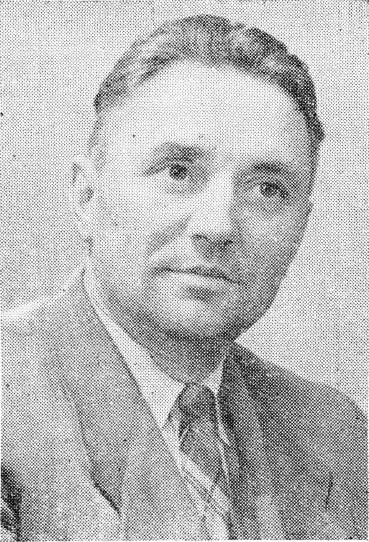
Pavel Semenovich Burtsev. Metro builder. 1962
Passed all authorities
Pavel Semenovich was born on January 7, 1918 in Mozyr, Gomel region of Belarus. He graduated from the factory training school at Metrostroy and at the age of 17 ended up working on the construction of the Moscow subway. He started as a reinforcement worker, was an insulator, a concrete worker, a tunneler, and a pumper.
Burtsev combined work at a construction site with studies at the workers' faculty. In 1943 he received a diploma from the Moscow Institute of Railway Transport Engineers with a specialty in Bridges and Tunnels.
Following this, Pavel Semenovich was appointed shift supervisor, then site manager, chief engineer, and later head of SMU-8 of Metrostroy. At the same time, Burtsev had to pass the technical maturity exam more than once.
Was a creative search engineer
While still in the position of site manager, Pavel Burtsev developed a new method for constructing distillation tunnels, which he later applied on the Kaluga radius. At the Oktyabrskaya (radial) and Kitay-Gorod (Nogina Square) stations, combined tunnel designs with a flat tray are used. By the way, thanks to new technologies, Oktyabrskaya became the first deep station with a smaller tunnel diameter than previously built.
A universal shield capable of moving at high speed not only in loose, but also in soft rocks, also Burtsev’s invention. Its creation was carried out simultaneously with the construction of the Zhdanovsky radius. The technology was adopted by foreign tunnel builders: during the construction of the Berlin metro and sewers in Washington. The work was nominated for a State Prize, of which Burtsev became a laureate in 1968.
Under the leadership of Pavel Semenovich, a world record for high-speed penetration was set at the Zamoskvoretsky radius - 430.6 meters per month. He was invited as an adviser during the construction of the metro in St. Petersburg, Prague, Budapest, Tbilisi and Yerevan.
Caring for workers
They said about Burtsev in the mine: “He will punish you for your deeds, but in trouble he will always help you.” Despite the high professional demands and rigor in his work, Pavel Semenovich took care of the labor safety and living conditions of his employees.
Contemporaries remember his modesty. As a deputy of the Moscow City Council, Burtsev and his family lived in a poorly equipped building, showing solidarity with the workers. He understood that good things are solved by people.
In 1973, Pavel Burtsev was appointed head of Department 10-A. According to his daughter’s recollections, he was invited to lead the construction of the Aswan Dam and the Baikal-Amur Mainline. But Pavel Semenovich’s health did not allow him to go on such long business trips.
Burtsev died on October 22, 1979. He was buried at the Kuntsevo cemetery in Moscow.
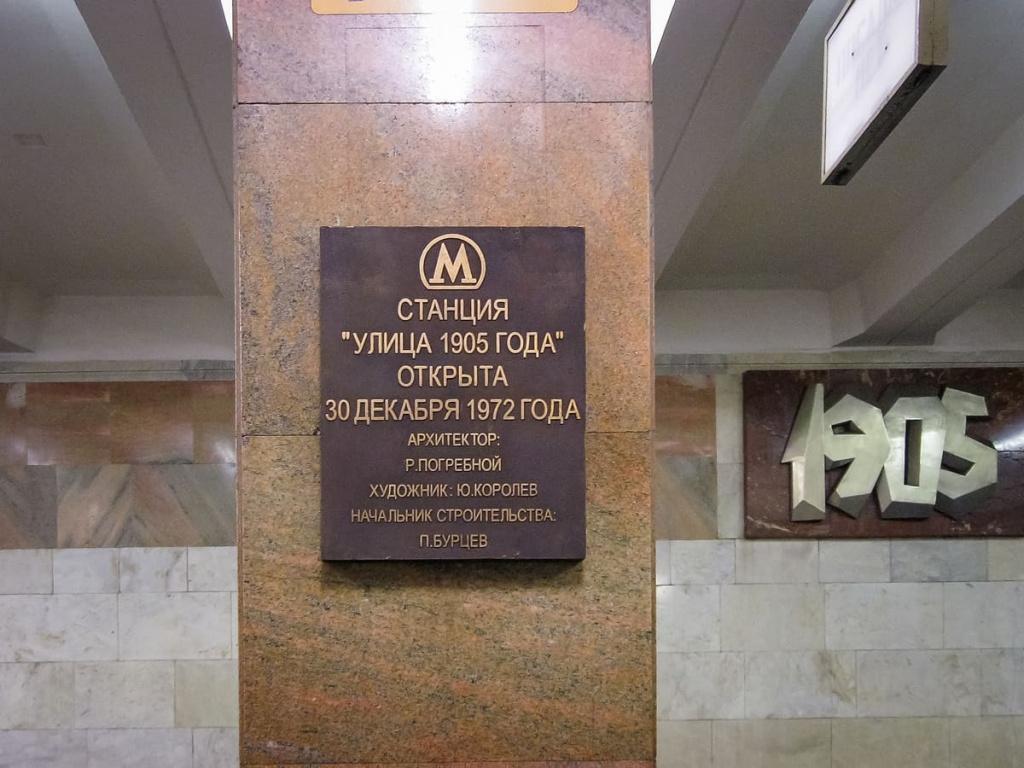
Memorial plaque at the Ulitsa 1905 Goda station with the name of Burtsev
An interesting fact is that it was he who opposed the deep laying during the construction of the Filevskaya line. In these places, during the time of Catherine II, those who died from the plague were buried. The construction of a subway at depth could be unsafe for human health.
Stations built under the leadership of Pavel Burtsev:
“Belorusskaya” (circular), “Fili”, “Oktyabrskaya”, “Volgogradsky Prospekt”, “Shcherbakovskaya”, “Yugo-Zapadnaya”, “Nogina Square”, “Schukinskaya”.