Open young paths

The first mine of Metrostroy
In October, two significant, interconnected dates came together. At the beginning of the month, the 87th anniversary of Mosmetrostroy was celebrated, and at the end of the month it will be the 100th anniversary of the birth of the Komsomol. The role of the union of young enthusiasts in the construction of the Moscow metro largely determined the success of this unprecedented undertaking for the country.
STARTING TUNNEL ROLLERS
Construction of the Moscow metro began with a pilot site on the side of Rusakovskaya Street, running from Sokolniki towards Komsomolskaya Square. One of the first Komsomol cells in Metrostroy was born there.
In November 1931, a team of diggers, armed with shovels and picks, began digging an inclined adit, which was supposed to lead the builders to the metro route. At first, things were not going well - there was a lack of mining experience, special equipment, and proper management.
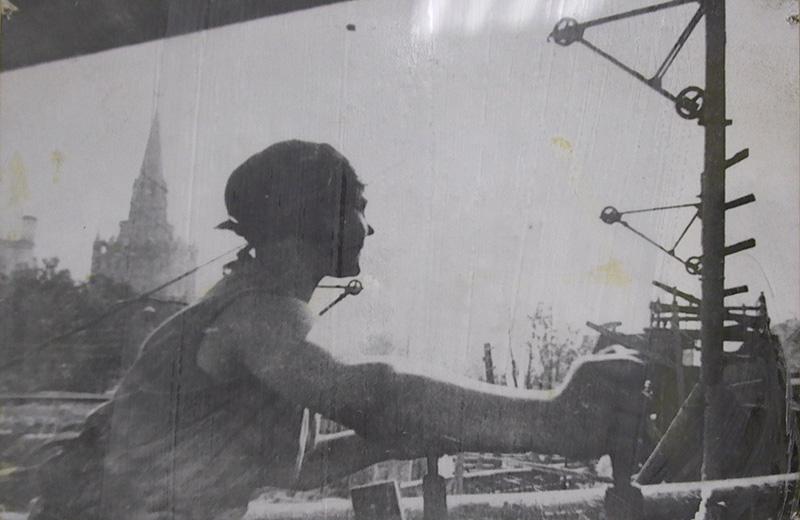
Komsomol member Nadezhda Surina.
Mine No. 30, first stage
From February of the following year, the site was headed by Philip Kuzmin, a former miner who received an engineering education at the workers' faculty. He professionally led the development of the adit, at the same time taking care of the living conditions of the workers. At his request, the management allocated funds for the construction of several barracks and a canteen. Komsomol members of the site, who already numbered more than twenty people in March, actively joined in solving this problem. After each working day, they voluntarily devoted two more hours to the construction of household premises. And by the May 1 holiday, vital facilities were ready.
The head of the station’s communication with young people was helped by his own Komsomol past, dating back to the very beginning of the 20s. The successful choice of the leader of the young enthusiasts also meant a lot. At the experimental site, he became the recently demobilized Red Army soldier Tikhon Fadkin.
Meanwhile, the inclined working reached the desired horizon. The experimental site was renamed mine No. 29. Builders have begun excavating soil from the calotte, the upper part of the future metro tunnel. According to the original design, it was (and remains) double-track in that place, that is, it was intended for train traffic in both directions. Tubing was not yet used at that time, and the role of lining was played by rubble stone masonry. Carpenters made wooden circles under it - they supported the formwork of the tunnel vault.
Now Fadkin’s memories are kept in the SMU-8 museum. Most of its exhibits are photographs collected by the former Komsomol organizer. Already a pensioner, he initiated the creation of the museum. Several decades later, the first metro builder recalled more than thirty names of his comrades and indicated their professions: tunnel workers, mechanics, carpenters. It was specially noted that before the start of work, many Komsomol members were already working directly in production. Three girls from the canteen staff also moved to the mine itself, having trained as winch operators. Their workplace was an inclined adit along which they pulled trolleys with rock.
At one of the first Komsomol meetings, the idea was born to form our own tunneling teams. By the end of 1932 there were already six of them at the mine.
As soon as the inclined adit could no longer cope with the growing volume of haulage, the management decided to go through a mine shaft - the first in the entire Metrostroy. Moreover, three of the four brigades assigned to this important task were Komsomol.
HELP
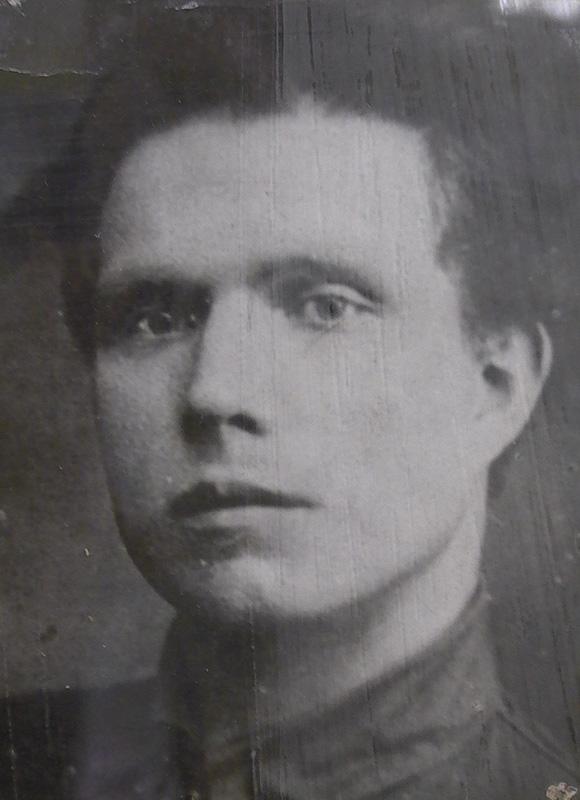
Tikhon Fadkin,
Secretary of the Komsomol cell of mine No. 29
Construction of the main subway structures began on April 28, 1932. In his memoirs, Tikhon Fadkin recorded not only the date, but also the exact time of this important event: “F.I. Kuzmin looked at his watch, and the hands on it showed 8-00, and said: “We seem to have understood how to develop rock in a calotte, we also understood how to set a circle, although it was difficult, we achieved our goal. Now let’s lay the heels of the arch under the first ring of the tunnel and wish all of us that everything will be fine and the tunnel will be strong.” Taking a silver fifty-kopeck piece out of his pocket, he placed it on the first row of rubble laid on the formwork.”
MEMORY STORES THE FILM
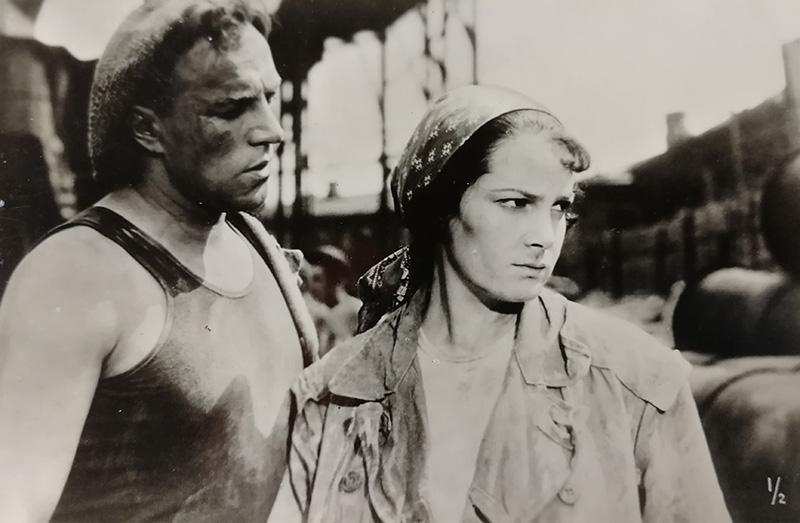
Mikhail Ulyanov and Elina Bystritskaya as the pioneers of the Moscow metro
In the fall of 1958, one of the most anticipated events in the public life of the USSR was the upcoming anniversary of the Komsomol. On the pages of our newspaper, a column dedicated to the fortieth anniversary of the multimillion-dollar union appeared in seven issues in a row.
In those days, the greatest tension was felt on the first section of the Arbatsko-Filyovskaya line, which was preparing to launch, where the track workers of Beniamin Katamanin’s brigade set the tone. A Komsomol member of Lenin’s conscription (1924), and then the first builder of the capital’s metro, he found time to speak to the young shift, talking about the enthusiasts of the 30s.
Our newspaper paid a lot of attention to the extension of the Sokolnicheskaya line beyond the Moscow River. There, in a tight, as usual, time frame, it was necessary to build the vestibules of the Leninskie Gory (now Vorobyovy Gory) and University stations. Moscow students were invited to the latter as assistants on a Komsomol ticket. For more than a month, a group of “Gubkinites” helped the masons of SMU-5.
It was the caisson workers of TO-6 (then SMU-1) who had the hardest time that fall. But they also showed high production. On the front page of Metrostroevets on October 25, it was reported that miners working under compressed air met their monthly quota a week ahead of schedule. The advanced brigades dedicated their achievement to the 40th anniversary of the Komsomol.
At the same time, our newspaper reported on another gift in honor of the anniversary – the premiere of the film “Volunteers”. It took place at the Udarnik cinema, where metro builders of several generations were invited to a meeting with the creative group. This film directly relates to them on topic. In addition, metro workers took part in the crowd scenes of the film. Moreover, the film was shot according to the script, which, together with director Yuri Egorov, was written by former pioneer Evgeniy Dolmatovsky, based on his own novel in verse “Volunteers”.
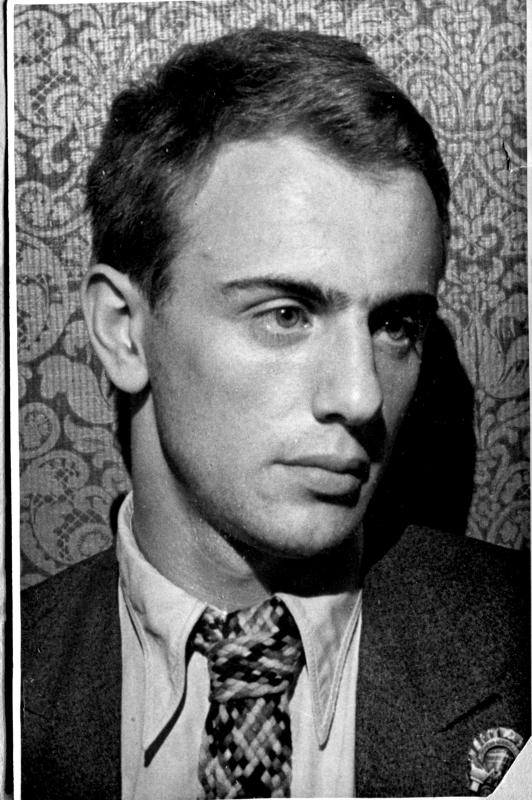
March 1941. Poet Evgeny Dolmatovsky, who worked as a hauler during the construction of the Okhotny Ryad station
In 1933, the future winner of high awards and author of many popular songs was 18 years old. At the mine where the Okhotny Ryad station was being built, he rolled trolleys with rock. Then there was study at the Literary Institute, a creative trip to the Far East, participation in the Red Army’s campaign in Western Ukraine and almost four years of the Great Patriotic War. He wrote the novel “Volunteers” in 1952-1955. Dolmatovsky wrote the poems for the main song during the filming of the film. “Komsomol Volunteers” are still sung at meetings of Mosmetrostroy veterans. And we still remember the debate about who the author based the image of Lelka, so beautifully depicted by the unforgettable Elina Bystritskaya.
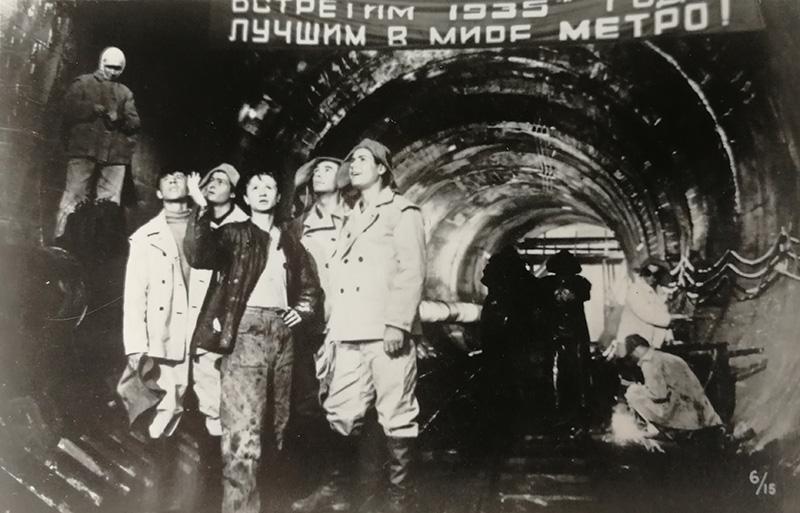
Still from the film “Volunteers”
FIRST YOUTH
In the history of Mosmetrostroy of the last quarter of the 20th century and the beginning of the 21st, the SMU-11 team occupies a special place. Initially, based on the method of recruiting workers, it was formed as a Komsomol youth organization.
The date of birth of SMU-11 and entry into service is April 1, 1972. The predecessor of the organization was called SU-702 and was engaged in civil engineering. Later, on its basis, they decided to form a new division, aimed primarily at the construction of metro facilities.
The most difficult thing was to recruit cadres of tunnelers. There was no need to count on vocational school graduates, since they were facing conscription into the army. But campaigning among the demobilized soldiers yielded good results. By the end of 1972, there were already six hundred people in SMU-11. By that time, the newcomers had completed their first task - they built a ramp chamber in front of Begovaya. Then the team was entrusted with the construction of an entire station of the same Tagansko-Krasnopresnenskaya line - “Tushinskaya”.
Launch followed launch. “Medvedkovo”, “Novogireevo”, “Nagornaya”, “Konkovo”. The builders gradually grew professionally. For example, Boris Khlimankov, who came to the organization after the army as an ordinary worker, managed to graduate from the evening department of the institute and in the mid-1990s became deputy chief engineer of SMU-11. By 1997, when the 25th anniversary of the team was celebrated, six of its members were awarded the Order of the Red Banner of Labor, and four were awarded the Order of Labor Glory.