Immortalized the name of kedrina
The literary association in the Moscow region town of Mytishchi appeared in 1946. At that time, it was more of a circle of interests, which was founded by one of the pioneers of the Moscow metro, front-line poet Boris Veselchakov. For 55 years now, LITO has been headed by Yuri Petrunin, who devoted a quarter of a century to Mosmetrostroy, working as a correspondent for the editorial office of the Metrostroevets newspaper.
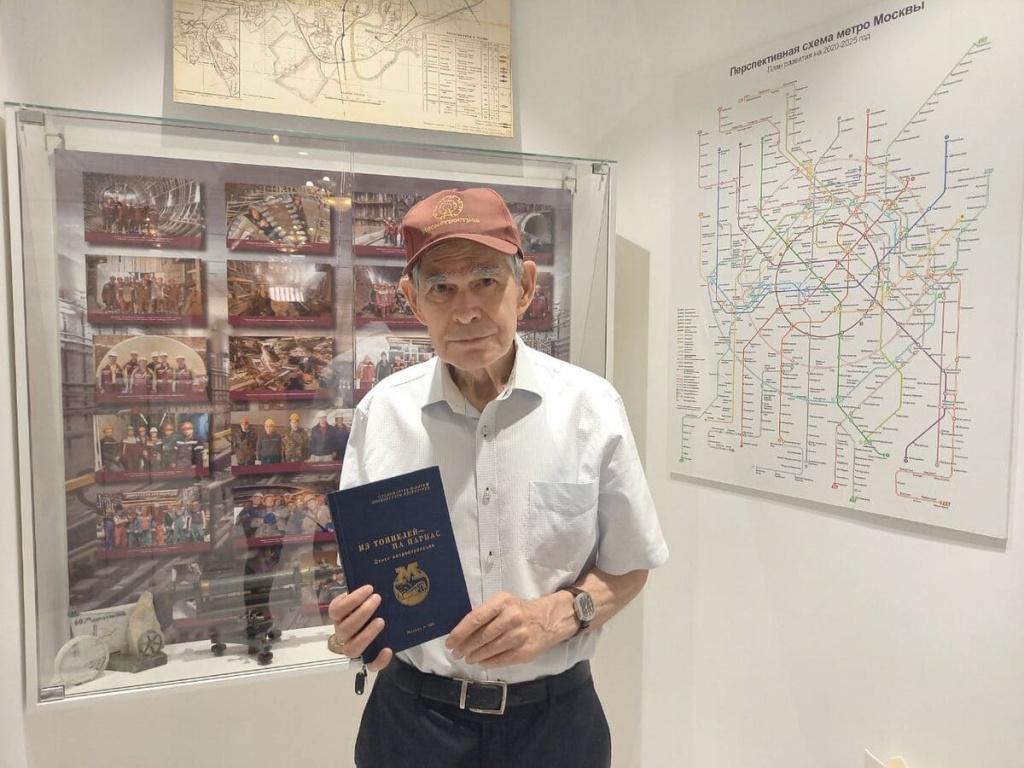
LITO head Yuri Petrunin in the Mosmetrostroy Museum
FROM TRAVELERS TO POETS
The founder of LITO, poet Boris Veselchakov, worked at the Moscow Metro Construction as a digger, rock hauler, and concrete worker. At the same time, he wrote poetry, for which he received a work permit to the Literary Institute. After the diploma, he went to the Mytishchi regional newspaper, where before the war he tried to unite creative youth.
After 1945, the order-bearing officer Veselchakov, who had gone through the war, published a poetic book “In the Dugout” and returned to the newspaper again. Literary circle meetings have resumed. The number of participants grew, and not only at the expense of Mytishchi residents. The community of aspiring poets and short story writers began to be called a literary association.
BIGGEST NAMES
In the 50s, LITO was led successively by three people. The most respectable figure among them was Valery Pushkov, who published the first collections of stories back in the 20s and the author of the novel “Who Sows the Wind.” Perhaps, at his suggestion in 1956, the first issue of the almanac “Poetry Day” included a poem by Mytishchi resident Yakov Belitsky “Caution, leaf fall...”. This young man soon began teaching classes at the association. The third leader in the same 50s was the poet, a graduate of the Literary Institute, German Valikov, who lived in the Moscow region and worked on the manuscript of his first book, “Flowers and Stars,” published under the brand name “Soviet Writer” in 1959.
The bearer of the most famous name that went down in the history of LITO was Nikolai Glazkov. Captured in films as a resident of the capital's Arbat, from the mid-50s he lived between two cities, spending the summer in the green suburb of Mytishchi - in Perlovka, in the house of his wife Rosina Glazkova. Tired of his “self-publishing”, the poet established contact with the regional newspaper and was published there under the heading “Poems of members of the literary association.” This was the case until the publication of his first book, “My Stage”.
In the summer of 1966, the Mytishchi LITO first announced its existence at the regional level. The Moskovsky Rabochiy publishing house has published Literary Echo, a collection of works by amateur authors. Mytishchi residents were also represented there, along with many others. The then head of LITO Sergei Pushkarenko spoke with a story, Yuri Degtyarev and Yuri Petrunin with poems. Pushkarenko was a participant in the Civil War, trained as an engineer, and moved from Siberia to the Moscow region only after retiring.
HAS TAKEN THE BATON
After publication in the Literary Echo, Sergei Pushkarenko, who at that time was 70 years old, decided to completely take care of his health. The reins of leadership of the literary association were taken over in September 1966 by Yuri Petrunin, a Komsomol member, a student at the Literary Institute, and an engineer at the Mytishchi Design Bureau for the Cable Industry.
– I was born in 1939 in Stalingrad. At the age of 17 he entered the Leningrad Polytechnic Institute. During his studies, he was an active correspondent for the newspaper Polytechnic, as well as a member of the literary circle at the newspaper. Having defended his diploma in the specialty “Insulating Cable Engineering”, he was assigned to the Mytishchi Design Bureau of the Cable Industry. I ended up in the air pipeline laboratory,” recalls Yuri Yakovlevich.
Working as an engineer, to which Petrunin devoted more than ten years, did not hinder his creative development. Having looked around Mytishchi, he immediately found a regional newspaper, where his notes, essays, poems and feuilletons began to appear, and also joined the literary association under it. He wrote about life at the enterprise where he worked, about famous residents of the city, and even then he had stories about construction in his arsenal. So, about the foreman Vasily Kruglov, who worked on the construction of residential areas of the new Mytishchi, he wrote a poem in five parts.
In 1963, Petrunin entered the correspondence department of the Literary Institute. His mentor was the first metro builder, poet Evgeny Dolmatovsky, and the reviewer of his thesis - the collection of poems “Winter Electric Trains” - was the poet Sergei Smirnov, who worked on the construction of Komsomolskaya. Already in his fourth year, Petrunin was offered to head a creative association in Mytishchi. Which, by the way, did not have its own name until now. Yuri Yakovlevich decided to fix this.
IMPORTALIZED THE NAME OF KEDRIN
– In 1967, the 60th anniversary of the birth of the wonderful poet of tragic fate Dmitry Kedrin was celebrated. I knew that in the early 30s he was a literary employee at the Mytishchi Carriage Works. The anniversary gave me the idea to go to Leninka and get acquainted with the files of Kuznitsa. Having collected the material, he wrote an article “Factory, Newspaper, Poet,” which the “district” published and continued in two issues. Soon the city committee of the Komsomol came up with the idea of perpetuating the memory of the poet Kedrin in our city. The Mytishchi City Executive Committee adopted a resolution: to assign the name of the poet to our literary association and the school of working youth (SHRM), which was then operating at the plant. Subsequently, the main library of Mytishchi began to be called Kedrinskaya.
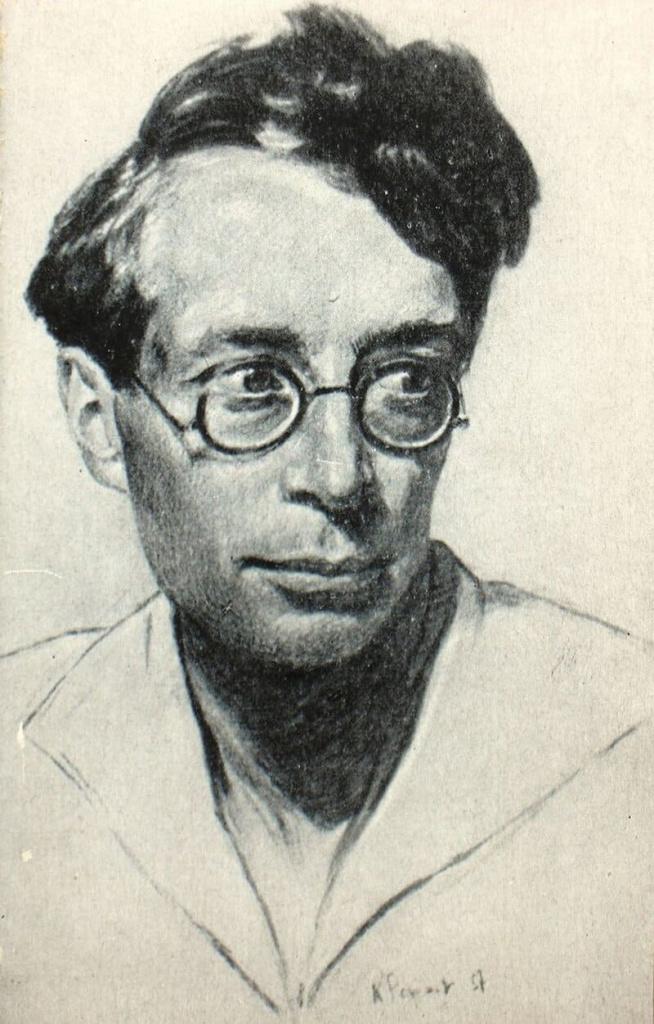
Poet and playwright Dmitry Kedrin (1907-1945)
For 55 years now, Yuri Petrunin has headed the association, which has published more than 250 books. For thirty of them he wrote an introduction. Petrunin himself has several collections of poetry to his credit, as well as the documentary book “Kedrintsy. Notes from the head of LITO" and many publications in collective collections and almanacs.
Many metro builders passed through LITO, whom Yuri Yakovlevich united in the creative community while working for our newspaper. Among them are the poets Alexei Fomin and Konstantin Ratner, with whom, by the way, they jointly compiled the book “From the Tunnels to Parnassus.”
In general, the pioneer builders aroused great respect and interest in Petrunin. He knew some of them personally and even visited them. While working for our newspaper, he immersed himself in the history of metro construction and studied files of newspapers published during wartime. They contained a published order conferring the title of Hero of Socialism. Labor to Ivan Yatskov, Ivan Zubkov, as well as Isaac Borenboim, who was unfairly forgotten.
By the way, interest in the fate of Dmitry Kedrin helped Petrunin find the grave of the first head of Metrostroy, Pavel Rotert. They are buried not far from each other at the Vvedensky cemetery.
Yuri Petrunin is a member of the Union of Writers of Russia and the Union of Journalists of Russia. He has the title “Honorary Citizen of the Mytishchi Urban District” and is the first laureate of the Dmitry Kedrin “Zodchiy” literary prize.