Remembering the best
At the beginning of November, the oldest organization of Mosmetrostroy, Tunnel Detachment No. 6, celebrated its 85th anniversary. On the occasion of the anniversary of TO-6, we remember the tunnelers whose achievements contributed to the development of metro construction as a whole.
Lead by: Vasily Zhokhov and his site
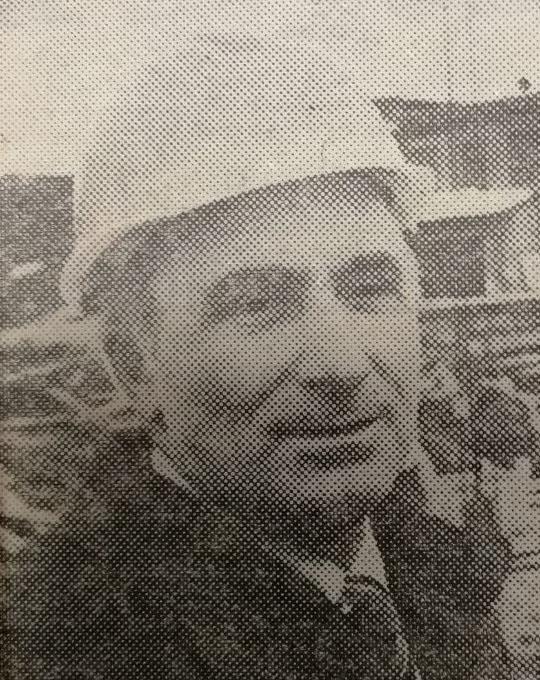 The name of Vasily Zhokhov occupies a very noticeable place in the life of TO-6 during the 60s and 70s. One of the confirmations of this is a selection of poetic dedications published in our newspaper on April 30, 1972 to well-known production workers throughout Mosmetrostroy. Tunnel detachment No. 6 is represented there by Vasily Petrovich:
“His there, then here –
Not because it's bad.
Where it is difficult is everywhere, always
Zhokhov is conducting the excavation.”
At least twice, engineer Zhokhov was sent to problematic sites to correct the situation. During the construction of the Kolomenskaya station, where there were large cost overruns, he was appointed acting site manager, and in a matter of months he achieved important results. Firstly, I corrected the situation by strictly making sure that no excess soil was taken from the pit - then less concrete would be needed for the tray. Secondly, he showed the ability to work with people.
Since August 1967, Zhokhov became the full-fledged head of his section. The team under his leadership begins the construction of the Varshavskaya station. By this time, his metro construction experience had reached 14 years.
“Varshavskaya” was to be built in an open way. The novice manager carefully studied the design documentation, compared it with the terrain and concluded that the project underestimated the weight of the backfill. Defending his opinion, he even reached the head of Mosmetrostroy Vasily Polezhaev. As a result, the crossbars were increased. At the same time, Zhokhov made sure that the station did not lose out in architectural terms.
Talking about this facility many years later, Zhokhov noted that the site had a very strong team of engineers and foremen. Then he listed up to a dozen names. Among other things, he named Vladimir Dronov, who was to rise to become the chief engineer of the entire Mosmetrostroy, and then the Main Directorate. He also mentioned foreman Pavel Novozhilov, whom the whole country soon recognized - in 1971 he became a Hero of Socialist Labor.
By that time, section No. 2 had been transferred to the Kaluzhsko-Rizhskaya line. First, a stretch was built towards “Belyaevo”. In January 1972, work began on the station itself.
In the fall of 1973, the team was awarded the title of Komsomol-youth section named after the 55th anniversary of the Komsomol.
Excursions came to the construction site - Novosibirsk metro builders, youth delegations from Czechoslovakia, East Germany, Bulgaria. During the pre-launch period of the Belyaevo station, Central Television broadcast the program “Hello, we are looking for talents.”
Interesting
Special attention to the construction of the “Belyaevo” station could be due to the fact that, according to journalists’ calculations, it was supposed to become the hundredth for the capital’s metro (Metrostroyevets also wrote about this). But Vasily Zhokhov’s section picked up such a pace in the competition that, beating several competitors, it finished ahead of the estimated time. Now in open sources “Belyaevo” is listed as the 97th station.
Shortly after the launch celebration, the successful site manager was promoted and transferred to another division of Mosmetrostroy: Vasily Zhokhov became the chief engineer of SMU-11. Thus ended his more than thirty-year stay in the ranks of our tunnel workers.
Zhokhov began as an ordinary worker. He remained in the same capacity during his years of study at the evening department of the technical school of transport construction. He was a very diligent student, striving to learn and assimilate as much as possible. As fellow students recalled, his thesis work was held up as an example to others for a long time.
Simplified the work of the railway workers
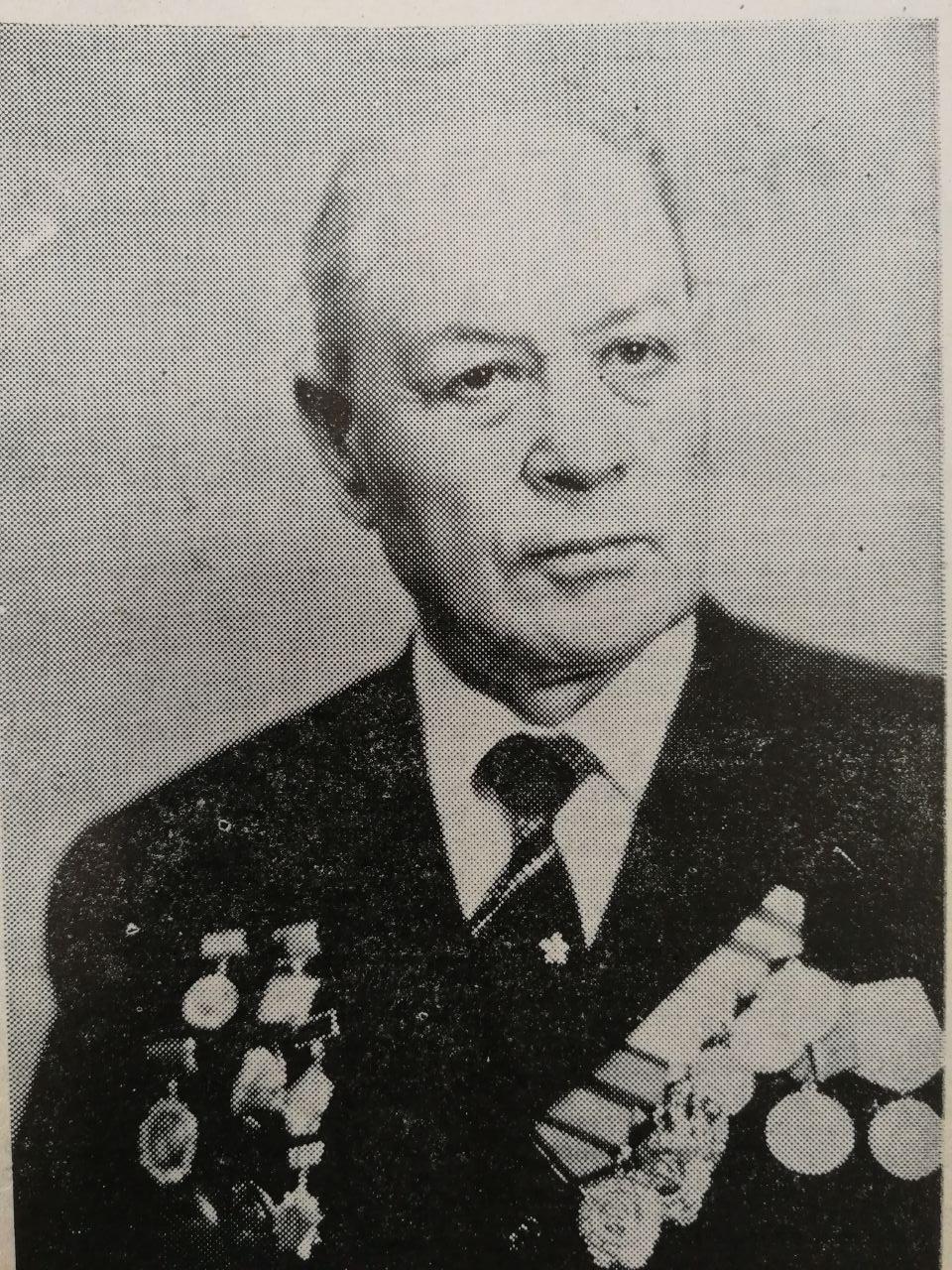 A quarter of a century ago, when the 60th anniversary of TO-6 was celebrated, its head at that time, Viktor Sidortsev, in an interview with Metrostroevets, spoke about the most famous people from the great history of the team. He named the first heroes of Socialist Labor Ivan Yatskov and Yuri Koshelev. Nikolai Meshcheryakov, whose work the country recognized with three orders, was on an equal footing with outstanding leaders. In addition, he had the title of pioneer, which was highly valued in Metrostroy.
Meshcheryakov joined the ranks of the Metro builders in 1934, when he came with a permit from the Proletarsky District Komsomol Committee to the construction site of the Kirovskaya station (now renamed Chistye Prudy). He started there as a mechanic, soon rose to the rank of foreman, and then - even before the metro was launched - he was drafted into the Red Army. Having served the allotted time, he returned to the construction site.
His new object was the station “Sverdlov Square” (“Teatralnaya”), where Meshcheryakov was in charge of a mechanical workshop - this determined his future career path. In the early 50s, he already worked as a chief mechanic at the construction of a facility led by Vasily Polezhaev. In the same capacity, he transferred to SMU-1 (future TO-6), when they began digging the distillation tunnels leading from the Moscow River to the University station. There, the water-saturated coastal soil forced the use of a caisson in the faces. And in ensuring successful work under compressed air, the most important role was played by the well-organized mechanical service of the tunnel workers.
Meshcheryakov left a good memory of himself thanks to his significant contribution to facilitating and improving track work. Before him, the running rails of the underground tracks were welded into whips by metropolitan workers, and they did this operation on a stationary installation at the Sokol depot, from where they transported them by motor locomotive to the finished ones tunnels. The former metro pioneer, who over the years rose to the post of deputy chief engineer of TO-6, implemented the idea of transferring the welding of the lashes directly to the place where they would be laid. This is how a new term appeared - mobile rail welding station. There have been no launches without it since then.
Soon after the introduction of advanced track technology in the Moscow tunnels, an order for a new product came from Baku. Glavk sent there a group of specialists headed by Meshcheryakov, and they helped their Baku colleagues significantly bring forward the time of launching the metro in the capital of Azerbaijan.
The tireless tunneler retired only in 1988, having given Metrostroy more than half a century. His career is marked by two Orders of the Red Banner of Labor, the Order of the Badge of Honor and six medals, among which there is an essentially combat award for the builder of protective structures - “For the Defense of Moscow.”