Outstanding engineer Semyon Rozanov
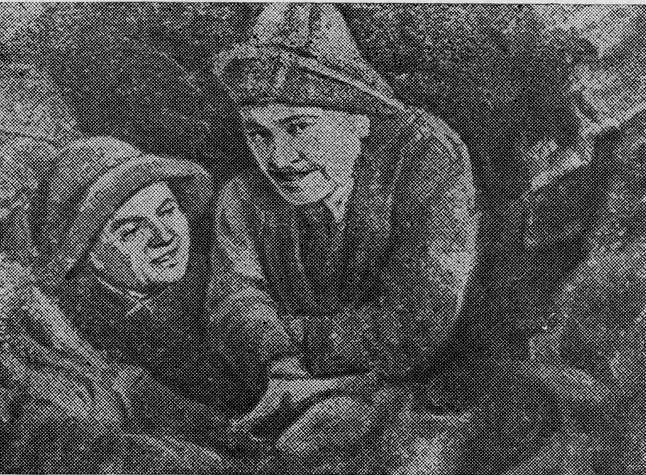
In the October issue of Metrostroyevets we talked about Semyon Rozanov, who designed the Paris metro, and then the first stage of the Moscow metro. Today we complete the story about an outstanding engineer.
However, after the transport collapse in Moscow on January 7, 1931, Kaganovich and Stalin became concerned with the problems of transport, which was in an extremely poor condition. At the June plenum of the Central Committee of the All-Union Communist Party of Bolsheviks in 1931, a decision was made to build a metro. In August, engineer Pavel Rottert was summoned to Moscow from Dneprostroy, to whom Grigory Ordzhonikidze offered to lead the design and construction of a new transport system.
The brilliant engineer and skillful organizer Rottert named the release of the surviving metro specialists from imprisonment as a condition of his appointment. So Rozanov, who was first in a tsarist prison and then in a Soviet concentration camp, was again free.
In October 1931, Metrostroy was established. Rottert appointed Victor Nikolai as the head of the technical department, and Rozanov became his deputy, consultant, and then chief engineer for tunneling.
By that time, three fundamentally different schools had emerged in metro construction: London (construction of subway panels at great depths); Parisian (construction of shallow tunnels and stations using manual mining methods) and Berlin (open pit or pit construction). Fairly aware of the extremely meager capabilities of the country in the 1930s, Rottert chose the simplest pit method for Moscow. At the same time, it was immediately clear that in many areas the tunnels would have to be built without opening the surface - in the Parisian (mountain) way. To test this method in the conditions of Moscow, long before drawing up the technical design of the line, Rottert laid an experimental tunnel on Rusakovskaya Street in early December 1931. From this moment on, the history of metro construction in Moscow and the country begins.
Vadim Pikul, who directly designed the experimental tunnel (under the leadership of Rozanov), testified that Rozanov not only used the Parisian method of calculation and construction, but essentially developed the method himself, proposing his own design scheme for lining the tunnel in the ground.
The further history of the design and construction of the Moscow metro is full of dramatic pages and turns. In 1932, Rotert's original design was rejected and construction took a completely different path. In its pure form, only 5 of the 13 stations of the first line were built using the Berlin (open, pit) method, three stations using the semi-closed method, and five using the mountain method using Semyon Rozanov’s method. The share of tunnels built using the closed method was 52%.
The last years of his life, Semyon Nikolaevich taught at MIIT. Unfortunately, he did not get to see the fruits of his work on the construction of the Moscow metro: he died on December 23, 1933, a year and a half before its opening. Rozanov's grave is located at the Novodevichy cemetery in Moscow (section 2, row 8).