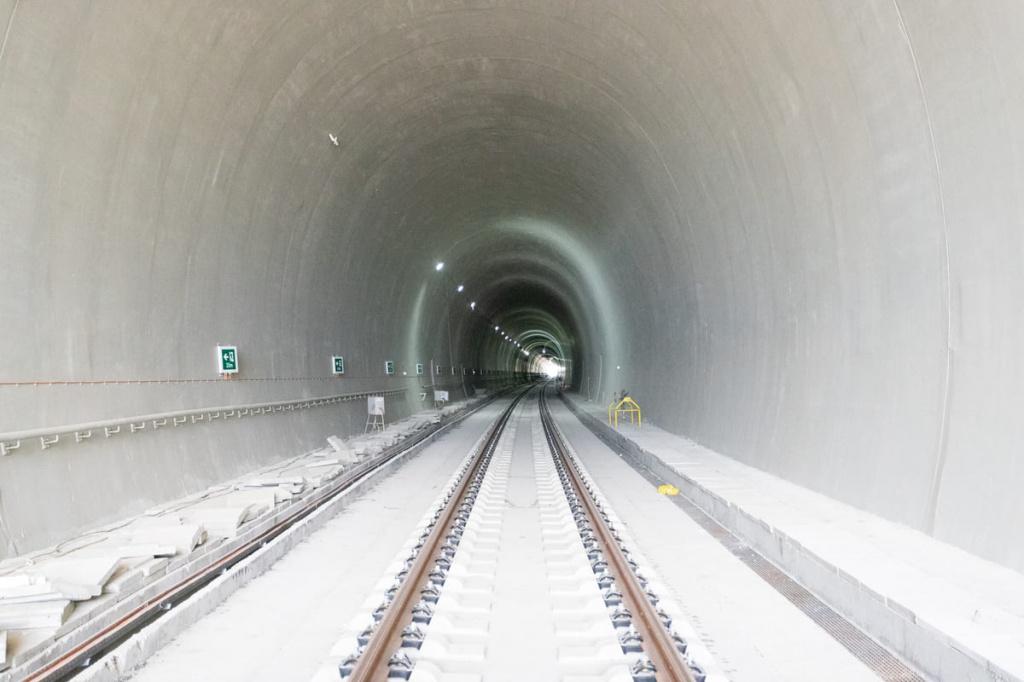
Engineering experience helps out in difficult tasks
MMC International has been participating in the reconstruction of the Stara Pazova-Novi Sad section of the high-speed railway in the Republic of Serbia for the fourth year. As part of the project, the organization received 46 artificial structures (ISSO), including overpasses, underground pedestrian crossings, road underpasses and overpasses, as well as railway bridges. They are all ready. The details were given by Andrei Loiko, Deputy Director of the MMC International Belgrade Branch.
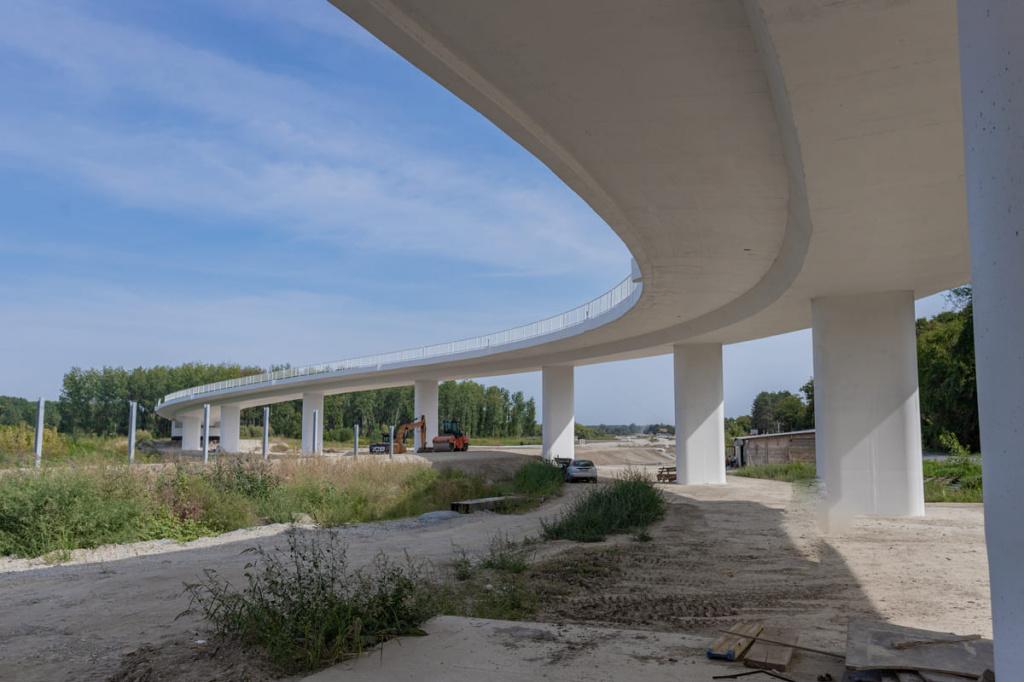
The construction of artificial structures in the section from Indjija to Novi Sad was completed at the end of July. Each of the 46 objects required special approaches from MMC International specialists. Basically, construction sites were located extremely compactly in urban areas.
“The location of objects in populated areas required thoughtful decisions from the organization of logistics to the formation of construction sites,” says Andrey Loiko.
Large objects turned out to be the most difficult. Among them is an S-shaped road overpass in the city of Sremski Karlovci, the spans of which are made of prestressed concrete structures.
“Another difficult object was the railway bridge in the city of Novi Sad,” he notes. “We had to completely block traffic on one street. Temerinska is the key road artery of Novi Sad, connecting two parts of the city. The bypass routes were inconvenient for the population, and the city authorities allocated a strictly limited period for closing this street.
MMC International was slightly ahead of schedule, despite the rather tight deadlines.
Among the complex objects, Andrei Loiko noted the underground road crossing on Bozhidara Adzhie Street in the city of Petrovaradin. The difficult hydrogeological conditions at this site are due to its location in the floodplain of the Danube River. The aquifer began with one and a half meters of excavation.
“There was literally a lake at the location of the object,” he recalls. “The pumps worked around the clock, pumping out water. We had to completely replace the soil at the base of the facility.
Closing the list of the most complex artificial structures is the underground road crossing on Vojvode Putnik Street in the city of Indjia, which connects the city with the highway between Belgrade and Novi Sad - the largest of the ISSO facilities in the arsenal of MMC International in Serbia.
“This underground crossing is surrounded by residential buildings, on one side it is adjacent to the city stadium, and on the other, a flour mill,” says Andrey Loiko. – Despite the cramped conditions, everything was completed on time, using engineering experience.
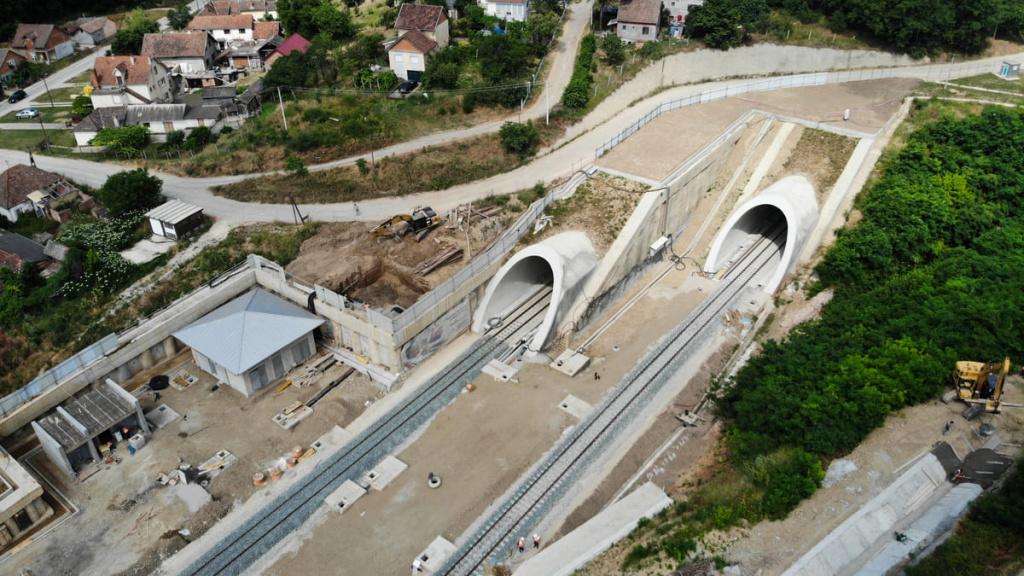
In addition, work continues in the Cortanovci tunnels, which are being built as part of a project to reconstruct the section of the high-speed railway on the Stara Pazova - Novi Sad section. After the repairs have been completed, the permanent lining is completely constructed. The task of constructing the track superstructure from the Rheda 2000 monolithic structure was also implemented.
“At the moment, all the collectors, pipelines, communication shafts have been equipped in the portal sections, that is, work on all underground structures has been completed,” notes Andrey Loiko. – The tunnel structures are completely ready.
According to him, the process of arranging the tunnel is currently underway. According to the contract, MMC International will have to install utility networks, fire protection, ventilation systems, transformer substations, and buildings for telecommunication systems. Other types of work include the construction of access roads and the arrangement of portal sites.
Among the prospects of MMC International, Andrei Loiko names several projects at once: the construction of two road tunnels in Belgrade, their commissioning will relieve traffic in the Serbian capital; reconstruction of the Bar railway, connecting Serbia and Montenegro and including 146 tunnels, about a third of which are already in disrepair; as well as the railway line between the cities of Nis and Belgrade on the Stalac-Junis section, which needs to be adjusted to speed up the movement of trains.
“In Serbia, large resources are involved, there is a good established base of suppliers, and work with subcontractors has been established,” he summarizes. “All this gives us the opportunity to confidently consider promising projects that we can implement.