Given a big ring

On March 1, Russian President Vladimir Putin and Moscow Mayor Sergei Sobyanin opened the world's largest metro ring. Nine of its 31 stations were created by JSC Mosmetrostroy.
On the first day of spring, a grandiose event took place - the Big Circle Metro Line was fully launched. Now trains make turns at 31 stations.
This event had been awaited for about ten years: when the builders began developing sites on site from the first projects and routings, they worked for years on end, not stopping on weekends or holidays, day or night. Behind is the colossal work of constructing an underground record holder. The 70-kilometer line accepts passengers. They count in the millions.
The command to launch the first train, which started on March 1 from Sokolniki and further around the entire circle, was given by Vladimir Putin. The Russian President watched the opening of new stations on the Big Ring via video conference. Sergei Sobyanin and hundreds of construction workers were in touch with the country's leader, bringing the holiday closer in the capital's metro.
“Now the new ring line has been fully put into operation, there is access for travel along its entire length,” Vladimir Putin thanked all the construction participants who, in a short time, implemented a large-scale project even by world standards. Vladimir Putin left an autograph on a new, complete map of the Moscow metro.
He noted that the launch of the Big Ring will qualitatively change the lives of millions of people, making it more convenient and dynamic.
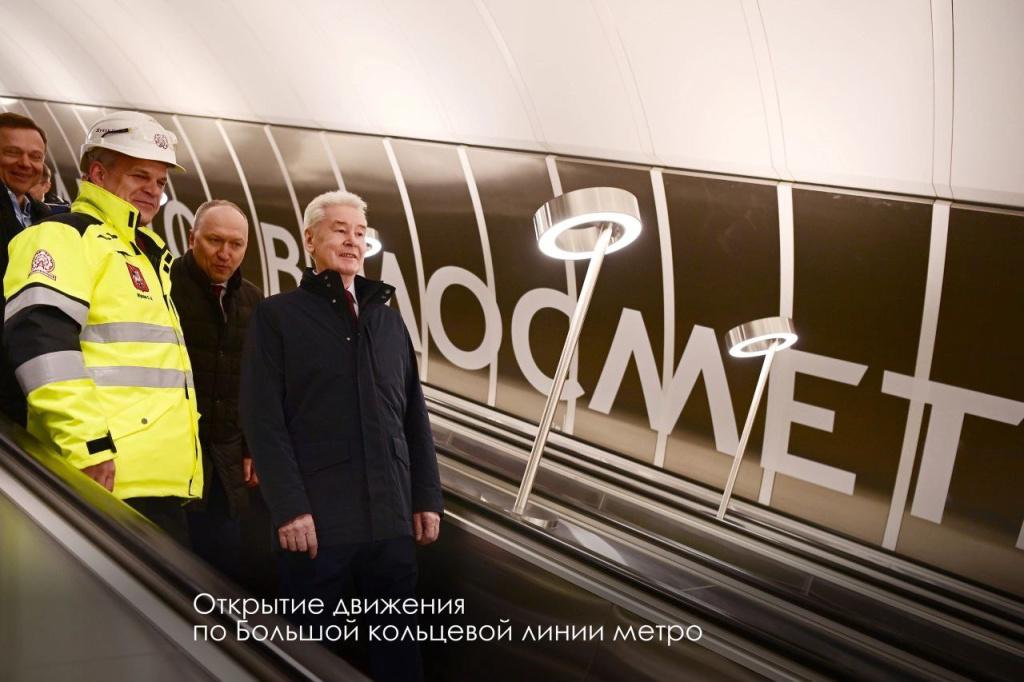
At a landmark event for Moscow, Vladimir Putin also announced a holiday for metro builders. It will be celebrated on October 2 - the day the order on the establishment of the Moscow Metrostroy was approved.
Sergei Sobyanin expressed gratitude to Vladimir Putin for his high assessment of the work.
– The new transport heart of the capital unites different metro lines and railways. Thousands and thousands of people worked to launch the Big Circle. The feat has been accomplished! – Sergei Sobyanin addressed the builders, recalling that many new metropolitan subway stations were created in the most difficult conditions.
This, for example, turned out to be the stations of the northeastern section of the Big Ring. It was here that the crews of JSC Mosmetrostroy worked. Maryina Roshcha and Rizhskaya with access to Sokolniki were built almost by hand. The first two are the deepest after Victory Park in the Moscow metro and have a number of features due to their location.
“We carried out one of the longest excavations near the Riga overpass of the Third Transport Ring,” noted Sergei Zhukov, General Director of Mosmetrostroy JSC. – The underground route ran at a depth of 30 to 70 meters, and TBMs crossed major highways and railways underground and came close to existing metro stations.
He noted that “Maryina Roshcha” became a record holder in its own way. It is located under the station of the same name on the Lyublinsko-Dmitrovskaya line at a depth of more than 70 meters.
“This station has the longest 130-meter escalators in the capital’s metro,” said Sergei Zhukov.
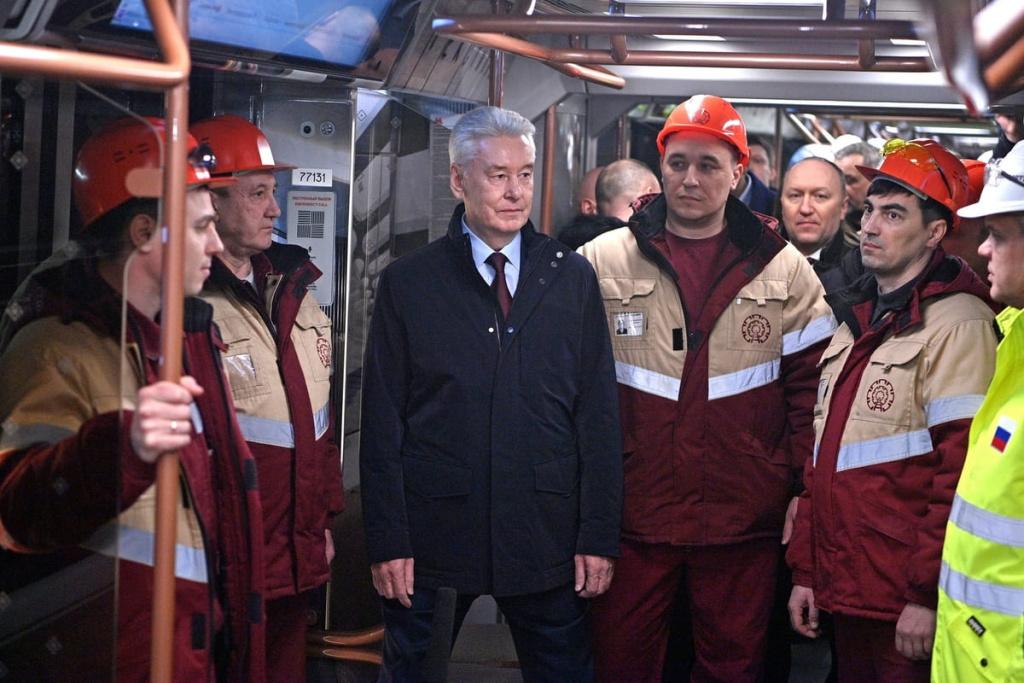
The metro builders also have other stations behind them: the reconstructed Kakhovskaya, Varshavskaya, Kashirskaya, as well as the previously built Elektrozavodskaya, Lefortovo and Aviamotornaya.
It is symbolic that the ceremonial launch of the entire Big Ring took place at Sokolniki. By the way, it was the design of this station that was dedicated to the feat of the metro builders - those who first created the newest transport reality of Moscow here more than 90 years ago. Panels appeared on the track walls, telling in the language of posters how the first metro lines began to be built.
It is worth especially noting the tradition of creating underground palaces not only 90 years ago, but also today. Each of the commissioned stations is a unique work of art. Thus, “Maryina Roshcha” was made to look like a noble estate, in which the main details were pot-bellied teapots and ball-columns. "Rizhskaya" has become a unique portal to the historical station.
Opened two years ago, Kakhovskaya and Kashirskaya and Varshavskaya, launched this March, have preserved their historical appearance thanks to the painstaking restoration and reconstruction of the stations of what was once the shortest line of the city subway.