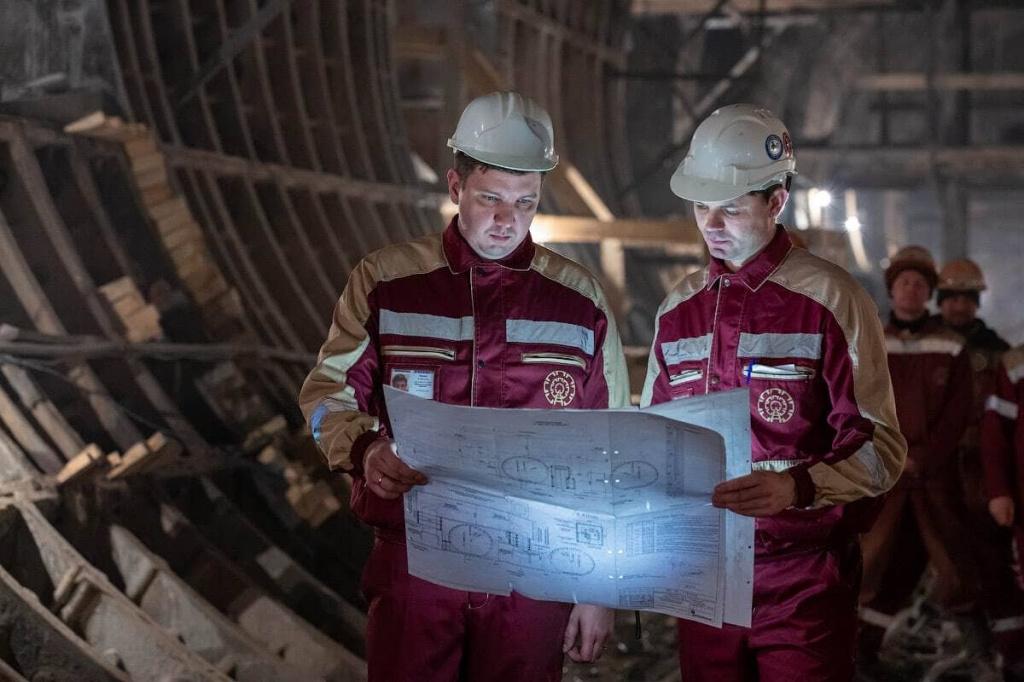
Continuing glorious traditions
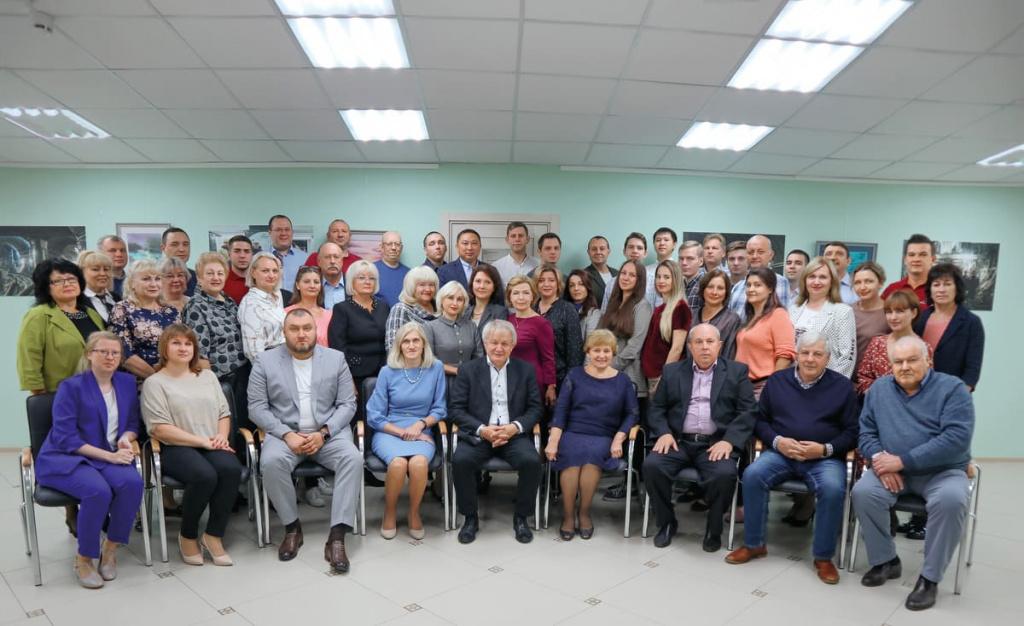
Employees of the SMU-8 management
Direct speech
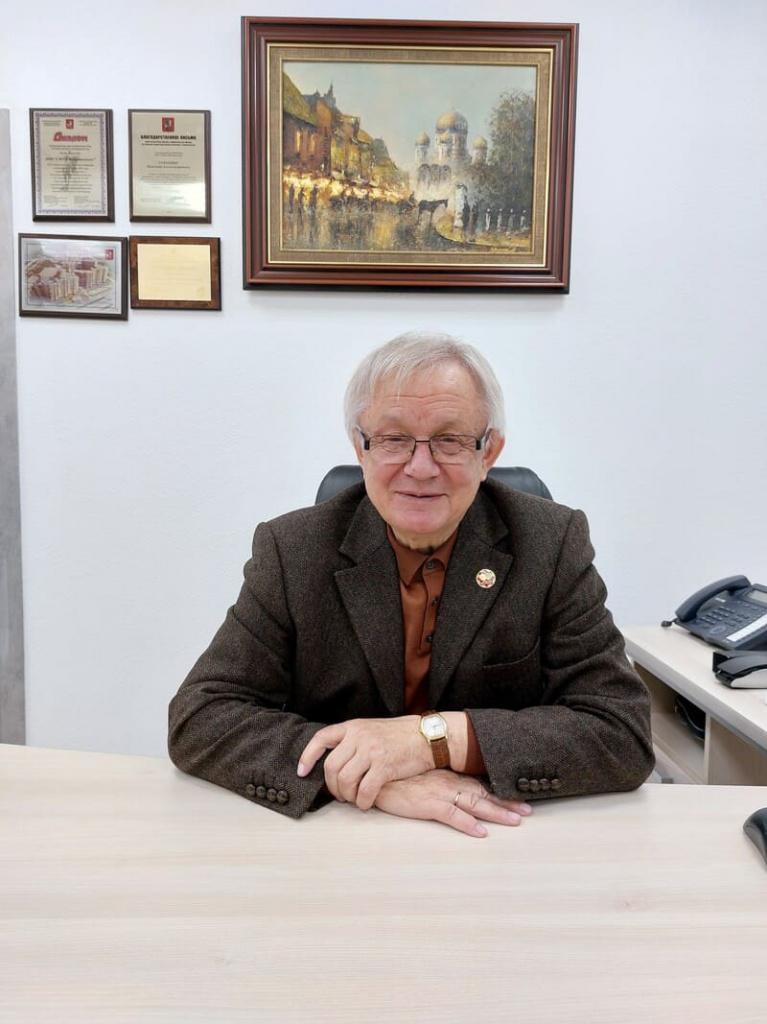
Nikolai Sorokin, General Director of SMU-8 Metrostroy LLC
Construction and installation department No. 8 of Metrostroy is one of the oldest construction organizations in the capital, whose history began 90 years ago.
In the fall of 1931, on Rusakovskaya Street, not far from the railway embankment of the Mitkovsky overpass, a work site was allocated, and opposite, the first office of the experimental site was located in an old barn. Here the first steps of the future SMU-8 team began.
Our veterans - the founders of the company managed to create a qualified engineering and working staff during the construction of the 1st stage of the Moscow Metro, lay a strong foundation and traditions, thanks to which SMU-8 is successfully developing today.
Summarizing the results of its 90-year history, I would like to express my gratitude to our veterans for the work done and wish them strong health.
I congratulate the entire team on the anniversary and wish you health, good luck, new achievements for the benefit of our city, the company and their families!
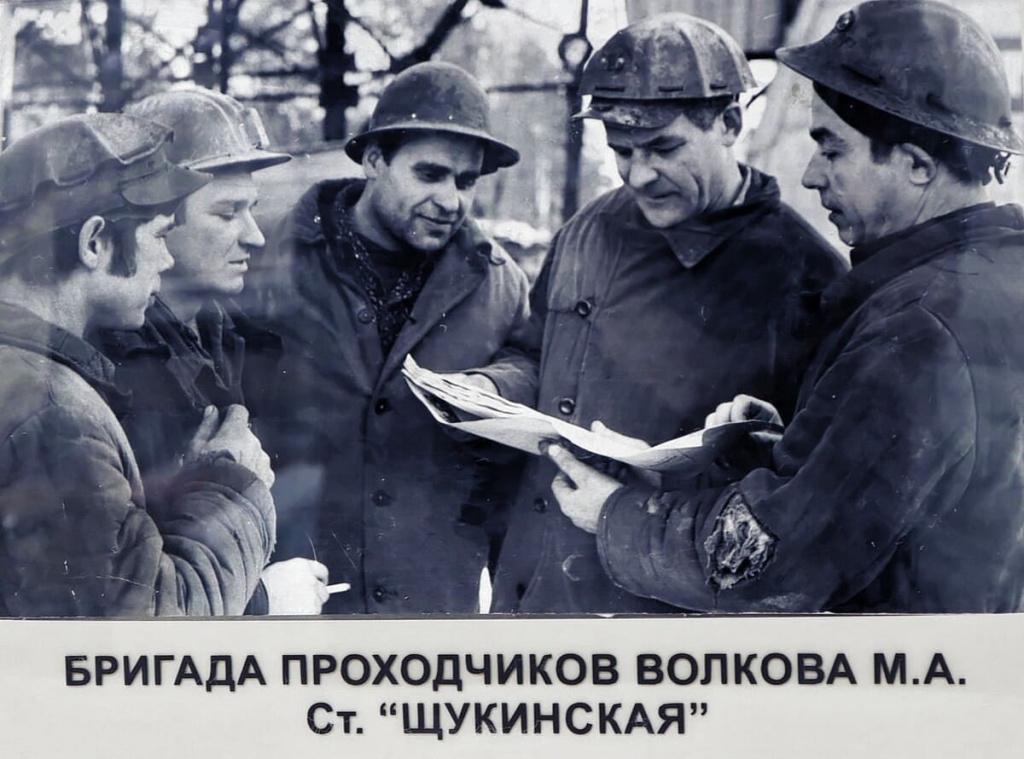
Historical chronicles
1931-1935 In four years, the first underground route of the Moscow metro was built, in the construction of the stations the builders of SMU-8 participated. These are “Red Gate”, “Chistye Prudy”, “Kropotkinskaya”, “Arbatskaya” and “Smolenskaya”.
1935-1938 With the opening of the second stage, the metro became 20 kilometers longer. SMU-8 took part in the construction of such stations as Ploshchad Revolyutsii, Kurskaya, Belorusskaya and Teatralnaya.
1939-1944 The stations built during the Great Patriotic War were erected by SMU-8, since employees of other units were either evacuated or sent to the front. By 1943, the Gorky radius from Sverdlov Square (Teatralnaya) to the Stalin Plant (Avtozavodskaya) was extended. “Paveletskaya” and “Novokuznetskaya” were opened in November 1943, and in January 1944 - a section of the Arbatsko-Pokrovskaya line from “Kurskaya” to “Izmailovsky Park of Culture and Leisure named after. Stalin" ("Partizanskaya"), and in May - "Elektrozavodskaya".
1945-1950 Among the objects of SMU-8, civil structures also appear. One of them is a children's health camp in Balabanovo. It was opened in 1946. 1950-1957 The fourth stage included the Circle Line, as well as the deep part of the Arbat Line.
1957-1970 During these years, Mosmetrostroy was headed by Vasily Polezhaev, the length of the capital's subway lines increased by 81 kilometers. SMU-8 built such stations as Oktyabrskaya, Ploshchad Nogina (Kitai-Gorod), and Shchukinskaya. Also, the SMU-8 team created the Central Transfer Hub at that time.
1980-1990 The pace of metro construction in those years is such that the Moscow metro is beginning to be compared with BAM. SMU-8 rents out Chertanovskaya, Polyanka, Tsvetnoy Boulevard, Rimskaya, as well as the Olimpiysky sports complex.
1998-2021 Over the past 20 years, the landmark objects in the construction of which SMU-8 took part were: the second exit from the Mayakovskaya station, the Annino, Savelovskaya, Butyrskaya stations, and a project in the field of metro construction was implemented in Nizhny Novgorod.
Created at a record depth
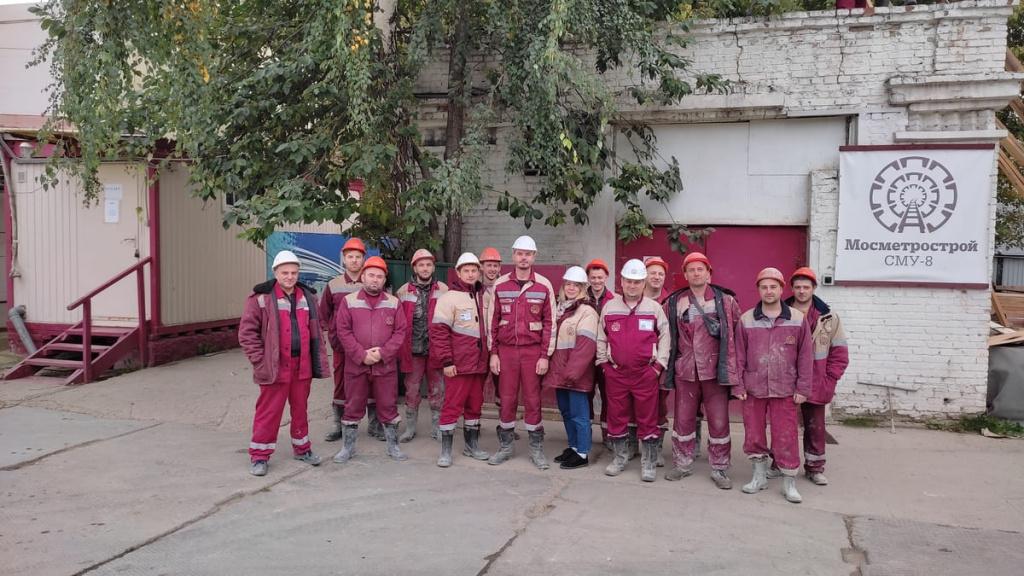
Plot No. 3, construction site No. 13.1, “Maryina Roshcha” BKL
For four years, SMU-8 crews have been taking part in the construction of one of the deepest metro stations in Moscow – “Maryina Roshcha” on the Big Circle Line. Deputy chief engineer of SMU-8 Dmitry Faizrakhmanov told what difficulties the builders faced.
SMU-8 began development of construction site No. 13.1 in 2017. The primary task was to prepare the VSM-10000 tunneling complex for the construction of vertical shaft No. 1238-bis with the subsequent construction of the mining complex. After the construction of the shaft yard and approach workings, we reached the station complex. During the design process, a decision was made to drill pilot tunnels using mechanized shields with a lining diameter of six meters and to connect several stations at once: Savelovskaya, Maryina Roshcha and Rizhskaya. The TBMs started from the assembly chamber at site No. 17.
Another point on the BKL for SMU-8 was site No. 24, next to Savelovskaya. Shaft No. 1237 was equipped with a mining complex, which made it possible to build dismantling chambers with a diameter of 13 meters underground, into which the TBMs went.
“After passing the pilot tunnels in the area of the Maryina Roshcha station, SMU-8 began dismantling the lining with a diameter of six meters and installing a cast iron lining with a diameter of 8.5 meters,” Dmitry Faizrakhmanov recalls the main stages. – The excavation of station tunnels was carried out in the technical zone of the existing metro using counter-faces using drilling and blasting operations. The bulkhead of the tunnels themselves was carried out by layers, four of whom worked in each. The brigades met in the area of the 116th ring. The cast iron lining in the tunnels is currently being waterproofed.
The third site No. 21 with a mountain complex is located on Vetkina Street, building 2. It serves to build an interchange hub to the Maryina Roshcha station of the Lyublinsko-Dmitrovskaya line. The minimum distance between stations is six meters, and the depth of the station under construction is 67 meters.
“That’s why most of it is done by hand.” So, with the help of drilling and blasting, the tunnels and the middle station hall were freed from the rock, Faizrakhmanov outlines the main difficulties.
Maryina Roshcha is a unique station in terms of its design. Typically, a block of technical premises and a traction-step-down substation (TSS) are always located at the station complex. Here it was decided to build a four-level lobby - two floors are located underground and two on the surface. A block of technical rooms and the Chamber of Commerce and Industry was located in the lobby. Another feature is the longest inclined passage in Moscow, its length is 130 meters.
At the moment, the readiness of the lobby is estimated at 85%, installation of utility networks and laying of granite is underway, and work on the façade cladding is being completed. Next year it will be decorated with balloon columns. They are made in a separate workshop using unique technology.
Despite the difficulties, the teams have the main task of completing construction in 2022.
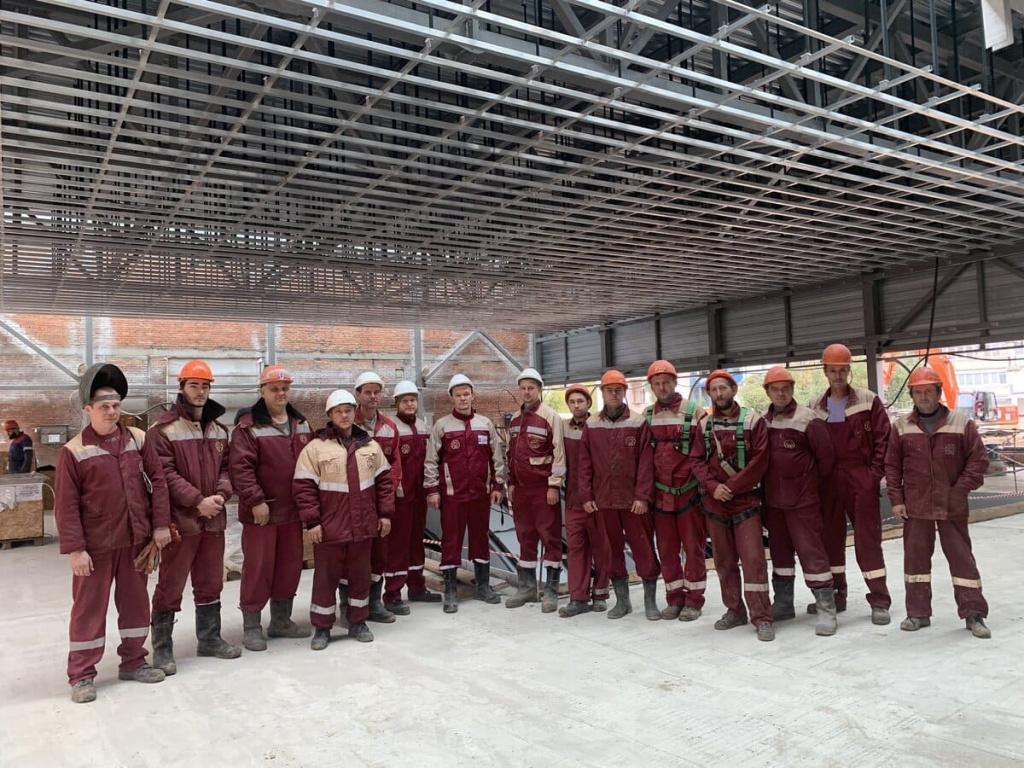
Plot No. 2, construction site No. 13, “Maryina Roshcha” BKL
We completed a magnificent replanting job
This summer was a special test for SMU-8 specialists. In record time, they had to build an interchange between the existing Prospekt Vernadskogo station and the station of the same name, which is under construction on the Big Circle Line. We are publishing the details of the operation for the first time.
In July, SMU-8 crews found themselves in one of the most difficult areas - the construction of an interchange hub between two stations. They planned to “approach” underground from the Great Ring metro station under construction, reaching the technical chamber on the Sokolnicheskaya line.
“In Soviet times, the builders at the station left the possibility of constructing a transfer to a promising line in the future,” said SMU-8 deputy chief engineer Evgeniy Shmakov. “We had to go into this chamber and, without stopping the movement of trains, go out to the middle of the platform using the staircases.
However, for the safety of passengers, the station was temporarily closed, and the builders had a little more time and opportunity to implement this small but very complex project. Among the main difficulties, Evgeniy Shmakov names the abundance of utility networks passing under the existing platform. The crews had to wait a long time for communications to be transferred. At the same time, monolithic work on the construction of approach corridors and later two flights of stairs was not stopped.
“We had to act with extreme caution,” added the deputy chief engineer. – We had some concerns about the construction of a transfer between two stations, one of which can be called “age-related”. After all, Prospekt Vernadskogo has been operating for almost 60 years, the structures of which were created not from a monolith, but from prefabricated reinforced concrete.
The builders worked as carefully as possible: it was unknown how the old slabs might behave when cutting out openings. For this reason, a system for monitoring station flume structures and utility networks was introduced, checking several times a day.
– Initially, the schedule allocated six months for the construction of the transfer hub. However, we completed it in two and a half months, erecting the main structures and handing over the replanting for finishing and laying utility networks,” summed up Evgeniy Shmakov.
We are laying a metro to the north of the capital
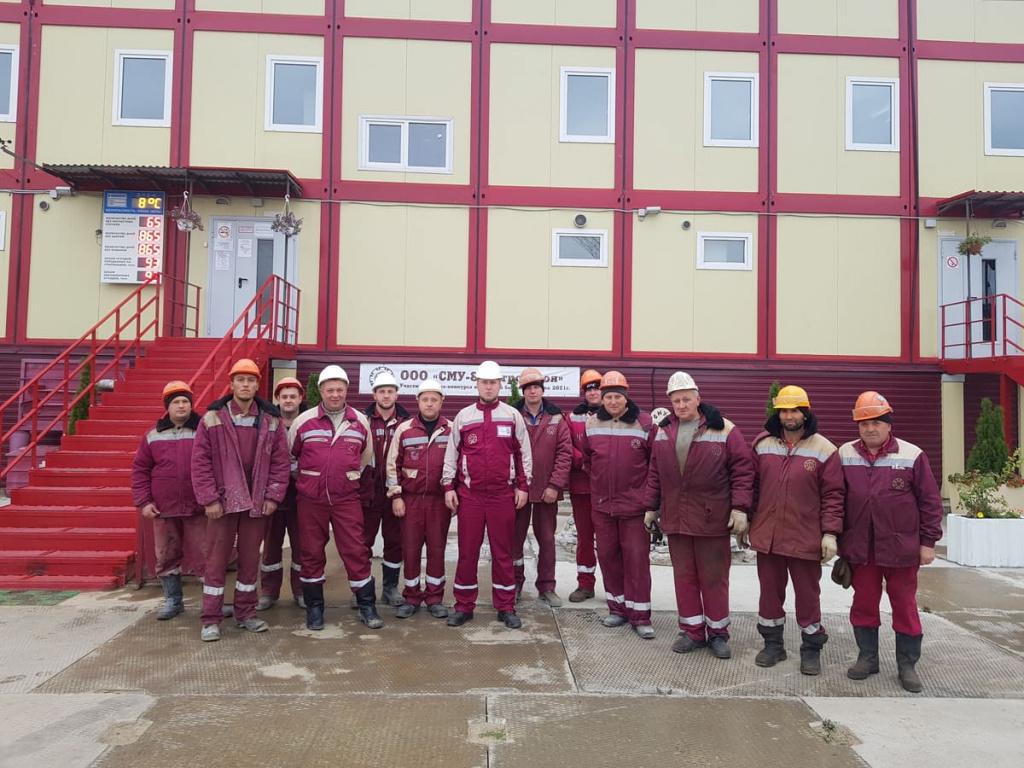
Plot No. 5, construction site No. 36, “Lianozovo” LDL
Work at another point of the city subway - the Lianozovo station of the Lyublinsko-Dmitrovskaya line - has been going on for two years. The shallow station will have two exits to the city. It is planned to lay 55 thousand cubic meters of concrete on its main structures. Deputy chief engineer of SMU-8 Evgeniy Shmakov spoke about the details of the work.
For the construction of any metro station, the main thing required is a site to accommodate people and equipment. It was with the liberation of the territories that SMU-8 began its work at Lianozovo. Demolition of garages, removal of building materials, elimination of a landfill - only after this the crews began to enclose the pit’s enclosing structures.
Now in this part of the capital's north, builders are building a station complex and a vestibule. In parallel, the Tatyana and Irina shields are building tunnels to Phystech. Lianozovo has already been connected to the previous one on the site - Yakhromskaya. In total, more than 200 people per month work at the Lianozovo construction from SMU-8 in two sections.
“According to the geological structure of the soil, the design institute developed working documentation for water reduction in the construction zone,” noted Evgeny Shmakov. – Wells were drilled along the perimeter of the pit, water-reducing pumps were installed, thanks to which water is pumped out. The completed “wall in the ground” isolates the pit from external soils: by drilling wells outside the pit, we lower the groundwater level inside. It should be below the structure tray.
Only after this can waterproofing work be carried out and monolithic structures erected. Lianozovo will have two underground lobbies. One will adjoin the existing underground passage, with exits on both sides of Dmitrovskoye Highway. The second lobby, through a pedestrian crossing under construction under the Savelovsky direction railway tracks, will unite the metro, the first Moscow Central Diameter and ground public transport, forming a new interchange hub.
The construction of the first lobby has already been completed, and finishing work has begun inside. The platform section is 70% ready. The first pedestrian exit will be located closer to Dmitrovskoye Highway. Utilities are being relocated in this area. In parallel, SMU-8 is working on the construction of two pedestrian exits.
By the way, next to the station under construction there is a factory from which there was a railway line. The rails were dismantled for the period of work; they will be restored after backfilling the pit.
Every person counts
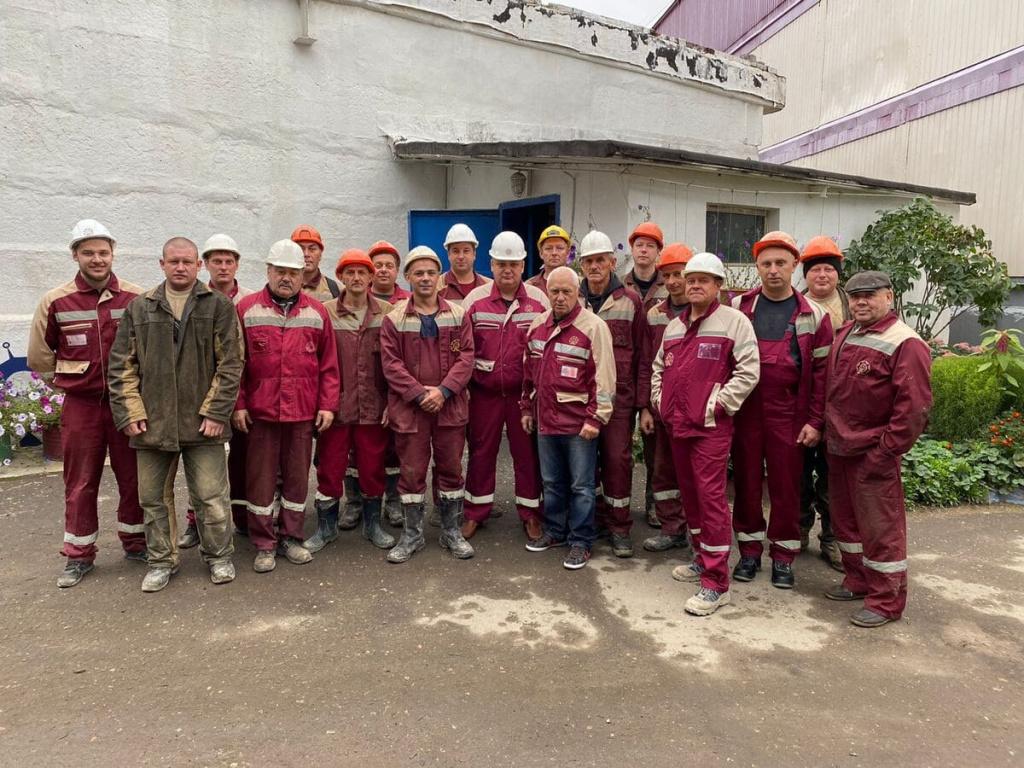
Site No. 1, construction site No. 21, mine No. 946, “Maryina Roshcha” BKL
Chief power engineer of SMU-8 Dmitry Tanan has been leading the management trade union committee for a little over a year. During this time, the number of union members of the organization increased by ten percent. How the team celebrates the holidays and prepares for the organization’s anniversary.
Trade union life is tense. We need to organize sporting events, meetings with veterans, and offer our own competitions to the younger generation - the children and grandchildren of employees. Of course, with prizes and gifts.
– We have two anniversaries coinciding – the 90th anniversary of Mosmetrostroy and SMU-8. Recently, in memory of such an important date, flowers were laid at the first mine, where the pioneers entered in 1931, says Dmitry Tanan.
In honor of the anniversary, festive printed and souvenir products were released. For the anniversary, a stand also appeared on the third floor at the SMU-8 head office. By the way, in the competition among the stands of metro construction organizations, SMU-8 was unconditionally recognized as the winner.
However, the trade union committee is not only concerned about work. Special attention goes to the wonderful part of the team. On March 8, each employee receives flowers and a salary bonus, and the team gathers at the festive table.
Employees go on trips to different cities several times a year and participate in sporting events.
“In Mosmetrostroy, our department is in first place in the number of trips of employees’ children to our health camp in Balabanovo,” adds Dmitry Tanan. – For everyone, “Young Metro Builder” is a special place, built by SMU-8. We are grateful for its revival and the organization of shifts.
By the way, a competition “We are building the best metro” is currently being held for children. The stand in the office on Gazgoldernaya Street brought together the works of young participants aged 5 to 17 years. For each, children will receive gifts and certificates.
Other issues include supporting people in difficult life situations. Operations, accidents, illnesses, care of relatives - each is dealt with separately at the meeting, and decisions are made jointly to support families.
Museum work - to perpetuate
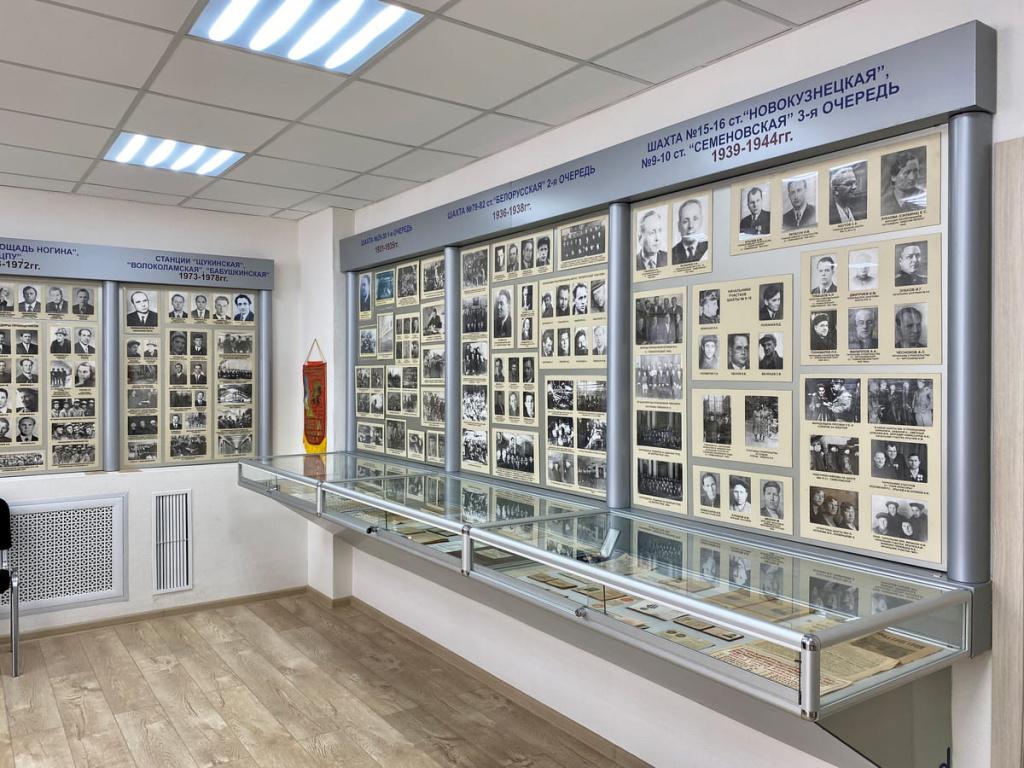
SMU-8 Museum on Gazgoldernaya Street
In the office on Gazgoldernaya Street, the arrangement of the Museum of Labor Glory and History of SMU-8 has been completed. Behind the glass display cases you can see the stages of subway construction by workers of all generations of the organization: in photographs, newspapers, magazines and documents from different years.
A lot of historical evidence is stored on stands. Here is a chronicle of the construction of stations in black and white frames of rare photo chronicles, medals and orders, newspapers from the launch of the first stage of the Moscow Metro.
Museum curator Alexander Kormushin takes out the yellowed pages of a newspaper from 1935. On the first page - the launch of the first stations. But the column on the last page was devoted to jokes, where classics of literature and philosophy allegedly joked about the subway. For example, Voltaire shows “class” by examining the subway. And the famous fabulist Ivan Krylov lets Scheherazade through the turnstile. The fairy-tale heroine was unable to use magic words to open the entrance to the subway. Gogol, Nekrasov, Pushkin, Griboyedov and Chekhov were also pleased with the work of the builders.
Plot No. 4, construction site No. 24, “Savelovskaya” BKL
No less surprising is the gratitude to the SMU-8 specialists from the Egyptian authorities for their assistance in the construction of the dam in 1964.
A separate stand is dedicated to the creation of a surveying service in 1932, which today is headed by Mikhail Malmyga. The service was responsible for the accuracy of construction, starting from the sinking of the first mine shaft and the construction of approach workings, to entering the route and laying the distillation and station tunnels.
“Over the 90 years of operation of SMU-8, a large number of tunnels, mine shafts and inclined passages for stations were built,” says Mikhail Malmyga. – Today the service has the most modern equipment in its arsenal: computers, total stations, laser devices, satellite orientation systems.
But you can get acquainted with the first set of surveyors and metro builders by visiting the SMU-8 museum.