Andrey Ryabchenko: I dance because I like it
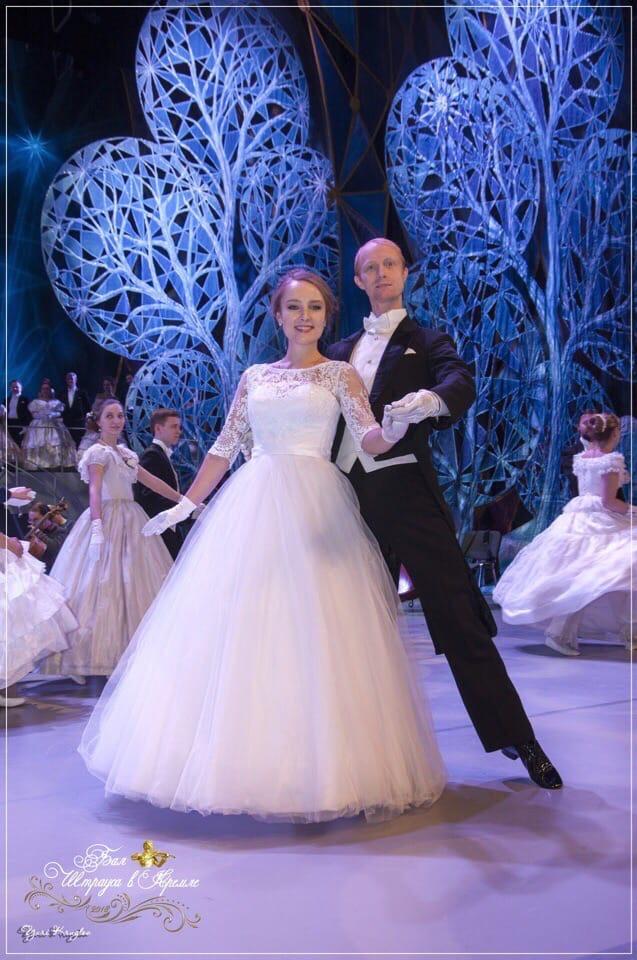
Leading engineer of the Inzhproekt Institute Andrey Ryabchenko is a versatile and creative person. In January, he performed historical dances, which he has been passionate about since 2010, during the intermission of the country’s main New Year’s ballet, “The Nutcracker,” in the foyer of the Bolshoi Theater. We asked Andrey about his hobby and asked how to get to a real ball.
– I graduated from Moscow State Technical University. Bauman, worked in a company that designed special underground facilities,” says Andrey. – In 2015 I ended up at Inzhproekt and since then I have been designing Moscow metro stations, mainly working in engineering: ventilation, heating and air conditioning systems.
Its first stations were Salaryevo and Rumyantsevo on the Sokolnicheskaya line. Then - reconstruction of the Filevskaya line, Leninsky Prospekt station with southern and northern vestibules, Kakhovskaya station of the Big Circle Line.
– Our institute designs the entire station as a whole, starting with the structure and ending with the architectural decoration. I like the job, otherwise I wouldn’t have stayed here for eight years,” he says.
DANCING
Ryabchenko became interested in dancing when he saw his friend waltzing with his bride at a wedding. That’s how he ended up in “Dance of Spring,” a historical ballroom dance studio taught by teacher Natalia Danilova, where he still studies. The studio organizes balls and dance evenings.
– I like both the dances themselves and the halls where they take place. For example, last year the GUM showroom became the venue for the Moscow Sretensky Ball, which is a reconstruction of the leisure time of young people of the early 20th century. This is such a home ball in the beautiful atmosphere of the historic GUM building,” shares Andrey. – Sports training helps me. Many dancers get tired quickly, but I can waltz without stopping for a long time. For this reason, photographers love me and I often end up on magazine covers and on the Internet.
The classical ball, according to Ryabchenko, traditionally opens with a polonaise or dating waltz - historical dances that are easy for anyone to master. This is followed by the Viennese Waltz, Bohemian Polka, Moscow Quadrille, Waltz-Gavotte, Mazurka, Quadrille “Die Fledermaus”, and the evening usually ends with the Troika Polka.
HELP
Dances of past eras are called historical: waltzes, country dances, polkas, mazurka, which were popular in the 18th-19th centuries.
According to the experience of the hero of the article, if you rehearse twice a week, you can learn the basic dances of past eras in a couple of months. He himself took additional lessons from the famous choreographer and teacher of classical historical dances Anna Nikolaeva, who helped choreograph the movements of his arms and legs and corrected his posture. All this really helped to hold my own body, as well as deftly control and skillfully lead my partners in the dance.
How to get to the ball? You can get there by signing up for any studio you like, or as a guest by purchasing a ticket. Andrey Ryabchenko’s performances are scheduled six months in advance. Already this January, he performed at the Bolshoi Theater of Russia, the charity Russian Ball in GUM and on the stage of the State Kremlin Palace - in the show “Johann Strauss’s Snow White Ball”. The concert was attended by the Concord Orchestra under the direction of Italian conductor Fabio Pirola. Fans of the famous Viennese composer were able to enjoy not only the splendor of his music performed by the orchestra, but also ballroom demonstration dancing to the sounds of his immortal waltz.
SPORT
The leading engineer of Inzhproekt is an avid athlete. The scope of his sports activities is large-scale - this includes races (half marathon 21 km and marathon 42.2 km) - Andrei came to running after a tourist orienteering competition - the famous Moscow forced march. He also inherited his passion for cross-country skiing from his father. In total, Andrey has 3-4 cross-country skiing races and 6-7 athletics races during the season. The geography of the competition is impressive - almost all of Russia, from Sochi to Perm, from Moscow to Yekaterinburg. He competes for the Mosmetrostroy team in both skiing and running.
– Marathons are held on weekends. Therefore, I have time to fly to the city where the competition is held, run and return back. First of all, I get positive emotions from the races; I am energized by the atmosphere and the people. When I run, I like to get to know a new city. For example, I recently visited Yekaterinburg for the first time. I explored this city from a marathon distance – it’s beautiful,” says Ryabchenko. – Also, my goal is to run 42 km in three hours, now – 3 hours 26 minutes. I think this is quite achievable. By the way, I have a tradition. During races in flight I do the first arabesque - this is a pose in classical dance. It looks very impressive.
Today Andrey is also a volunteer of the organization “More Than You Can”. This is a running movement where people, regardless of physical ability, train and participate in sports together. The 42-year-old metro worker accompanies runners in wheelchairs from start to finish.