The minter must be hardy
We continue the “Keyhole” section. In it, an MS correspondent spends one day with a builder, “spying” on his work. This time the hero of the column was the foreman of minting workers from SMU-6 - Maxim Berezhnoy. He spoke about the stages of waterproofing work in finished tunnels and explained how the seam between the tubes is cleaned before embossing.
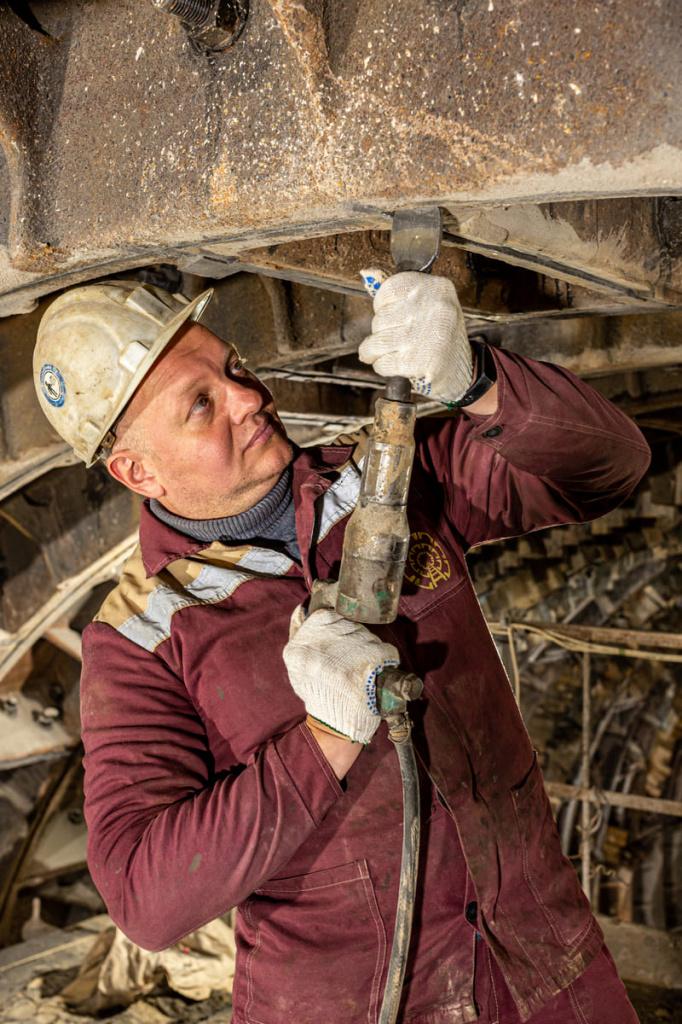
Foreman of embossers SMU-6 Maxim Berezhnoy
Maxim Berezhny’s working days take place in the tunnels of the Rizhskaya station under construction on the future Big Circle Line. Every morning, first thing, he receives an outfit from the head of the SMU-6 section, Nikolai Panov, and goes to a depth of 60 meters underground with his team. In the workings leading from the mine yard to the station complex, it is still damp, water drips from the roof of the tunnel, and in some places it is impossible to walk without rubber boots.
Waterproofing began only in the summer, since there were open workings everywhere and drilling and blasting work was carried out. By this time, the middle station tunnel had been completed, the diameters of the right and left tunnels had been increased after the tunneling of the TBM, almost all the openings between the central hall and the future platforms, as well as the near-tunnel structures, were ready.
– The waterproofing stage is one of the most important. The tightness of underground structures where trains with passengers will travel depends on the quality of work,” Berezhnoy explained. – Our volumes at Rizhskaya are large, but the deadlines are tight, they should be completed in March.
The full cycle of waterproofing in metro tunnels includes three stages. This includes re-bolting of bolted joints with replacement of mounting washers with asbestos-bitumen ones, control injection of cement mortar lining and, in fact, embossing work.
“Now we are preparing the seams for embossing,” says the foreman, heading into the right station tunnel, where you can already see the difference between dry and wet lining. – After control injection, during which we fill all the voids behind the lining with a special solution, the seams must be cleaned to a mirror shine.
After stripping, lead cords are inserted into the seam between the tubes and the soft metal is broken along the seam with a hammer. The top is coated with a non-shrink mixture, BUS. The solution resembles cement, but has a stronger composition, quickly sets and expands, ensuring complete tightness.
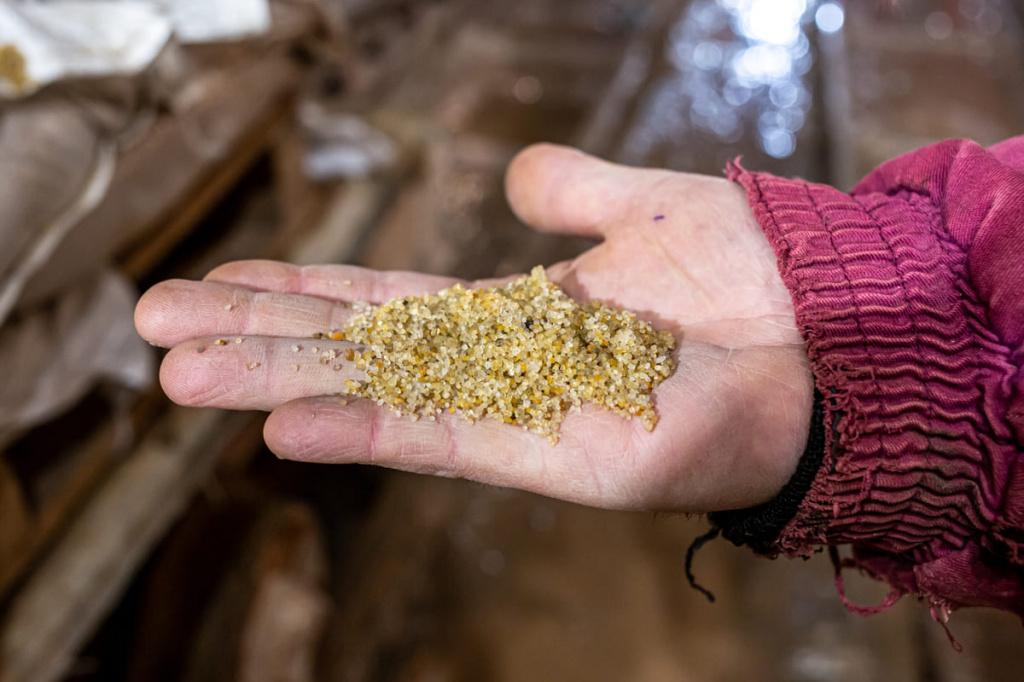
Working tools are a impact wrench, a caulking hammer with attachments of different sizes to suit the thickness of the seam, and a control discharge pump. A sandblasting machine is also used. Special quartz sand, which is brought in huge bags, is dried using heat guns before being applied to the seam of cast iron rings. This makes cleaning better.
For convenience, a coining cart is used in the tunnel. These are mobile scaffolds that allow you to conveniently work with bolts and seams at any height. At a good pace, minters go through an average of two rings a day.
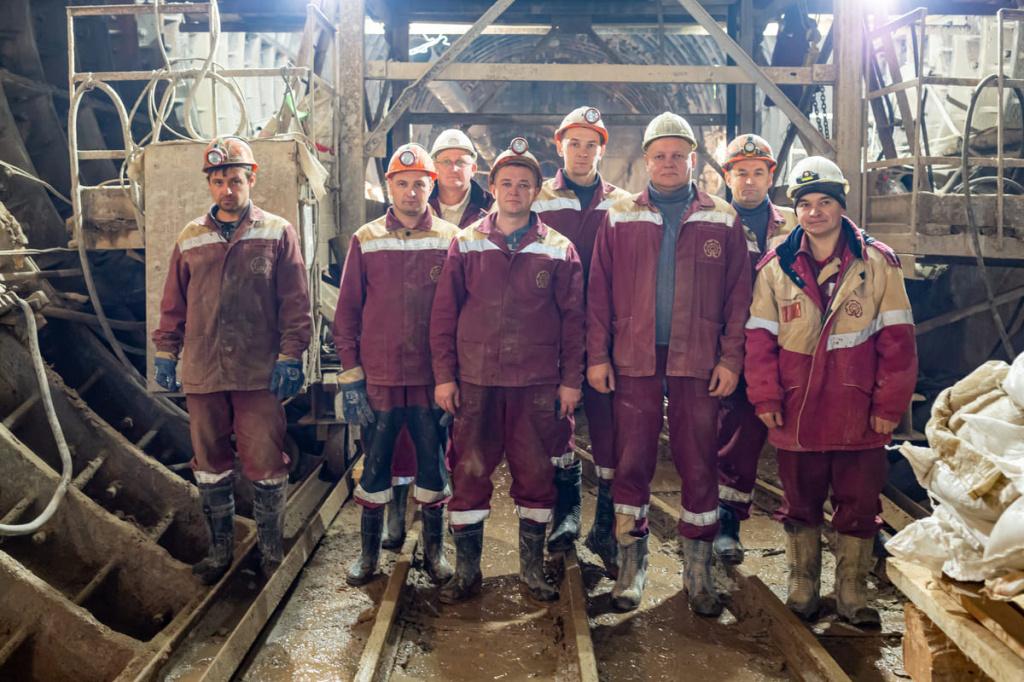
About one hundred minters are involved in insulation work in the tunnels of the “Rizhskaya” BCL
Maxim Berezhny's team, which consists of 17 people, moved to the Rizhskaya inclined station, where waterproofing work has been completed, floor slabs have been installed and the installation of escalator equipment has begun. In total, about one hundred waterproofing specialists currently work at the station.
“We do everything by hand, so the chaser must be hardy and withstand great physical stress,” explains Berezhnoy, who over the past five years has managed to form a strong core of his team. – These are people interested in stable work and income for their families.
Maxim Berezhnoy was born in the Rostov region, studied there and worked as a miner in a coal mine. When they stopped paying salaries in the 90s, he went to Moscow and worked for 10 years at Transtonnelstroy. He came to Mosmetrostroy in 2004, worked at SMU-5, SMU-23, and now he has moved to SMU-6.
– I had to learn how to do insulation work. Coal mines are a completely different matter. There is no such height as in the subway tunnel. The ceiling is just above your head, there are frames and anchor supports,” the foreman admits. – At Mosmetrostroy, he participated in the construction of Dostoevskaya, Maryina Roshcha, Sretensky Boulevard, Mitino, and now Rizhskaya.
By the way, you can master the profession of an embosser at the Mosmetrostroy Technical School, specializing in insulation. Here they will teach you how to replace bolts, do control injection and how to caulk a seam.