Circulation of the carousel line
We continue the “Keyhole” section. In it, an MS correspondent spends one day with a builder, “spying” on his work. This time the hero of the column was the crane operator and operator of the carousel line of the Pokrovsky Reinforced Concrete Products Plant (Pokrovsky ZZHBI LLC) Sergei Aleshin. He told how he first saw the enterprise and visited India thanks to his work.
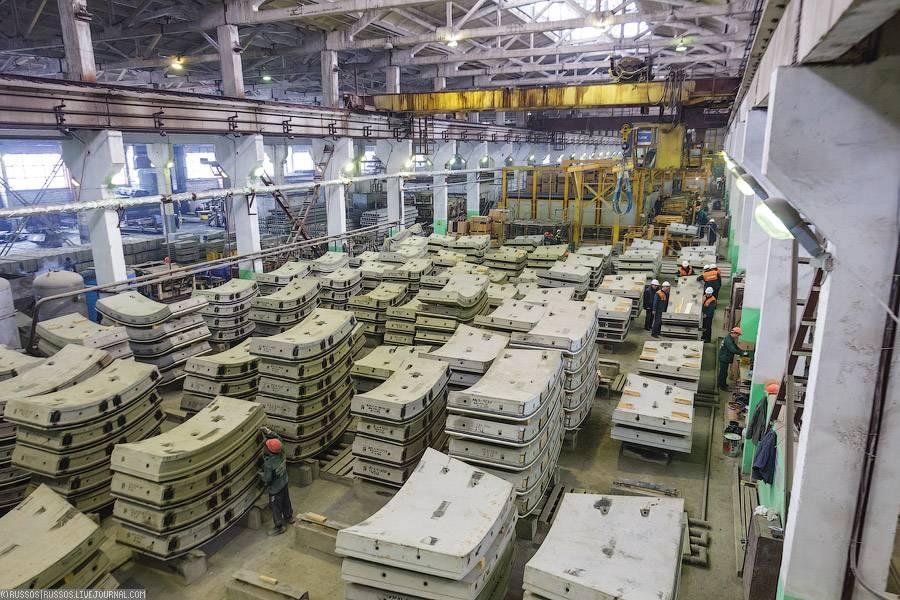
At the Pokrovsky plant, reinforced concrete blocks are molded for the construction of metro tunnels. Sergey operates overhead and gantry electric cranes with a lifting capacity from 5 to 15 tons. It moves loads both in the finished goods warehouse and on the carousel line of the main molding plant.
– My shift starts at seven in the morning and lasts twelve hours. The first step is acceptance of the crane. Safety and speed of work depend on this. I check the brakes, cable, lines, for oil leaks. Only after this I begin moving goods. A crane operator cannot work alone, he needs a trained and certified slinger, sometimes two or three, says Aleshin.
WITHOUT A CRANE IS LIKE WITHOUT HANDS
Work on a crane is specific and responsible. The weight of cargo secured with slings reaches several tons. These include reinforcement frames, reinforced concrete blocks and slabs. The crane operator must always act carefully. Frankly, the whole line depends on him.
– You can’t do anything here without a crane. You can't pick up the stove with your hands! – explains Aleshin.
In the reinforcement and molding shop there are five production bays, where work is in full swing around the clock. Plus a warehouse for finished products, which is also obliged to receive and load products without interruption. Therefore, as the crane operator notes, he has no time to run from the cab. At the same time, there is not much space there for personal belongings - Sergei brings with him only a thermos of tea.
THE FACTORY, FAMILIAR FROM CHILDHOOD
– I first saw the factory when I was twelve years old. I drove past him on the bus. I remember the fog and the factory towers in it. The picture is like something out of a horror movie,” Sergei jokes and adds seriously. “Before, it was really scary to watch.” Now everything here is practically new.
Aleshin came to work at the Pokrovsky plant in 2011. He started as a molder, then mastered several other specialties: slinger, crane operator and carousel line operator. Therefore, he is familiar with all stages of the production of reinforced concrete blocks for tunnel lining.
The frames of future products are created in reinforcement spans. The arcs (or “ribs”) are made in an automated installation and then welded by hand. Concrete is prepared at a concrete mortar unit. Next, it is poured into a mold where the frame is already installed. To fill it evenly, it is sent to a vibration stand. The next stage is the steaming chamber. At the exit from it, the almost finished product is removed from the mold - it is stripped, the surface is brought to the required parameters, maintained at positive temperatures until it reaches 100% strength, and sent to the finished product warehouse.
TO INDIA AND BACK
Several years ago Aleshin went to India on a business trip. Abroad, he exchanged experiences with colleagues. He worked in the city of Chennai, at a factory for the production of blocks for the construction of the metro.
The crane operator spent a month and a half on a trip abroad. At first, Russian workers were trained by the Italians who built the plant. Then we worked in the workshop, mastering and testing the equipment. Then they passed on the acquired knowledge to the Hindus. We went on excursions on weekends.
– The principle of the line there is the same as ours, but the equipment is a little different. The Italians did everything well, and the plant is still operating, as far as I know,” shares Sergei.
There were no difficulties with the translation, according to Aleshin’s recollections. Representatives of all parties spoke English to varying degrees. If some points were unclear, the chief engineer explained everything clearly.