Mikhail Uspensky: both worked and rested with full dedication
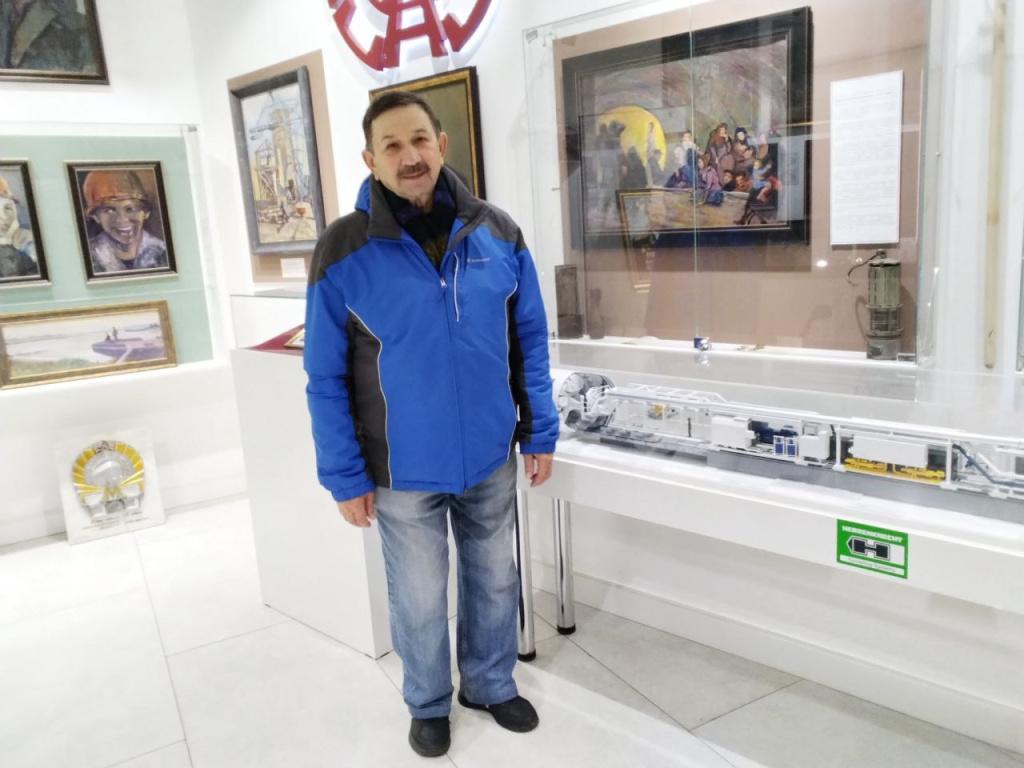
Head of drilling and blasting operations SMU-6, secretary of the Komsomol organization SMU-6 Mikhail Uspensky served Mosmetrostroy for 45 years– from 1976 to 2021. With pleasure and slight sadness, he recalls the time spent underground, his friends and those who shared their experiences, helped in difficult times and lent a shoulder: in the mine, as at the front, you yourself perish, but you save your comrade.
The path to Mosmetrostroy lay through Kuzbass
Mikhail Uspensky was born in the regional center of Sosnovka, Tambov region, into a peasant family. Father Uspensky Mikhail Fedoseevich after the Civil War - from 1924 to 1937. – restored and worked for 10 years at a mine in Krasny Luch, Lugansk region, first as a miner, then as a blaster. Then he was drafted into the army. He began serving as an artilleryman in Belarus, then on the Finnish border. He went through two wars - the Finnish and the Great Patriotic War. Reached Berlin. Until 1948, he worked in Potsdam in repair shops, restoring “artillery.” When he returned home, he worked in the timber industry: workers harvested wood, dried it, made log houses for bathhouses and houses, even furniture for the population - kitchens, chairs, tables, cabinets, chests of drawers. My father did any carpentry or carpentry work, made gates for collective and state farms: and all with pleasure and ingenuity.
Mother Evdokia Kuzminichna Uspenskaya graduated from machine operator courses in 1929 and was the first tractor driver in the region. She worked on the collective farm until 1965. Mother of many children: she gave birth to 6 children - two girls and four boys. They lived from their own yard and garden. The older children helped manage the cattle, cut hay, planted and dug potatoes, fermented cabbage, and pickled cucumbers and tomatoes.
Unfortunately, my parents left early. Before his death, his father told him: “If you have a son, name him Mikhail...”. Mikhail Mikhailovich did just that: he has a son, Mikhail.
In 1959, Mikhail graduated from school and went to the city of Prokopyevsk, Kemerovo region, to visit his brother at the Tsentralnaya mine. “In Prokopyevsk,” recalls Uspensky, “everyone knows that his path is to the mine: there were 18 of them.” Until he turned 18, he worked on the surface, then in the face at the Komsomol youth section. He studied at a mining technical school.
From 1970 to 1972 served in the Group of Soviet Forces in Germany (GSVG) at the Ranet Special Communications Center in Wünsdorf.
Before World War II, there was the most advanced underground communications center at that time, the AMT-500 “Zeppelin” with pneumatic mail. This made it possible to quickly deliver information from the fronts to headquarters and send back decisions made.
This town is also famous for the fact that Marshal Zhukov commanded the assault on Berlin from Wünsdorf.
After our victory, the Nazi bunker complexes were blown up. "Zeppelin" The Soviet army restored and set up the Ranet Special Communications Center in its place.
Having repaid his debt to his homeland, Mikhail returned to the mine in the Kemerovo region. In September 1973, he continued his studies at the mining technical school.
This and the next three years are rich in significant events: in ’73, right at the mine face, the secretary of the mine’s party committee, Vasily Aleksandrovich Kotrichenko, handed him a party card; On Miner's Day they were awarded a personalized watch. In 1974, Mikhail Uspensky became the “Drummer of Communist Labor.” In 1975, the mine sent him to study at the Moscow Mining Institute. In 1976 he came to SMU-6.
I got into SMU-6 by accident
“I got into SMU-6,” said Mikhail Uspensky, “by chance: at the institute I studied in the same group with Sergei Ovcharenko, who worked in the Mosmetrostroy Administration on the Komsomol line. When he found out that I, a student with a family, needed a good salary, he advised me to go to SMU-6, whose head was Prostov Nariman Aleksandrovich. Despite five years of experience working in a mine in Kuzbass, Nariman Aleksandrovich sent me to the Mosmetrostroy Technical School. And only after that he was allowed to work. I ended up in the brigade of Ilya Ivanovich Shepelev at the Marxistskaya station.
The work was difficult: the miners stumbled upon an underground lake, and the mine was flooded. Fortunately, there were no casualties: people were evacuated in time. The water was pumped out using deep-seated pumps, and special pipes were installed into which the water flowed. It took more than two months to eliminate the consequences of the accident. The young miners had a hard time, but they also gained experience in getting out of such situations. I was impressed by the work of the “old guys” and the head of SMU-6, Nariman Aleksandrovich, who was not at a loss and quickly found a competent solution.
The young miner also liked the climate in the team. The guys were friendly and athletic. They met not only in the mine, but also outside it. We went to visit each other, to the Mosmetrostroy stadium on Krasnaya Presnya. The bosses encouraged sports and made sure that the miners were in good sports shape: weaklings underground did not work with full dedication.
Mikhail was instructed to improve sports activities in the team. In 1978, his athletes became champions of Mosmetrostroy. Cash bonuses and new sports uniforms were presented to them before the shift by Nariman Aleksandrovich Prostov.
The main thing is safety
The Marxistskaya station became Mikhail Uspensky’s favorite. It is beautiful, elegant, the color of the lining – dark red – corresponds to the name. It is also interesting for the technical innovations that were used in the construction of the inclined passage for the escalators and the organization of transitions to the two neighboring Tagansky ones.
“In 1978,” Uspensky recalls, “a “Best in Profession” competition was organized for the tunnelers. I took first place. I got questions, the answers to which I knew well: how an inclined stroke is developed and “blasting operations,” with which I was well acquainted: my brother was a master blaster. The main thing is to follow safety precautions and remember about stray currents: the mine is always full of water, and somewhere the insulation may be damaged or the ends of the wire from the detonator may be exposed. We must make sure that it does not spark anywhere and does not lead to a preliminary explosion. You move the car a few meters behind the metal gates, close them so that the rock does not fly far from the explosion.
When Mikhail Mikhailovich worked in the brigade of Boris Vasilyevich Grishin, the head of the site, Alexey Alekseevich Lykhno, advised Uspensky to master another profession - a minter. Without interrupting his work, Mikhail sat down at his desk at the Moscow Technical School of Transport Construction. Then he completed the brigadier course. They taught us how to lead a team, and this is also an art. People are different, you need to take into account everyone’s mood, know what happened, if something didn’t work out, scold someone, help someone. You can’t paint everyone with the same brush: you won’t get a friendly, results-oriented team. Uspensky recalled the experience of the legendary foremen with whom he had the opportunity to work: Boris Egorovich Baranov, awarded the Order of Lenin, Hero of Socialist Labor Igor Ivanovich Shepelev, Vasily Alexandrovich Krutitsky, Anatoly Mikhailovich Romanov, Alexey Fedorovich Strelnikov, Yuri Alexandrovich Korshunov, Viktor Semenovich Khokhlov... unique people saw right through a person and immediately determined who was capable of what. They didn’t offend anyone, but they didn’t make any concessions either.
In 1979, the Marksistskaya station was commissioned, and the miners moved on to the construction of the Serpukhovskaya station. Mikhail Uspensky took up minting. The stations “Marksistskaya”, “Serpukhovskaya”, “Mendeleevskaya” remember the warmth of his hands.
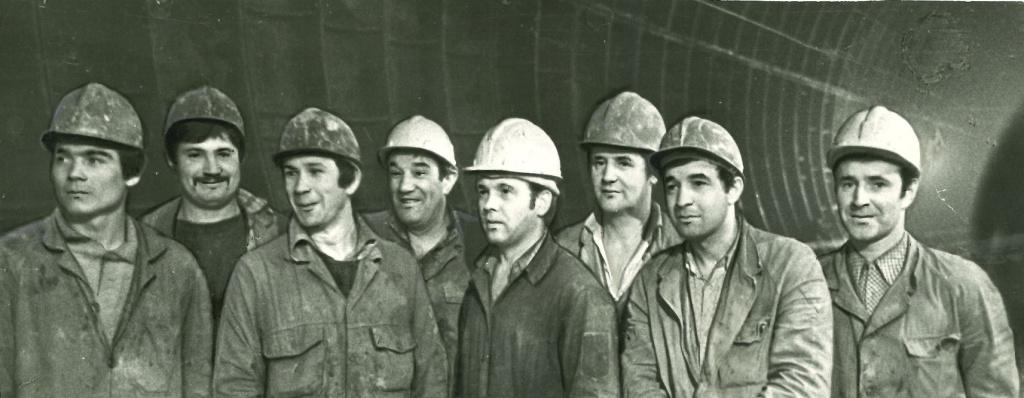
An extra profession wouldn't hurt at Metrostroy
In 1983, Mikhail Uspensky was elected secretary of the Komsomol organization Mosmetrostroy. As he believes, for well-organized sports work. “The team,” says Mikhail Mikhailovich, “was an excellent one: the Komsomol youth brigades of Valery Aleksandrovich Malakhov, Anatoly Aleksandrovich Fedorov, Sergei Vasilyevich Kulikov (later winner of the Moscow Komsomol Prize) more than once won socialist competitions in Mosmetrostroy.
In 1987, Uspensky acquired another specialty: he completed explosives courses with the right to lead. In 1993, he became the head of the drilling and blasting section (D&B), from 2012 to 2018. - Head of the BVR. Then he worked as a mining foreman at site 1, where the mining complex was dismantled and the site of the Verkhniye Likhobory station was improved; at site 12, a ventilation shaft was used to supply fresh air into the mine and discharge exhaust air from it.
It was a pleasure to work with Alexander Filippovich Nevin - a skillful leader who has served Mosmetrostroy from 1974 to this day.
Mikhail Uspensky’s portfolio includes a rich list of stations: “Marxistskaya”, “Serpukhovskaya”, “Mendeleevskaya”, “Ulitsa Podbelskogo” (“Rokossovsky Boulevard”), “Chkalovskaya”, “Dostoevskaya”, “Vorobyovy Gory” (reconstruction), “Verkhnie Likhobory”.
The union paid for the rest of the metro construction workers
Mikhail Mikhailovich recalls his Komsomol youth with sadness: “I went to work with pleasure. And they worked with full dedication and rested. We traveled around our country and visited the Warsaw Pact countries - Poland, East Germany, Hungary, Czechoslovakia, Bulgaria. We traveled in a group of 15 – 25 people. We rested in departmental sanatoriums on the Black Sea coast. There was a boarding house in Adler where you could relax for 24 days for 21 rubles! The trade union paid for the tours.
We had excellent medical care. Veterans of Mosmetrostroy often remember him. Especially when we meet in a common yard - I live in Brateevo, there are 4 metro buildings - everyone is limping, walking with a cane: decades of work almost waist-deep in water have not been in vain.
Every year on Builder's Day, the Komsomol Committee organized a holiday for metro builders in the departmental Palace of Culture, its director Boris Filippovich Prigoda held Veterans' Days and various concerts there. Metro construction workers met with famous people, scientists, popular artists, and astronauts. When SMU-6 worked at the Kuznetsky Most station, we were frequent guests of the Central House of Arts. Famous artists received us well and filled us with good mood for a long time. So the metro builders were aware of the cultural life of the capital.
Our children went to departmental kindergartens and went to a summer pioneer camp. My eldest son was resting in a camp, the youngest in a sanatorium in Nekrasovka.
Then everything disappeared. It’s good that Sergei Anatolyevich Zhukov, having headed Mosmetrostroy, defended the summer camp.”
Large Uspensky family
Mikhail Mikhailovich proudly talks about his family: he has lived with his wife Svetlana Vladimirovna in love and harmony for more than 40 years. They have four children: Olesya, Katya, Vladimir and Mikhail. All have received higher education and are successfully implementing their knowledge in life. Everyone made their own way. Grandfather and grandchildren are happy - there are six of them! The eldest, Alexey, serves in law enforcement. The eldest granddaughter, Radislava, works in one of the federal newspapers. Granddaughters Eva and Alisa and grandchildren Vova and Ilya are schoolchildren.
A large family loves to gather in the house that Mikhail Mikhailovich built in the Mikhnevo district. What could be better than evening gatherings in the fresh air with your beloved children and grandchildren!
Natalya Dolgushina