On the pulse of stations
Granite floors, marble-lined columns, seemingly endless rails... All this is beautiful, but it seems frozen. The stations color and come to life after dozens of systems are launched by pressing a button, which is preceded by the complex work of specialists in electromechanical devices.
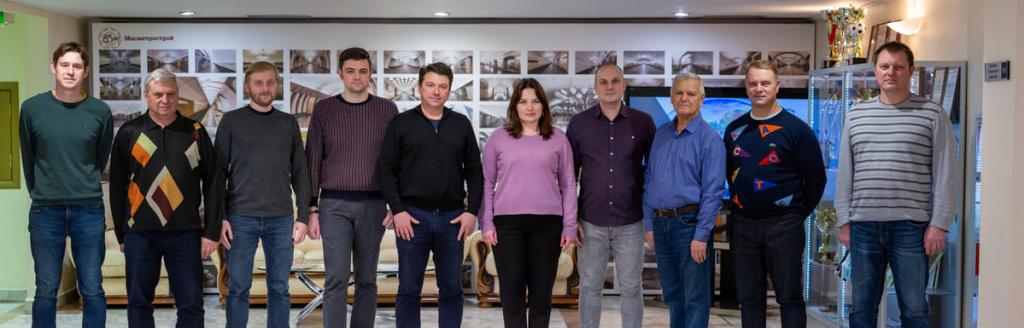
Ivan Korsakov, Alexander Sopronkin, Vladislav Semenikhin, Maxim Kovylin, Stanislav Chernyshev, Irina Menyashkina, Alexander Lebedev, Tagir Nezametdinov, Roman Bugaenko, Victor Dianov
ENGINEERING FILLING
Many Muscovites go down to the subway every day; it’s warm, light and lively. We inhale a familiar smell, hear a familiar hum, and there is a steady tapping sound in the carriage. Thousands of passengers can safely and quickly reach almost anywhere in the capital by metro. This comfort is ensured by the operation of numerous complex devices and mechanisms.
From the very beginning, since the 1930s, the metro was built as a well-developed underground city with power supply and train traction, lighting and communications, heating and ventilation, sewerage and escalators. Over time, the underground city became more and more technically advanced: fire and security systems, telemechanics systems, video surveillance and dispatching were needed. Today, during the construction of one metro station with the adjacent half-sections, up to 60 engineering systems are installed. And with each new object their number increases.
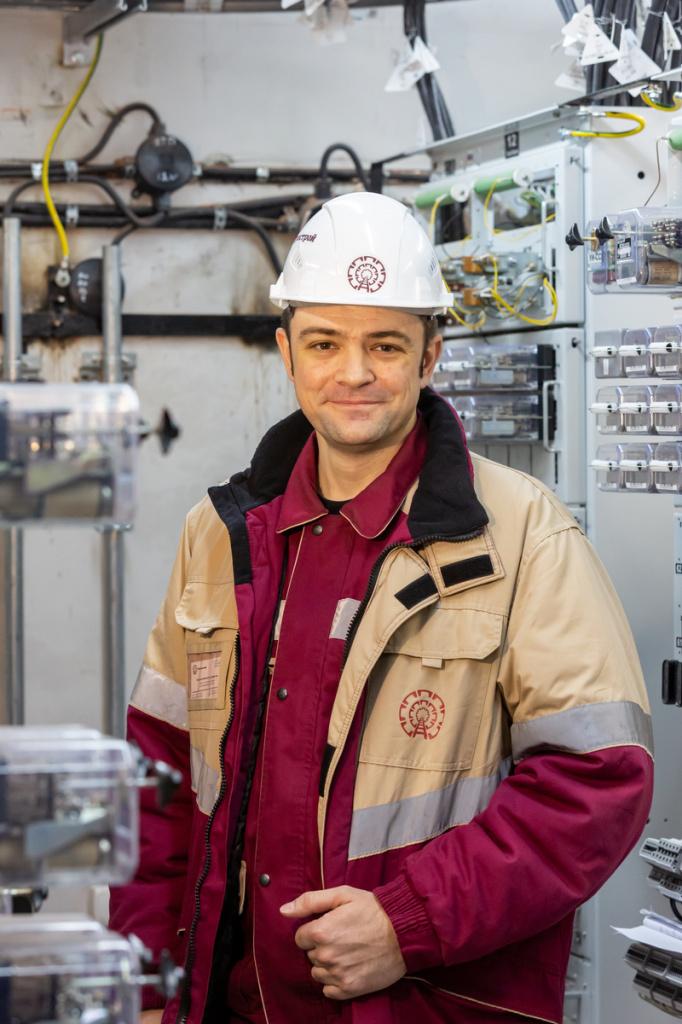
Deputy Chief Maxim Kovylin at the Elektrozavodskaya launch station BKL
THE INVISIBLE FRONT
Making it more convenient for Muscovites to travel by metro and debugging all the necessary systems is the task of the Electromechanical Devices Department (EMD). It has been in existence for 87 years and today employs 11 highly qualified specialists, each of whom is responsible for specific systems at the stations. These people know exactly what multitasking is. The department is headed by Alexander Sopronkin. In 1994, he came to the metro to work as a mechanic. In 2008, he was already the head of the electromechanical service on the Tagansko-Krasnopresnenskaya line...
Passengers descend to the platforms on escalators. They find themselves underground and breathe calmly there. They choose the desired path or find a crossing thanks to backlit signs, and see the train’s arrival time on the board. The train emerges from the darkness along the running rails due to the direct current in the contact rail, the voltage on which is 825 V. If water gets in there, terrible things will happen, but everywhere is dry. And when necessary - for example, to wash tunnels or in rare emergency cases to put out a fire - water appears.
Passengers do not care about substations and traction networks, cable lines and transformers, supply and exhaust systems, pipelines and pumps. And rightly so, because all this is debugged and operates thanks to the daily, sometimes irregular, work of the OEMU employees. The list of tasks for its specialists seems endless: installation, debugging and launch of dozens of systems are traditionally accompanied by approvals, reports and tons of paperwork. However, these are normal situations. But there are others.
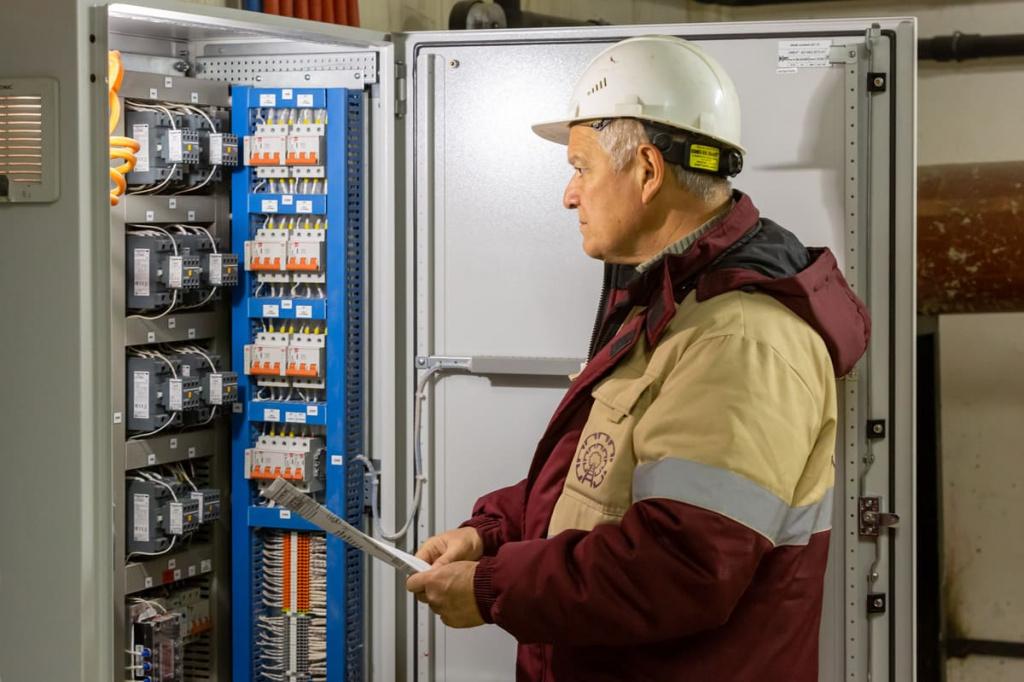
Tagir Nezametdinov checks the compliance of the installed equipment with working documentation
EXPERIENCED PATH
When the Troparevo station was built, on the instructions of the metro, they introduced the latest automated dispatch system (ASDU EMS). Everything was carefully checked, but the system, contrary to expectations, failed. The launch of the station was in jeopardy. OEMU employees found a solution in emergency mode - they developed an algorithm for temporary equipment control. And the station was launched on schedule. Later, this technique came to the rescue when commissioning five more objects on the Sokolnicheskaya and Lyublinsko-Dmitrovskaya lines. The stations were already operating efficiently and safely for passengers, and the new automation system was being brought to fruition along the way.
It happens that OEMU has to come to an agreement with nature. When they designed the section between the Okruzhnaya and Verkhniye Likhobory stations, it seemed that everything had been taken into account. Including the construction of a room for a drainage plant. As it turned out later, flooded soils prevented the construction of a room of this size. The specialists of the electromechanical department decided not to fight with them, but to come to an agreement: they developed and agreed on a compact placement of pumps and electrical equipment OVU-9134. This greatly saved the builders’ resources and time.
The electromechanical devices department regularly faces similar tasks that require extensive experience, professional flair and a creative approach - the Moscow metro continues to expand. Currently, the OEMU operates at the new Elektrozavodskaya station of the Big Circle Line. The facility should be completed at the end of 2020.
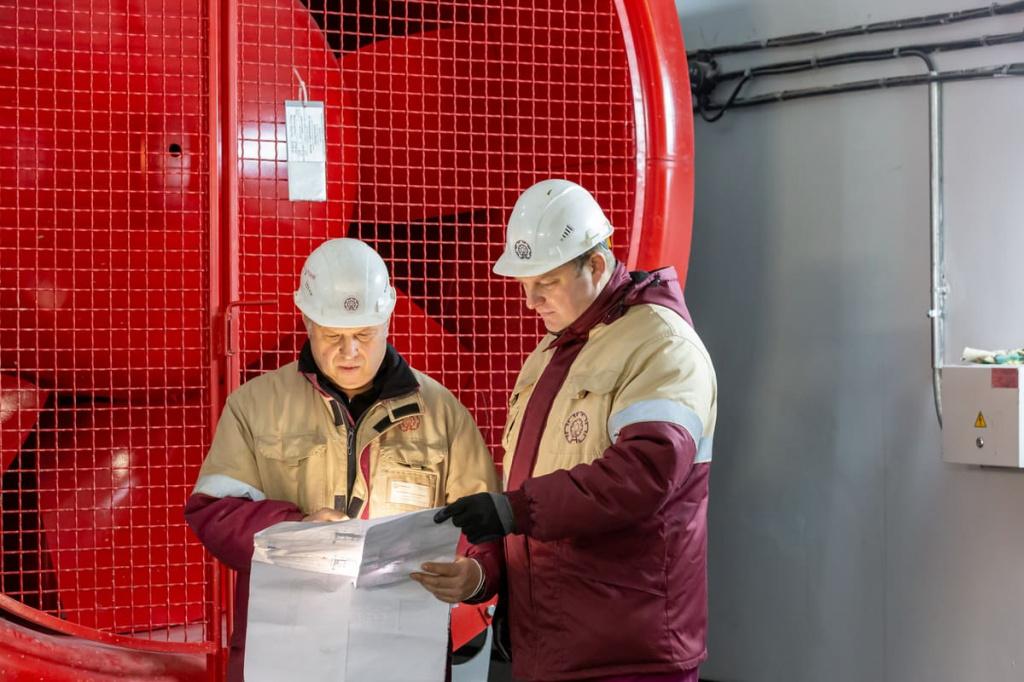
Head of department Alexander Sopronkin and leading engineer Viktor Dianov at work
PAPER HISTORY
New stations make moving around the capital more convenient, and Muscovites often look forward to the metro, and with it the whole city, getting closer. And Mosmetrostroy understands this very well. But setting up stations, installing equipment and carrying out commissioning work is only half the battle. We still need to prepare a lot of documents and agree on many details.
Design and technical documentation accompany each system operating at the stations. These systems, in turn, are introduced only with special permits, the acquisition of which requires special talent and perseverance. And the completed work must be handed over to various authorities: from the operation services to the Moscow State Construction Supervision Authority. Departments check whether what is stated on paper corresponds to reality.
In the chaos of paper, it is easy to lose the essence and forget why everything was started. And here the specialists from the electromechanical equipment department come to the rescue with determination, attention to detail and the ability to negotiate. They find compromises, solve non-standard problems and clearly follow their line. This allows us to open new stations for passengers. So that they can quickly and comfortably at any time from 5:30 am to 1:00 am habitually go down into the subway and go about their business, without noticing the coordinated work of cunning systems and mechanisms.