Sclerometers help to check concrete
We continue the “Keyhole” section. In it, an MS correspondent spends one day with a builder, “spying” on his work. This time the heroine of the column was the head of the Central Construction Laboratory, Galina Koveshnikova. She told how her day begins at the workplace and why metro builders need to test concrete, mortar, brick and other necessary materials.
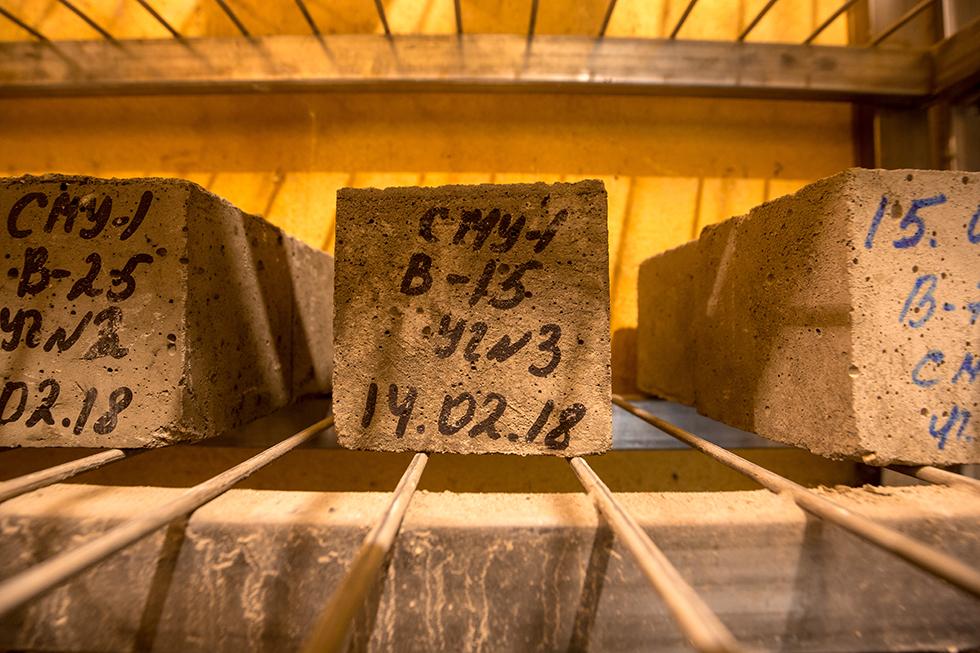
In a one-story building near the Volzhskaya station, construction laboratory employees perform non-trivial tasks: they test concrete for compression and bending, and concrete and mortar for strength. This is how they check the quality of the material used at the facilities under construction in the Moscow Metro. If experts do not approve of it, the structures will have to be strengthened or replaced. “We are fighters on the invisible front,” the laboratory staff jokes. In one of the rooms, engineer Tatyana Babina has been conducting tests since the morning. During her career, she commissioned half of the capital’s metro stations, Koveshnikova shares with us. Tatyana places a cube of concrete under the press and slowly squeezes it. The cube begins to crack, and then sharply splits into pieces. Concrete chips bounce off the protective screen. She quickly writes the results into a journal. “The domestic machine is the loudest and clumsiest,” says Koveshnikova. – But Italian cars are fabulous, you can connect a computer to them! The quality of a sample can be easily measured by eye: if the cube is chipped at the edges in an hourglass shape, the concrete is good. “They bring us samples from all SMU,” deputy head of the laboratory Andrei Prokofiev joins the work. – We keep the cubes in the storage room. We sign them so as not to get confused. Inside the chamber is like in a Turkish hammam - warm and humid. Smells like wet sand. Samples of concrete and mortar are “marinated” under such conditions on purpose: they must be saturated with moisture and gain strength before testing. He will be put under pressure only on the seventh and twenty-eighth days. On the third machine, leading engineer Gennady Shamin tests bricks for flexibility. – We also control the quality of the metal. When we worked with old structures on the Filyovskaya line, it turned out that the concrete was in good condition, but the reinforcement was let down,” Galina recalls. For inspections directly at the station, the laboratory purchased new equipment - sclerometers. Outwardly, they resemble a hand blender with a monitor. Engineers tap concrete with instruments to determine its hardness. Almost invisible round dents remain. “There were cases when, due to poor quality of concrete, structures had to be cut down and concreted again,” complains Galina. – It’s good that this happens rarely. In the next room, engineers are setting up another machine, which they call a “rumbler” because of its characteristic noise. These are several mechanical sieves stacked on top of each other. They separate bulk materials and, thanks to the vibration parameters specified in the device, determine the granulometric composition of bulk materials without physical human effort. To the right of the “roar” is another machine, with a saw in the center. “We used to cut off pieces of concrete with a grinder, now we have a convenient and safe machine,” says Galina. – A large amount of equipment has been replaced in recent years – now it’s a pleasure to work.
BYWAY
A sclerometer is a device designed to determine the hardness of a material by pressing or scratching it. Currently, they are increasingly referred to as devices needed to measure wear resistance, ductility and other mechanical parameters and implement the scratching method. Testing materials by this method, known as sclerometry, has been used in world practice for more than 300 years and is one of the oldest methods for assessing the mechanical characteristics of solids.
HELP
The Central Construction Laboratory of Mosmetrostroy JSC conducts tests of control samples of concrete cubes (mortar) for compression; testing control cube samples made of lightweight or cellular concrete cut from a block for compression and density; determination of concrete strength using core samples taken from structures; determination of the strength of concrete (mortar) in structures using non-destructive testing methods (elastic rebound; shock impulse; ultrasonic); testing the strength of concrete by the peeling or chipping method; determination of the depth of crack opening in concrete using the ultrasonic method; determining the water resistance of concrete on samples (products) or structures; determination of the mobility of the concrete (mortar) mixture and the main qualities of welded metal joints.
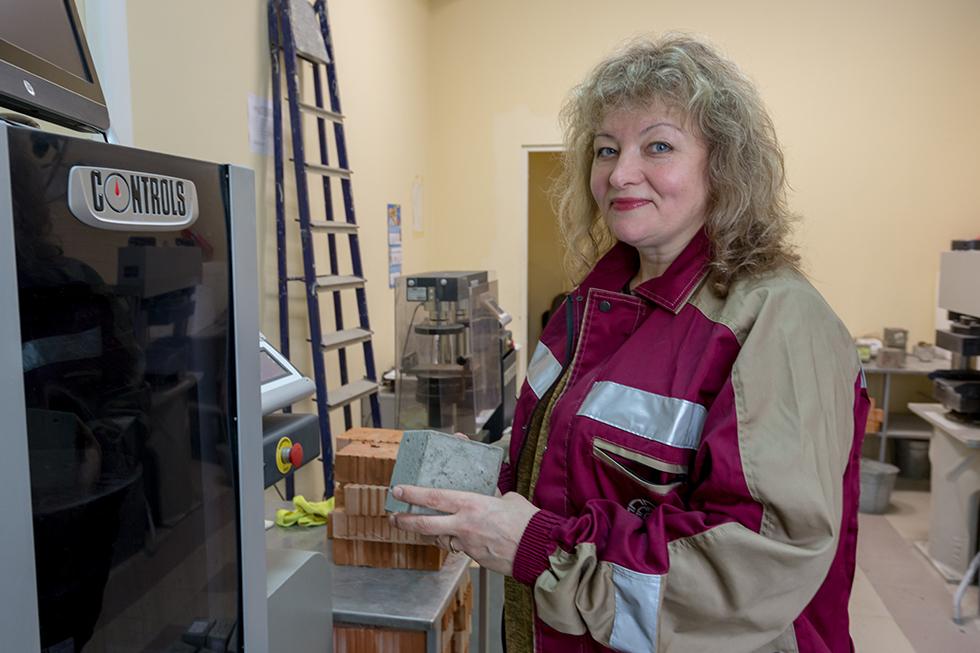
March 14, 2018. Head of the Central Construction Laboratory Galina Koveshnikova holds a sclerometer in her hands