Anatoly Wasserman: it is profitable to build beautiful stations
Erudition Anatoly Wasserman answered questions from our newspaper. He talked about his favorite stations, what science he considers the most important, how to train his memory and why he doesn’t want to be the President of Russia.
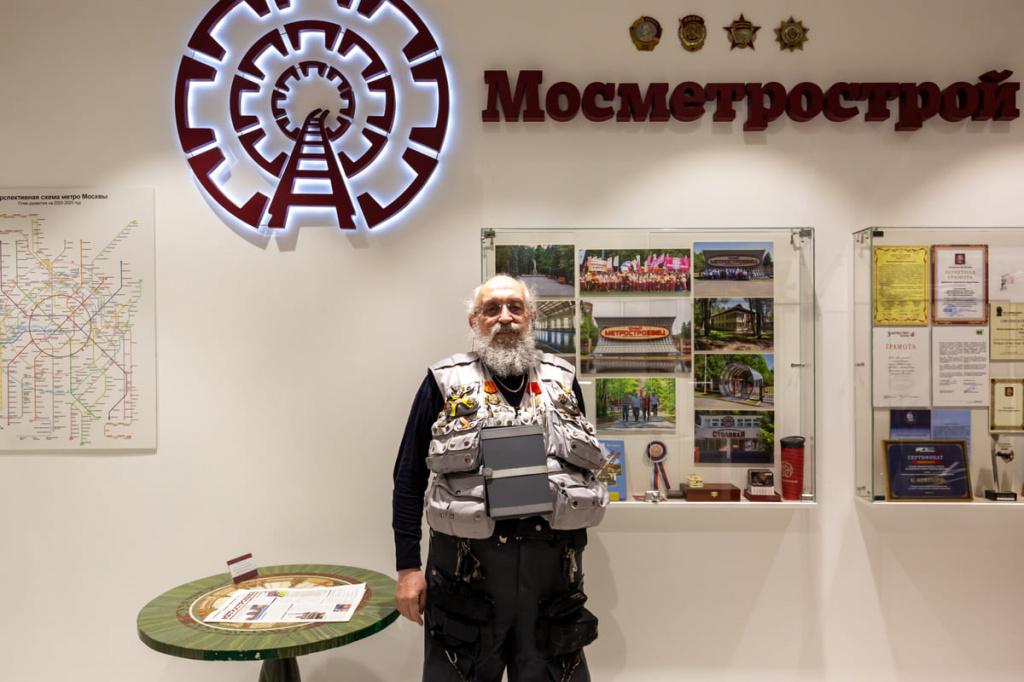
Anatoly Alexandrovich, do you use the metro?
– I go quite often. I can’t say how many times a week, I never kept statistics of trips on the subway.
Is it true that you give tours for your friends on the Moscow metro?
– When I was still a resident of Odessa, I gave my Muscovite friends tours of the subway stations. They grabbed their heads: how do I not notice this, I drive every day? I’ve been a Muscovite for a quarter of a century now, and I myself perceive the metro more as a transport artery. Now there are about a dozen more stations that I have never been to.
Do you have a favorite station? Why?
– I have two favorite stations. From the pre-war - “Mayakovskaya”. And among the post-war ones I choose Pushkinskaya. Their architectural solutions suit me, first of all, because they reflect the creativity of the eponyms - the poets in whose honor the stations are named.
Moscow metro stations are built in different architectural styles: here there is the Stalinist Empire style, and the typical centipedes of the 50s, and modern high-tech. Which style is closer to you?
– In relation to the Moscow metro, I like the Stalinist Empire style most of all. I remember the architect of one of the stations answering the question “Why are you offering such luxury in the Naryshkin Baroque style?” replied that people spend a lot of money on the metro, let them see where they are going. The subtlety here is that the finishing price is only a small fraction of the cost of building the station. And a completely insignificant portion of the construction of the entire metro - transport tunnels and other things. Therefore, no matter what luxury we display in the subway, it is inexpensive. But the eye rests. During the trip, the passenger gets the opportunity to psychologically relax and enjoy even being underground. And ultimately, transport fatigue from traveling in the Moscow metro accumulates more slowly than in the New York metro. I had an article about why it is profitable to build beautiful stations.
In your hometown of Odessa, since the 60s, there have been plans to build a metro system, the construction of which was supposed to begin in the early 90s. There is a version that General Secretary Chernenko himself canceled these plans... Do you think the metro is needed in Odessa?
– There is undoubtedly a need for a metro in Odessa. First of all, because the city stretches along the sea and even one line can take on a huge share of passenger traffic. More than any other city of comparable size. Why didn’t the metro take place in Odessa? It's hard to say, but it's unlikely that Chernenko's decision has anything to do with it. I suspect that the matter was slowed down not in Moscow, but in Kiev. In Kyiv, Odessa is traditionally very disliked.
Why did you connect your life with science?
– Unfortunately, my life is in no way connected with science. Although at the institute I was actually taught to be a scientist. But after studying I took up programming. Then he became a publicist. What I do, from my point of view, is not science. Everything I say and write about are obvious conclusions from known information. I do not rule out that famous scientists also consider discoveries to be consequences of generally known information. But I don’t consider myself a scientist.
The most interesting problem you have ever solved
– Pulling yourself out of delusions.
Various exercises for memory training are now quite popular. Have you ever used anything like this or do you think they are useless?
– There are quite serious reasons to believe that our brain records everything that passes through it. And the problem is precisely to remember. I am a curious person, and I have to remember a lot and often. And I remember what is interesting to me without much effort. As for memory simulators, there is a free educational platform “Wasserman Academy” wasserman.su. There are various exercise machines, puzzles and tasks designed for different ages. They are designed to help train your memory.
Which science do you consider the main one?
- Mathematics. This is the language of science. It allows you to describe any scientific problem in such a way that it is convenient to solve them.
How do you feel about digitalization in modern education? Is it still necessary to switch to distance learning and a computer, or is classical education more useful?
– Living education is living communication, and its skills are necessary in life, regardless of education. I see many advantages in distance education if it serves as a complement to the classical one or as an extension of the educational program.
What do you think about the new bill, which proposes to license scientific activities, in particular lectures, including on the Internet?
– Not scientific, but educational – there is a significant difference here. No one is prohibited from engaging in scientific research and it is unlikely that they will ever be prohibited. But in education the picture is often quite depressing. Nowadays, many “darkers” declare themselves to be enlighteners. A significant part of those who consider themselves educators spread stupid fantasies, and sometimes outright fakes. Despite all my dislike for bureaucracy and my understanding of the dangerous consequences of licensing, I believe that such licensing is necessary.
What are the dangerous consequences of licensing?
– The most dangerous consequence of licensing is if it is the advocates of pseudoscience who engage in it.
If you became president of Russia, what would you do first?
– Posts in the executive branch are contraindicated for me. This requires a different character. If I become president, I will quickly become overwhelmed with options for action. And I can't choose any of them.
What kind of vacation do you prefer? What do you like to do in your free time? Do you have a hobby?
– In my free time, I read books not related to my work. As the first Russian Nobel Prize laureate, physiologist Ivan Petrovich Pavlov, noted: “The best rest is a change in activity.” So I read and enjoy participating in intellectual game competitions.
Do you have a dream?
- Of course. Now I dream of the reunification of Russia and Ukraine. When that happens, there will be other things to dream about.
Who would you like to fight in a mind game?
– Through the tournament mechanism, I met almost everyone who flashed on the screen in intellectual games. And with a huge number of people who did not make it onto the screen, because tens of thousands of people are involved in this sport, the screen cannot accommodate all of them. Fate brings you together with interesting people. Playing with those who are not interested in the game is not interesting.
Who is your idol, who do you look up to in your life?
– I don’t have and never had any idols. And he was targeting a lot of people.
BTW
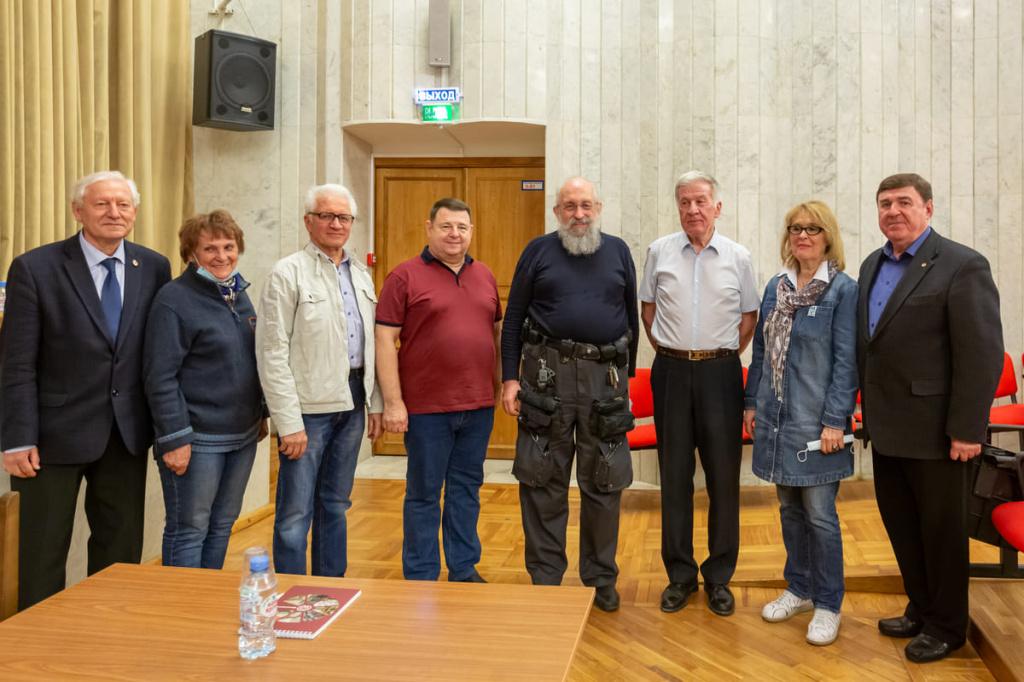
On May 21, Anatoly Wasserman met with the Council of War and Labor Veterans of Mosmetrostroy. The conversation with honored builders was about the Moscow metro, its architecture and development prospects. Our veterans presented the erudite with three books about Mosmetrostroy and a set of badges for the collection and received in return an author’s book entitled “Why Capitalism is Worse than Socialism.”
And on the eve of Victory Day, Wasserman honored the memory of the metro builders who went to the front in 1941-1945, as well as those who worked in the rear during the difficult years of the Great Patriotic War. He laid flowers at the “Memory” memorial complex of the school museum “My Beloved Metrotown”. Relatives of the deceased metro builders come here and lay flowers and remember their grandparents.
HELP
Anatoly Wasserman is a Soviet, Ukrainian and Russian journalist, publicist, TV presenter, political consultant, participant and multiple winner of the intellectual games “What? Where? When?”, “Brain-ring”, “Own game”. Born in Odessa on December 9, 1952. He studied at the Odessa Technological Institute of the Refrigeration Industry and received a degree in thermal physics engineer.