The day of the Great Victory is approaching. 80 years have passed since the completion of the grandiose test, which is still memorable for every Russian family. Over the course of four fiery years, the country not only stubbornly defended itself and successfully attacked, but also built new facilities, educated and healed the younger generation. Let us remember this heroic time using examples of the creative activity of the legendary Mosmetrostroy, whose main customer isJSC "Mosinzhproekt".
Mosmetrostroy is a unique organization and, perhaps, not everyone knows; in terms of its geographical scope, it is far from being strictly metropolitan. She, like a talented gardener, arranged and strengthened her life-giving shoots in many points and directions.
Far from Moscow
So, on the eve of the war, in January 1941, Construction No. 5 of the People's Commissariat of Railways of the USSR (NKPS) was formed for the construction of the Leningrad Metro. It was headed by the first builder of the Moscow metro, Ivan Zubkov. Unlike Moscow, construction in the Northern capital was secret - the Leningrad metro was considered a huge bomb shelter, and one of the transport tunnels under the Neva was built in a railway gauge - as an emergency route in case of bridge destruction.
The engineering and technical staff was fully staffed with highly qualified experienced workers of all specialties from Moscow. By June 1941, 34 mine shafts were laid (15 were completed), 675 meters of approach tunnels were passed, 11 adits began to be excavated, 14,000 m³ of concrete and 800 tons of tubing were laid.
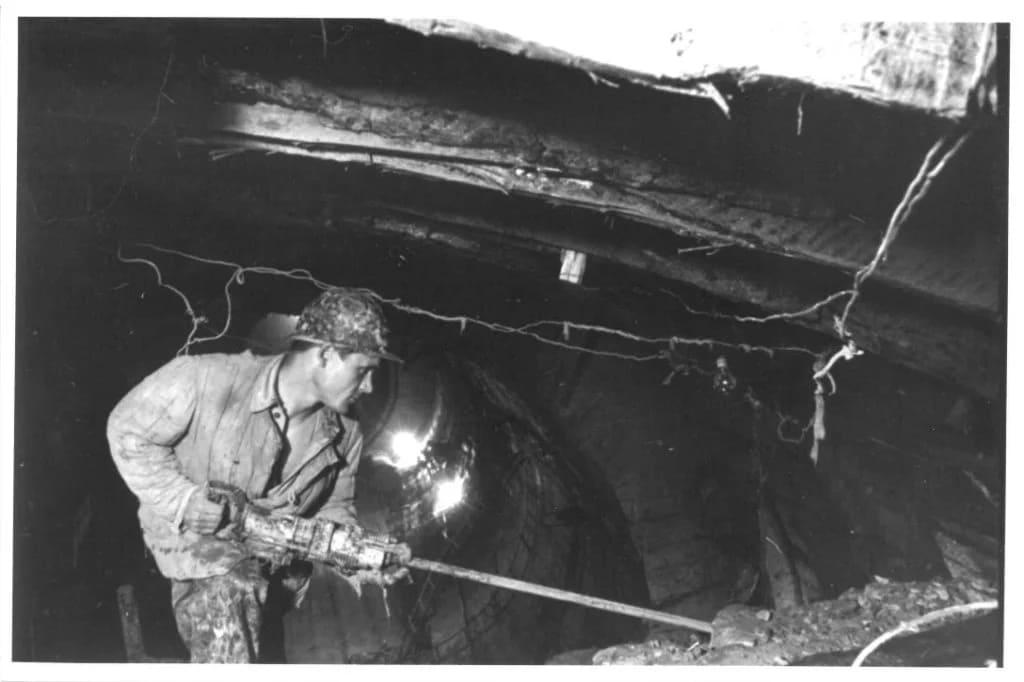
With the outbreak of war, Zubkov formed 10 battalions within 24 hours and began construction. From June 28 to September 1, 1941, defensive structures were erected. Dead ends for armored trains and warehouses, railway lines with a total length of 30.5 km, a tank crossing across the river at the Nevsky bridgehead, and other facilities were built. 640 bunkers and pillboxes were built, 90 km of trenches were opened, and 55 km of anti-tank obstacles were created.
In the summer of 1941, the forces of the Leningrad Metrostroy were transferred to the defense of the city, and the mines that had been passed through were mothballed. And during 1942 - 1945, metro builders built bridges, piers, coal mines, piers and everything that was needed for the front and the national economy. Unfortunately, Ivan Georgievich Zubkov died tragically in a plane crash on June 28, 1944.
Mosmetrostroy played an important role in the construction of special fortifications, which were of great importance in the defense of the capital.
On the eve of the war, the Kremlin began construction of a complex of underground facilities - a special shelter for the country's highest officials. Facilities for the People's Commissariat of Defense of the USSR, underground government communications centers, command posts of departments and other underground shelters are also being introduced.
In the interests of ensuring the safety of head of state Joseph Stalin, metro builders built several facilities, including special facility No. 1 in the Kremlin. In Kuibyshev (Samara), Mosmetrostroy workers erected an underground complex for the functioning of a reserve capital in wartime conditions.
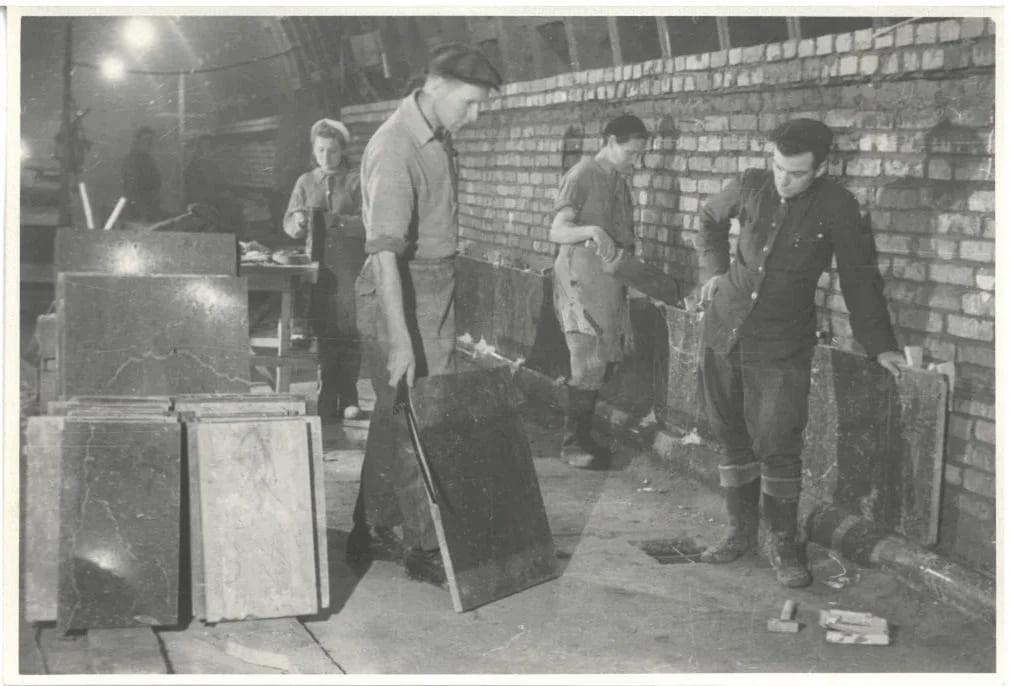
At the same time, large detachments of metro builders were sent to build defense structures at the Mozhaisk defense line, Stalingrad, Gorky (Nizhny Novgorod), and Valdai. Volga command posts and various underground facilities were built in the vastness of our Motherland.
During this period, Metrostroy also worked on other sites that had different fates or histories. For example, the construction of No. 4 NKPS, the tunnel under the Amur in Khabarovsk, was accelerated, because the existing bridge was the primary target in the event of a Japanese invasion. On July 12, 1941, the first test train carrying construction workers passed through the tunnel. The facility was put into permanent operation on October 25, 1942.
A separate detachment of Metrostroy erected railway tunnels of the Black Sea Railway in Abkhazia, part of the forces was transferred to the construction of defensive lines in the Caucasus. In the Murmansk region, hydraulic tunnels were erected Niva HPP-3 - a hydroelectric power station on the Niva River. This is the first underground hydroelectric power station in the country: construction began in 1937, was frozen at the start of the war, and completed in 1949.
As a result of the offensive of the Red Army and the liberation of the occupied territories, Mosmetrostroy was engaged in the restoration of blown up and destroyed railway tunnels and other infrastructure in many regions.
Safe Shelter
On June 22, 1941, the Moscow Metro had an operational line length of 23.31 km, 22 stations and carried 800–900 thousand passengers per day.
Since the beginning of the war, Mosmetrostroy, together with the metro, began to actively prepare existing stations and sections to shelter the population. They erected chambers for filter-ventilation units and constructed hermetic partitions in subway tunnels. The work was carried out in the operating mode of the metro.
It was necessary to clear the mine yards and approaches to inclined passages for the free passage of people. There were no escalators there, so wooden stairs were installed in the inclined passages that had already been passed, along which one could go down to the station. It was necessary to clean the station and ferry tunnels, install ladders and stairs, install a water supply system for drinking water, and install latrines.
With the beginning of the war, air defense exercises begin in Moscow, which include, among other things, sheltering the population in the metro and metro construction. On July 24, 1941, the first exercises took place, then the metro received 200,000 people.
Despite the incidents and damage caused by enemy bombing, the Moscow Metro and the workings of the unfinished third stage served as a reliable shelter for the citizens. During 1941, more than 13.9 million people took refuge in the subway. In 1942 - 303,000. The daily maximum reached 500,000 people.
At the Mayakovskaya metro station, up to 50,000 people were sheltered per day, and at the Kurskaya station - up to 40,000. In 1941, 217 children were born in the Moscow subway, and in total during the period of sheltering the population - 243 children.
There were 21 first-aid posts at the stations, which were visited 70,000 times during 1941.
While hiding at stations and in tunnels, agitators held film shows and performances by concert bands. There were libraries at all stations. At the Kurskaya station there was a branch of the State Public Historical Library. Drawing, embroidery, and sculpting clubs operated at the propaganda centers, and training sessions were held.
On November 6, 1941, at the Mayakovskaya station, a historic meeting of the Moscow Council of Workers' Deputies with Moscow party and public organizations took place, timed to coincide with the 24th anniversary of the October Revolution of 1917. Comrade Stalin spoke at the ceremony.
Rewards for feat and for work
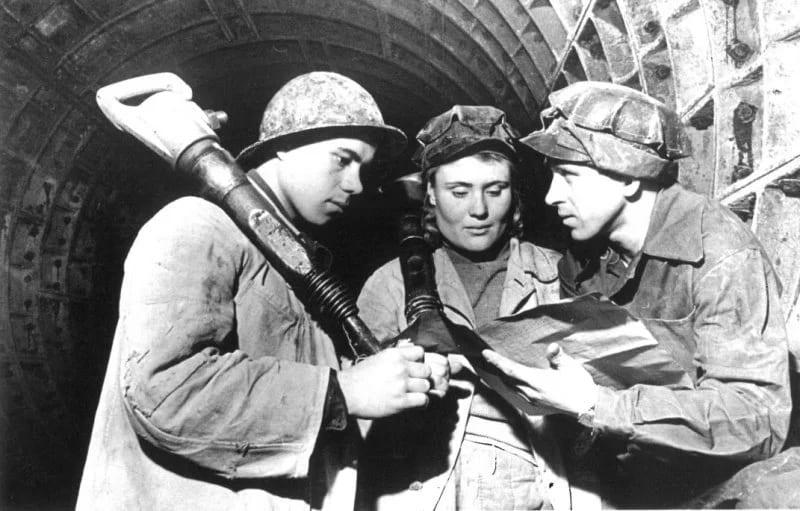
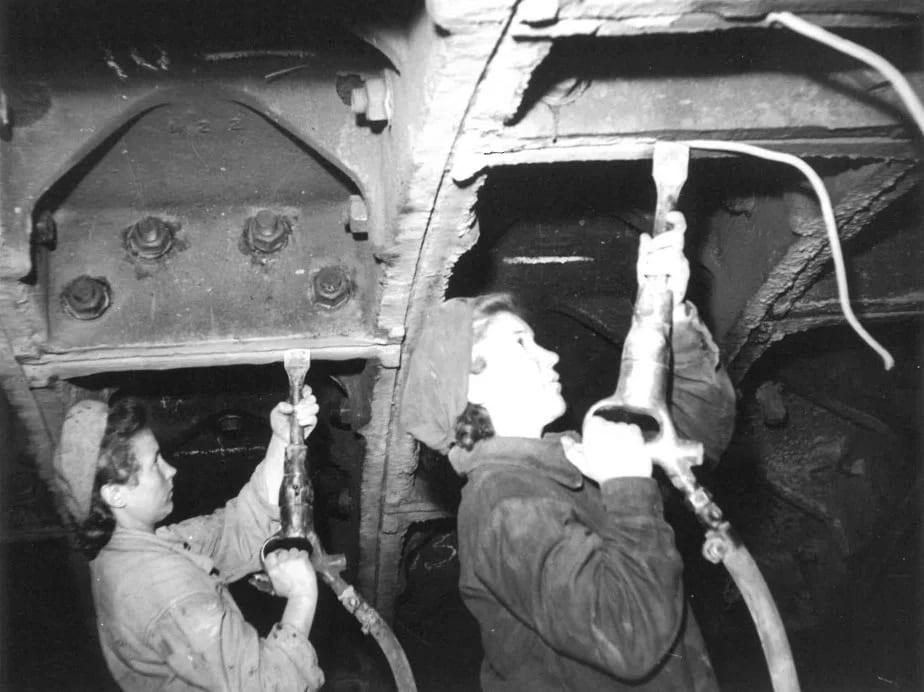
In the first days of the war, thousands of metro workers went to the front and to the militia. Women took over the jackhammers. Their number then amounted to 65–70% of the total number of employees. Mining teams usually consisted of four men and eight women. Construction of the metro continued actively until August 1941. And it practically froze by mid-October. But already on May 22, 1942, GKO Resolution No. 1822 “On the completion of the construction of the Zamoskvoretsky radius of the third stage” was adopted. It includes three stations: Novokuznetskaya, Paveletskaya and Avtozavodskaya. The conditions were difficult and there was a shortage of materials. Thus, according to the original project, it was impossible to complete the Paveletskaya station. It was supposed to be a column type, but all metal structures remained in the occupied territory. Therefore, it was decided to build a temporary station without a central hall. Its reconstruction began after the war and lasted several years.
The Zamoskvoretsky radius opened on January 1, 1943, and two stations on it opened on November 20 of the same year. On March 20, 1943, decree No. 3059 was issued on the completion of construction of the entire third stage. This includes the Pokrovsky radius from the Kurskaya station to the Partizanskaya station, the completion of two stations on the Zamoskvoretsky radius and the construction of an underground passage between the Okhotny Ryad and Teatralnaya stations.
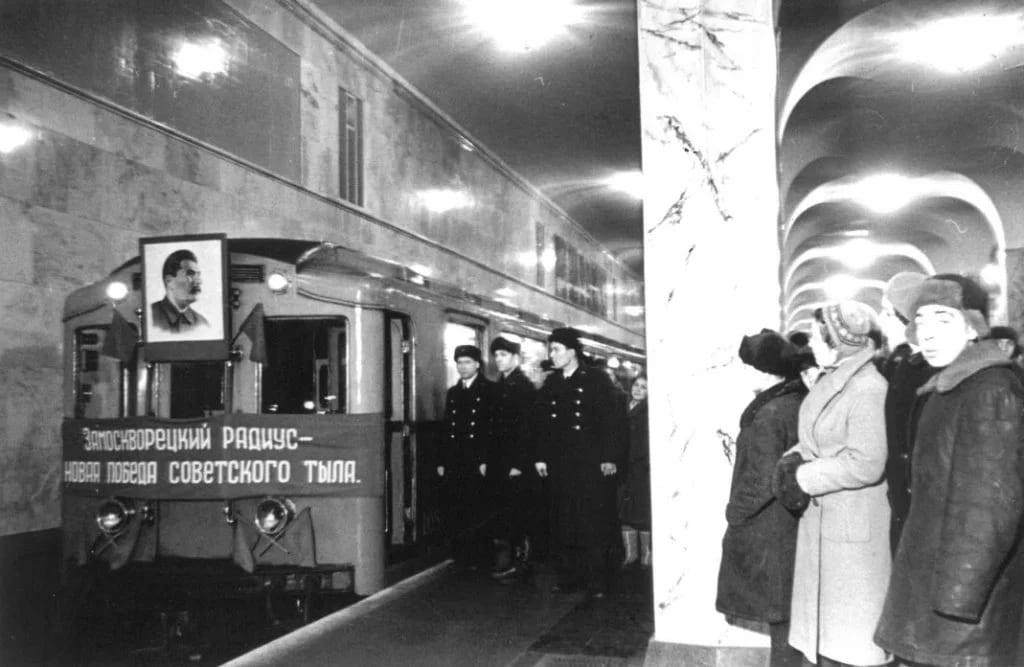
On November 21, 1943, a decree was issued on the construction of the fourth stage of the metro - the Circle Line. On January 18, 1944, the Pokrovsky radius was launched, and the Elektrozavodskaya station was launched on May 15. The heroic deeds of the metro construction workers were appreciated: on June 2, 1944, a Decree of the Presidium of the Supreme Soviet of the USSR was signed in the Kremlin on awarding Metrostroy with the Order of the Red Banner of Labor.
A few words about the military exploits of the metro builders. The Aeroclub, organized in the pre-war years by Metrostroy, trained pilots, 40 of them subsequently received the title of Hero of the Soviet Union. Among them is Anna Aleksandrovna Timofeeva-Egorova, Il-2 attack pilot, navigator of the 805th Aviation Regiment. A mechanic at the Metrostroy auto repair plant, Konstantin Yakovlevich Samsonov, hoisted the Victory Banner over the Reichstag, which he carried at the post-war parade along Red Square in Moscow. In total, 53 Heroes of the Soviet Union emerged from the labor collective of Mosmetrostroy (and metro builder ace pilot Vitaly Popkov became a twice hero) and 1 Hero of the Russian Federation.
Artek in Balabanovo
The war was moving to the west, and Mosmetrostroy began construction of a recreation center on the territory of the Pobeda state farm in the Kaluga region. It was back in 1944... The first vacationers lived in a Spartan way - in wooden buildings and tents. The territory was improved, cottages and outbuildings were erected. Since 1970, the camp became known as the “Young Metro Builder”. It still operates to this day - last summer about 1,800 children vacationed there, including from families of metro construction workers. In 2025, the camp celebrates its 80th anniversary!
Today, the large-scale reconstruction of the health resort is almost complete. We carried out major overhauls of buildings, landscaped the territory, built treatment facilities, a boiler room, and updated communications. The main work was completed in 2021 - the year of the 90th anniversary of the Moscow Metrostroy. “Each organization contributed to the restoration of the iconic place for several generations. It is noteworthy that all buildings are painted in Mosmetrostroy’s signature colors – burgundy and beige, and the main entrance to the territory uses an installation made of real cast iron tubes,” said Sergey Zhukov, general director of Mosinzhproekt JSC, the main customer of Mosmetrostroy.
The Chairman of the Veterans Council of the Mosmetrostroy Administration, Lidiya Arushanova, vacationed in the camp in the 1950s, starting at the age of nine. “We had 25 squads, my brother played trumpet in the band. Dunaevsky’s children’s ensemble, which vacationed with us, staged unforgettable concerts,” recalls Lidia Gurgenovna. “We lived in wooden dachas, had excellent food, and in the mornings there was a lineup with bugles and drums. Time flew by interestingly and cheerfully, strong friendships were formed. The pioneer leaders were students of pedagogical universities and young guys from our SMU. All the children loved and knew the song by heart: “And we will never forget anywhere, we guys will remember forever: our Balabanovo is Metrostroevsky Artek!”
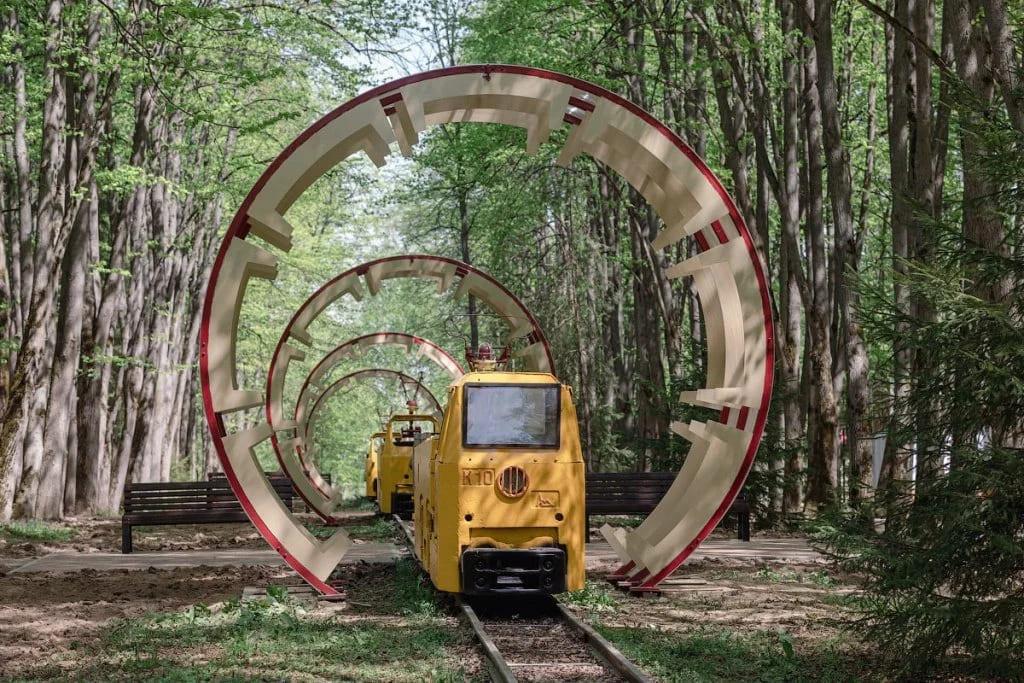
Nowadays, the open-air museum of special equipment, the first of its kind in Russia, is especially popular among children. The narrow-gauge railway is equipped with various subway construction equipment, including trolleys that were used to transport soil and rock during the construction of tunnels. On the territory of the camp you can play football, play volleyball, basketball, and hold squad events. On Pushkin Alley with linden trees, spaces for creative activities have been created in restored wooden openwork gazebos.
The legendary recreation center is expanding. A multifunctional club for conferences, quests and sports competitions has already been built here, which can accommodate up to 400 people. This summer he will welcome his first children.
The young generation of future metro builders is growing and developing!