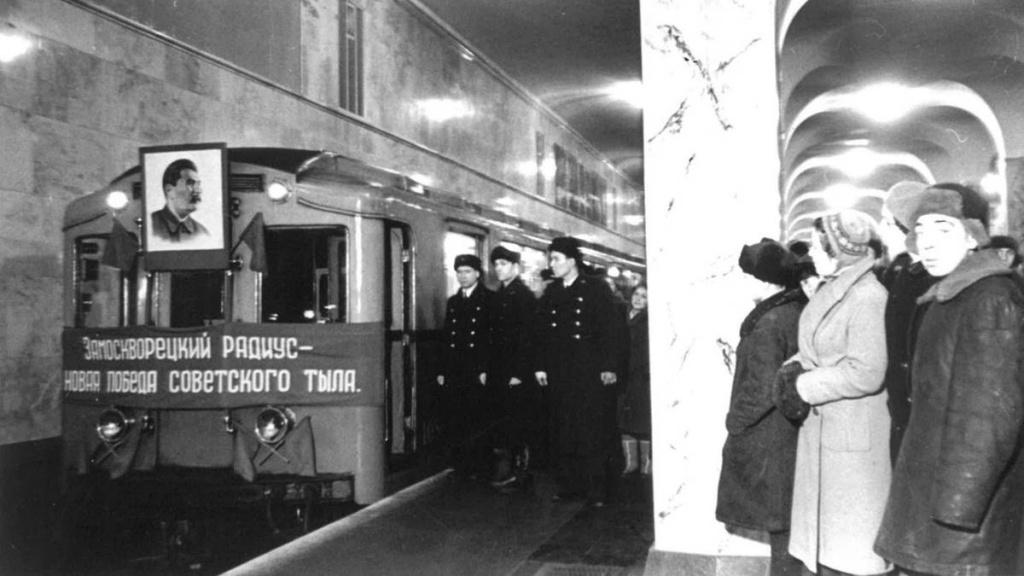
Not every metropolitan enterprise, even one with a long history of development, can boast of the truly impressive contribution that was made to the cause of Victory by ordinary Moscow metro builders. 53 Heroes of the Soviet Union, hundreds of workers awarded military orders and medals, their colleagues, civilians who worked on the construction of defensive structures. Today their names have become evidence of unparalleled courage, they brought the great date closer - May 9, 1945.
Labor and military achievements are not forgotten while grateful descendants honor the memory of them.
Sergey Zhukov, Chairman of the Board of Directors of Mosmetrostroy (part of JSC Mosinzhproekt), at one of the meetings with veterans noted: “On The enterprise cherishes the memory of veterans. We preserve it, we honor traditions, because our main wealth is people. Wartime people did everything for subsequent generations, for their peaceful life. We are eternally indebted to them.”
In Moscow, the construction of the metro did not stop even during the war years. Three stations of the green line and four blue ones - Novokuznetskaya, Paveletskaya, Stalin Plant (now Avtozavodskaya), Stalinskaya (now Semenovskaya), Baumanskaya, Elektrozavodskaya, Stalin PKiO (now Partizanskaya) - were commissioned between 1941 and 1945. During the period of hostilities, 13.5 kilometers of transport tunnels were built. And this was a huge reason for pride: at a time when all physical and material resources were thrown into the fight against the enemy, metro builders, with minimal teams, worked on the construction of the capital’s subway. The construction of the metro was perceived by the townspeople as a powerful uplifting act; it instilled confidence: once the lines were being built, it meant that Victory would be ours!
But the main source of pride for Mosmetrostroy is the people who left their jobs to fight the enemy and returned as heroes. A huge contribution to the perpetuation of their feat and glory is made by the Council of War and Labor Veterans of Mosmetrostroy. Chairman of the Council Boris Prigoda considers metro builders to be a special breed of people.
In the first days of the war, thousands of metro builders went to the front, to join the people's militia. Among them are truly legendary personalities. The life story of Ivan Alekseevich Vishnyakov, pilot, Hero of the Soviet Union, is described in the book “On Steep Turns.” Ivan Vishnyakov came to the construction of the first stages of the metro as a young guy, he worked as a mechanic. Following the example of his friends, he became interested in aviation and joined the Metrostroy flying club. It was there that his friendship began with Alexei Ryazanov, also a metro builder. Both of them later went to war and became fighter pilots. Both returned from the war as Heroes of the Soviet Union, and Alexei Konstantinovich Ryazanov received it twice. After the war, Alexey and Ivan were friends all their lives; they died one year apart, just one day apart. They were buried nearby at the Troekurovsky cemetery.
The name of Konstantin Samsonov is known to everyone who is interested in the heroic capture of the Reichstag. These events are described by many historians. Before the war, Muscovite Konstantin Samsonov graduated from a seven-year school, a factory apprenticeship school, and before being called up for military service in 1937, he worked on the construction of the capital’s first metro stations as a tunneler, also attending the flying club. The grandson of Konstantin Yakovlevich, Alexander Prishchepenko, knows well the heroic biography of his grandfather.
— Grandfather met the war in the Far East. There he received the rank of junior lieutenant and constantly submitted reports, he wanted to go to the front, he says. “But first he was sent to the Shot course, and only then he found himself in the active army. Commanded a battalion. At the end of April 1945, the division that included his battalion, together with other Soviet units, entered the outskirts of Berlin. Under his command, during the storming of the city, the Red Banner was installed on the Reichstag column.
Konstantin Yakovlevich died in 1977. He is buried at the Novodevichy Cemetery.
The Council of Veterans of Mosmetrostroy took under its care the burials of honored colleagues. There are other memorial places that are significant for this organization. In 1971, in the village of Malye Vyazemy, Odintsovo district, a memorial was created in the courtyard of a high school - an obelisk was erected for the students of the Metrostroy flying club who were awarded the title of Hero of the Soviet Union. The exposition of the school museum, which contains rare photographs, historical documents and souvenirs, tells about them and their exploits.
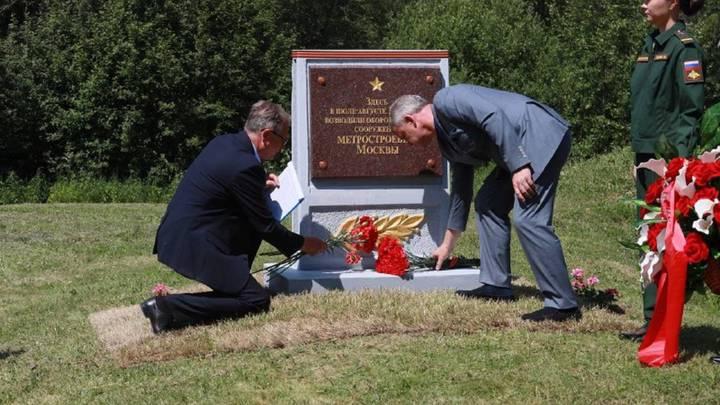
And in 2023, under the leadership of the council and with the support of the management of JSC Mosmetrostroy, another memorial was opened on the Borodino field after restoration - to the employees of the organization who erected defensive structures in 1941. The memorial monument was erected in 1971 and is dedicated to their unprecedented feat: in July-August 1941, on the six-kilometer line of the Mozhaisk defense line, under constant bombing and shelling, these people erected reinforced concrete pillboxes, built ditches, trenches, and command posts. 1.5 thousand people, mostly women, took part in the construction. The work was supervised by Tatyana Fedorova, deputy of the Supreme Soviet of the USSR, Honored Builder of Russia, Hero of Socialist Labor. Preserving the memory of these and other people is a piece of immortal national gratitude, which today is more important than ever for everyone who lives in our country.
REFERENCE
The large-circulation newspaper “Metrostroyevets”, and the permanent museum in the main office of Mosmetrostroy, and the exhibition for Victory Day at JSC “Mosinzhproekt” talk about the events and people of that time. This year its theme was the life and fate of the pioneer builder of the Moscow and Leningrad metro, Ivan Zubkov. The exposition is in the public domain.