The construction of the Dostoevskaya station on the Circle Line is one of the most complex projects of the Moscow metro. It is being built without stopping the movement of trains, in difficult geological conditions.
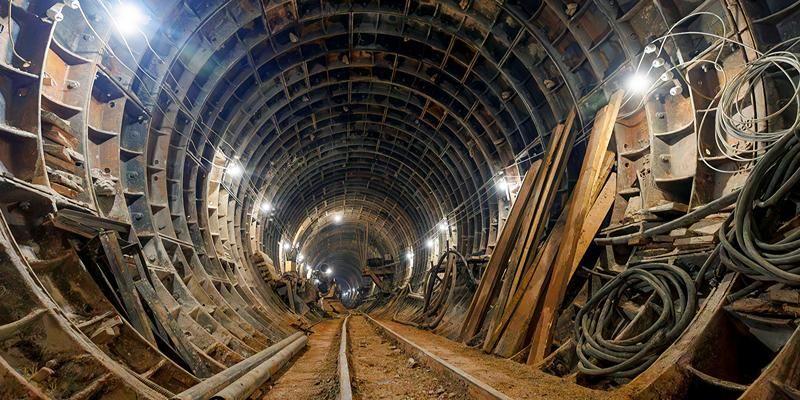
Dense development, abundance of utilities and groundwater, mountain mining method, operating line a few meters from the face. The Dostoevskaya station of the Moscow metro is being built in difficult conditions, sometimes it is necessary to work manually. It will be the first new station on the Circle Line since 1954. mos.ru correspondents went down into the mine and observed how construction was going on along the historical route.
One of the most complex projects of the Moscow metro
Construction of the ring metro line began in 1944, at the height of the Great Patriotic War. In 1950, the first section from Kurskaya to Park Kultury opened with the stations Kaluzhskaya (now Oktyabrskaya), Serpukhovskaya (now Dobryninskaya), Paveletskaya and Taganskaya; four years later the ring was closed.
Dostoevskaya will be the first new station in more than 70 years. It will be located between Novoslobodskaya and Prospekt Mira, under the southern part of Suvorovskaya Square, at the intersection of Durova and Samotechnaya streets. Not far from this place, on Seleznevskaya Street, in building 29, building 2, there is the office of SMU-6 Metrostroy. This is a subsidiary of Mosmetrostroy, over 85 years of work it has built many metro stations, and is now building Dostoevskaya. The office operates in a two-story building. We are met by chief engineer Dmitry Zaitsev.
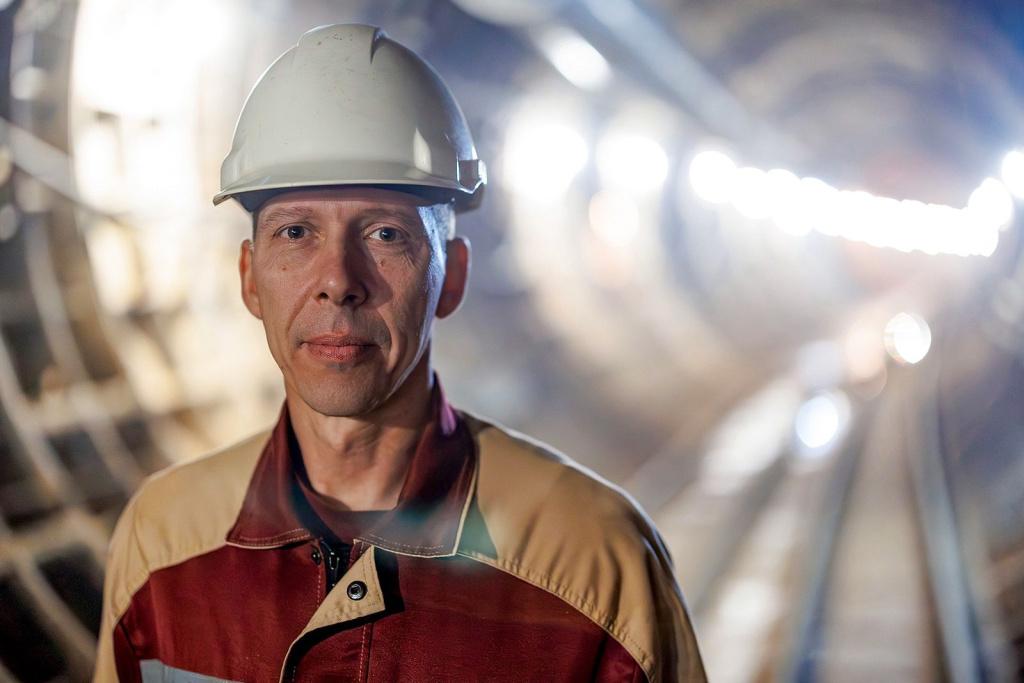
“The idea to build the 13th station of the Circle Line appeared in the late 1950s. The projects changed several times, as did the names. At first the station was called “Commune Square”, then “Suvorov Square”, “Suvorovskaya”. In the 1990s, a place was laid out for a construction site in the tunnel, but the idea was never brought to life. In 2010, the Dostoevskaya station appeared on the Lyublinsko-Dmitrovskaya line, and again it was not possible to create a neighboring one on the Koltsevaya line. The difficulty was that both lines were operational and the work would interfere with the flow of passengers. With the further development of the Lyublinsko-Dmitrovskaya line, which is still the only one in the metro that does not have a transfer to the historical ring from the northern part, the city decided to return to the complex project. The future station was named “Dostoevskaya” as a radial neighbor,” says Dmitry Zaitsev.
To integrate it without stopping trains on the Circle Line, metro builders are building two bypass tunnels with a total length of more than 1.7 thousand meters.
“When the tunnels are ready, we will switch train traffic to them one by one. This will make it possible to begin the construction of the station complex: a middle hall, two side tunnels, transfer hubs, inclined passages for escalators, and lobbies. Having completed all the work, we will again send trains along the usual route, and the bypass tunnels will remain under the economic management of the metro,” explains the chief engineer.
Heirs of the first metro builders
“Dostoevskaya” is being built on an existing metro line, and in the city center, which means in conditions of dense buildings and engineering communications. Therefore, we chose the closed method. Near the Central Academic Theater of the Russian Army, mine shafts were installed, through which equipment, materials and builders are delivered, and the mined rock is also lifted.
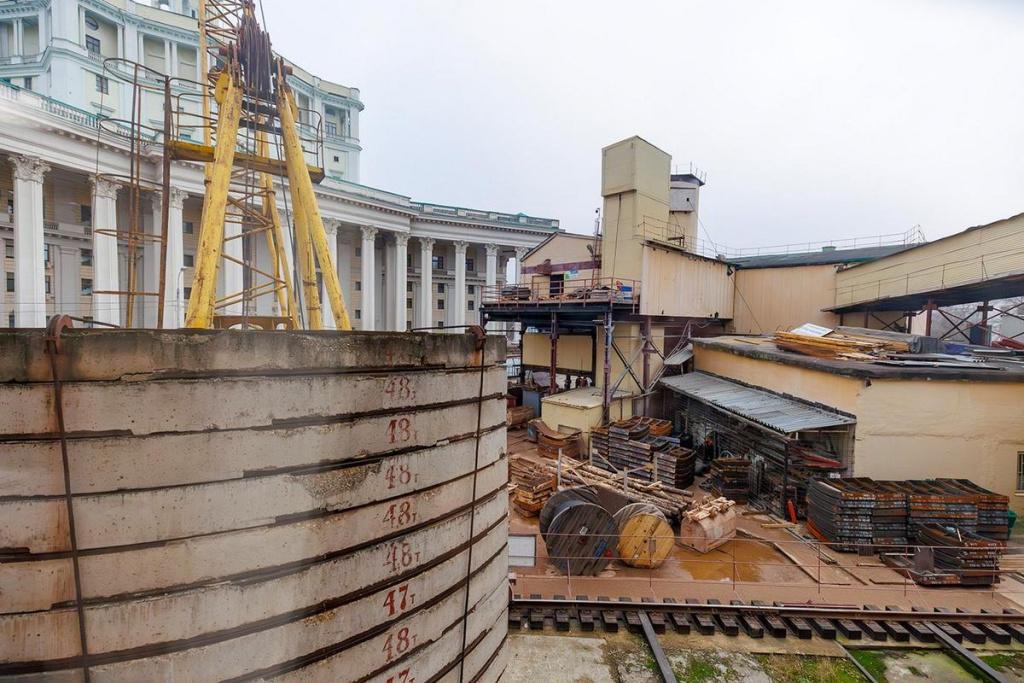
In cramped conditions, metro builders cannot dig bypass tunnels using modern tunneling shields. They have to resort to conservative but time-tested technologies. To get to know them, we go to the construction site. We change into special suits, put on helmets and waterproof shoes, and go into the annex where a descent into the mine is equipped. The cage serves as an elevator for materials and builders.
Below we see a left bypass tunnel. It is built from tubes (cast iron blocks) that protect the space from rock pressure and groundwater ingress. Under the arch there is a mine ventilation pipe, along the floor there are narrow rail tracks for trolleys and rock-loading machines.
“At first we tunneled through the earth using the drill-and-blast method. But when approaching the technical zone of the metro, that is, the Circle Line, they switched to means of small-scale mechanization - destructive robots. In the most sensitive areas we have to work with jackhammers, like the first metro builders,” notes Dmitry Zaitsev.
There is a lot of moisture in the tunnel - this is groundwater coming in. At the same time, according to experts, the Dostoevskaya site is considered dry. During the construction of some stations, miners are forced to work in rubber suits up to their waists in water. When the excavation is completed, the tunnel will be protected from groundwater by a waterproofing shell.
We move on, watching as construction workers use jackhammers to cut through a ventilation chamber and install tubing into rings, climbing onto wooden shelves directly under the arch.
We reach the bottom. Here, miner Alexander Yampolsky watches how the robot destroyer bites into the rock with a hydraulic hammer and crushes it. On the other side, light can be seen from the adit passed towards the bypass tunnel. Soon they will be brought together and a motion switching chamber will be built. It is through it that trains will move from the Circle Line to bypass the Dostoevskaya line under construction.
When the demolition robot goes quiet for a minute, we hear the sound of train wheels. It turned out that the active tunnel is located at a distance of less than a meter. So you need to work like a jewel, and soon the robot will be replaced by people with jackhammers.
“The miner needs to be extremely careful. It is also important for him to “listen” to the breed. If it is soft and loose, care should be taken to prevent a collapse. Sometimes it is necessary to further secure the tunnel by installing supporting supports. If the breed is strong, you can safely move on. This instinct comes with experience. Motorists feel the same way when they drive from dry asphalt onto a slippery road,” shares Alexander Yampolsky.
Through the city center without unnecessary transfers
We return through the tunnel back to the mine shaft. Dmitry Zaitsev notes that now it will take more than three hours to inspect the entire constructed area. Just a year ago you could walk around it in 40 minutes. The creation of bypass tunnels is almost complete, but there are still many difficulties ahead. Crews continue to construct mine shafts (due to the complexity of the project, instead of the traditional one or two shafts, there will be six of them). They are also preparing to excavate inclined passages - and closer to the surface they encounter quicksand. When redirecting traffic to bypass routes, all utility networks will need to be switched.
The Dostoevskaya station is planned to be completed in 2030. It will have two lobbies: underground - under Durova Street, where it intersects with Delegatskaya, and above ground - next to the Olimpiysky sports complex, at the intersection of Durova Street and Olimpiysky Prospekt. The latter can be reached via a pedestrian crossing equipped with travelators and an escalator. For the convenience of people with limited mobility, an elevator will be installed. Thanks to the new station on the Circle Line, transport accessibility will improve in three districts of the capital - Meshchansky, Tverskoy and Maryina Roshcha.
Source: mos.ru